Hinduism and It's Gods
The Hindu Pantheon of Gods consists of three hundred and thirty-three million Gods. The word Bhakti means the devotion to the God and the Gods of Hinduism. In Hinduism existence is composed of three worlds:
The First World
The Second World
The Third World
'The First World is the physical universe, the Second World is the subtle astral or mental plane of existence...and the Third World is the spiritual universe of the Mahadevas, 'great shining beings', or Hindu Gods.' (Himalayan Academy)
There is only one God in Hinduism, the other Gods and Goddesses, whose name resides in books and myth, are all considered and thought of as manifestations of their supreme God. With many Gods and Goddesses worship varies from person to person. This is accepted in Hinduism as all Hindus show great respect for another own personal beliefs in which ever deity they choose to worship. Thus, bringing tolerance in an individuals freedom of expression.
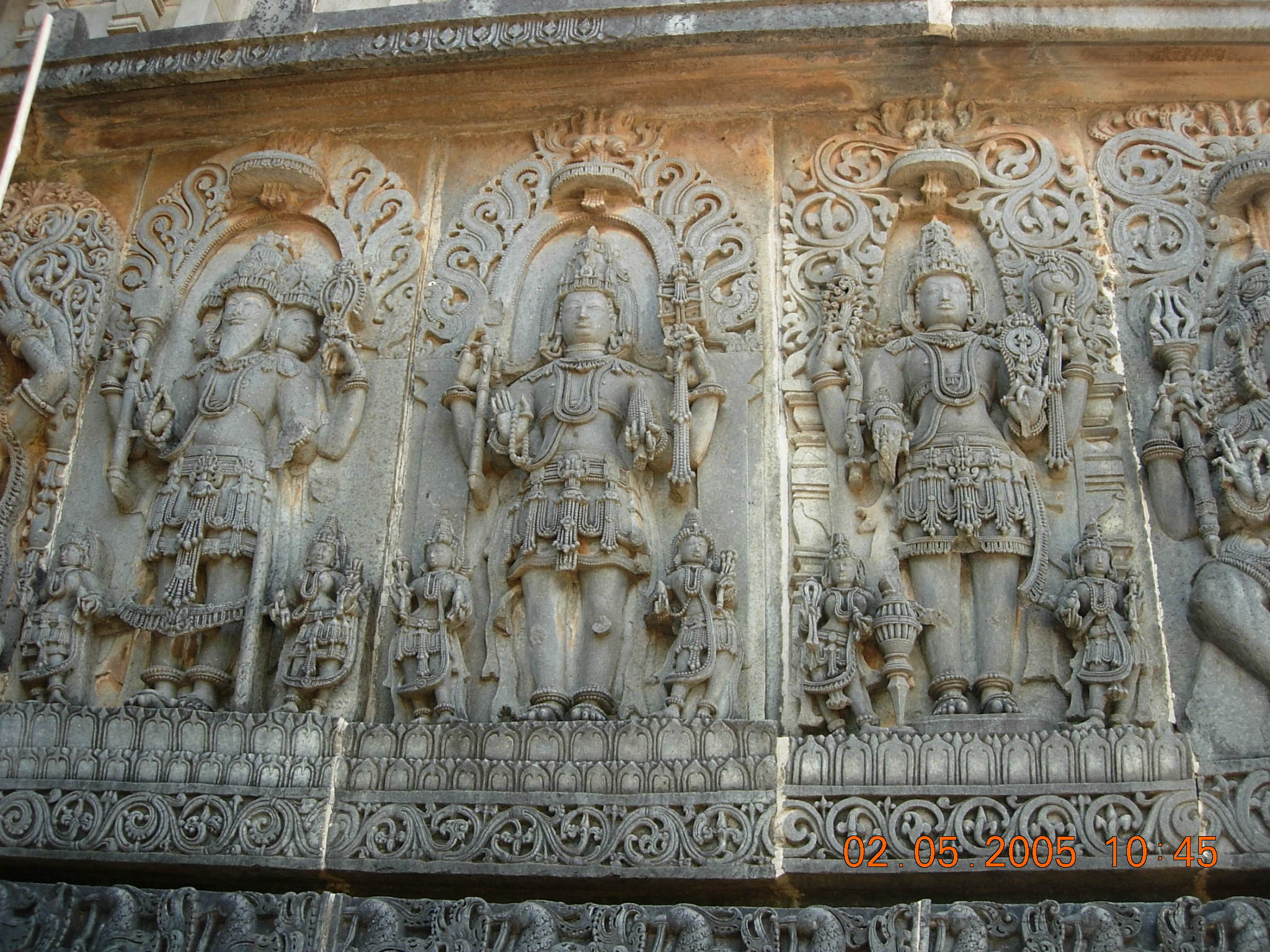
Hinduism is made up of four main denominations:
Saivism
Shaktism
Vaishnavism
Smartism
they all reside under a divine hierarchy of the pantheon. (or Mahadevas) 'Theses great Mahadevas, with their multitudes of angelic devas, live and works constantly and tirelessly for the people of the religion, protecting and guiding them, opening new doors and closing unused ones.' (Himalayan Academy)
One of the most common Mahadevas is Brahma. He is considered to be the Father of gods and men and the creator of the universe. He is one of the most revered. Brahma has many forms but is depicted with being a man of four faces. He acquired theses faces when his consort Sarasvati (Goddess of water) emerged from his side, as told in legend, being the modest woman she was Sarasvati stepped to one side to avoid his gaze, a second face emerged on Brahma's...
More Hinduism
essays:
Religions of the World: Brief description of aspects of Hinduism, Buddhism, and Islam.
... deities: gods and goddesses. Although it has been viewed by some as a monotheistic religion, because it recognizes only one supreme God: the panentheistic principle of Brahman, that all reality is a unity. To Hindus the entire universe is ...
Hinduism. A) Describe the sacred stories and writings. B) Four principal beliefs, nature of God, significance of life after death. C) Hinduism in Australia
... the gods and goddesses. B) In Hinduism, the divine soul is Brahman. Brahman is made up of three main Gods. Brahma (the Creator), Shiva (the Destroyer) and Vishnu (the preserver). The three together represent the primal forces of the universe. Shiva ...
Description of the four Hindu paths to "Brahman"/God and which one appeals to me the most.
... aspects of God and point to something beyond. Karma yoga is the path to God through work. In humans, "The drive to work is psychological, rather than economic." This path expresses love ...
Hinduism; a basic overview of this eastern religion and philosophy.
... other gods and goddesses as facets, manifestations or aspects of that supreme God. Most urban Hindus follow one of two ...
An Overview of the Religion of Hinduism: Hindu beliefs, including the concept of reincarnation, karma, and dharma, heavily influenced Indian culture.
... countless gods and multiple forms of worship, all Hindus share certain basic beliefs. God is one, but wise people know it by many names. This ancient proverb is the key feature of Hinduism. Hindus believe in an omnipotent spiritual force ...
Marriage in Hinduism and Catholicism
... Sacramentality of Marriage in a Dalit Context. India: Inter-India Publications, 2000. Bhogal, Balbinder S. "Hinduism II: Seeing the Gods and Goddesses." Introduction to Religion Studies. Computer Science Building, York University. 11 Jan 2005. Narayanan, Vasudha. "The Hindu Tradition ...
Hinduism Paper
... blessings from different Gods. According to YGoY, 2005, "Hindu is based off of idol worshiping of their Gods and Goddesses at the temple or at their home. They normally practice their spiritual rituals ...
Hindu Religious Tradition: Sacred Elements-Their Significance and Meanings
... teaches universality and respects every belief. The worshippers' goal is to attune themselves with Brahman through rituals, festivals, and ceremonies venerating the gods and goddesses. Karma, by definition, is action and the consequence of action ...