History Of Titanium; Speeches
Speech
In 1791, the Reverend William Gregor, an English clergyman and mineralogist, reported that he had discovered a magnetic black sand near the beaches of Cornwall, England. The mineral was named menachanite after the local parish of Menaccan. A few years after Gregor's discovery, M.H. Klaproth, a German chemist, separated TiO2 from the mineral rutile. Klaproth named the new element titanium after the giants of Greek mythology. However, it was not until 1910 that M.A. Hunter, an American chemist, produced pure titanium.
Titanium is a hard, silvery-gray metallic element. Its atomic number is 22 and its symbol is Ti. It is the 9th most common element in the Earth's crust. It also is found in meteorites, the moon, and the sun.
Titanium metal has a number of useful physical properties. It is very resistant to corrosion, hard, has a high melting temperature and is lightweight. Its strength is similar to steel, but is 45% lighter. Titanium alloys can be twice as strong as aluminum alloys.
Titanium has no known nutritional benefit for animals. It does, however, have some slight benefits for plant health. And has been found to be very compatible with the human body and is often used in surgical instruments and medical implants such as in dental procedures.
Titanium is a strong lightweight metal often used in airplanes. When titanium combines with oxygen, it forms titanium dioxide (TiO2), a brilliant white pigment used in paint, paper, and plastics. Major deposits of titanium minerals are found in Australia, Canada, India, Norway, South Africa, Ukraine, and the United States.
2nd Speech
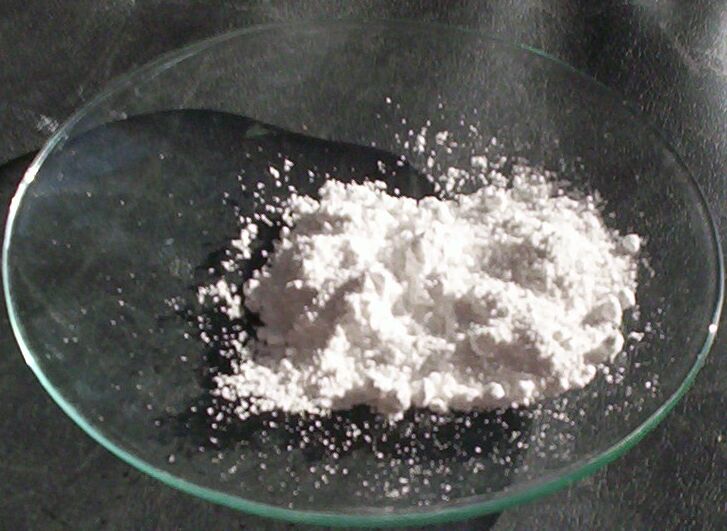
Most titanium is used in its oxide form. TiO2 is a white pigment used in paint, varnishes, plastics, paper, and other products such as fabrics, printing inks, roofing granules, and special coated fabrics.
Titanium is lighter than steel but...
More Chemistry
essays:
History Of Titanium
... TITANIUM William Gregor in England, 1971, first discovered titanium in an impure form. It was later given the name titanium (after the Titans, in Greek mythology, the sons of the Earth Goddesses) by a German chemist, Martin ...
Titanium the Metal of tomorrow
... hard, silvery-gray metallic element. Its atomic number is 22 and its symbol is Ti. It is the 9th most common element in the Earth's crust. It also is found in meteorites, the moon, and the sun. Titanium ...
Radium. This essay describes, gives a history of, and gives properties of the element radium.
... the elements, radium's symbol is Ra and is classified as one of the alkaline earth metals which are silvery, soft, low density metals. Radium's appearance is almost pure white, but quickly blackens when exposed to air. Its atomic number ...
A Brief History of the Periodic Table
... by the Russian chemist Dmitri Ivanovich Mendeleev and the other by the German chemist Lothar Meyer. Meyer's table was simply a list of all the elements according to increasing atomic mass, demonstrating periodic valence changes as a ...
About the components, history, etc. of titanium
... Titanium? The Reverend William Gregor in 1791, who was interested in minerals, discovered titanium. He recognized the presence of a new element, now known as titanium. He noticed it in menachanite, a mineral named after Menaccan in Cornwall (England). Several ...
The history of the atomic theory. This essay discusses Aristotle, Democritus and Alchemy.
... 8 new elements on the periodic table as well as distillation, crystallization, and many ... a common substance was transformed into gold, for it was soon as the transformation of a human into a pure, noble spiritual being. Alchemy was looked down upon by 17th century chemists and was viewed as a ...
The History of the Periodic Table
... a new element named argon which did not fit in any of the known periodic groups. William Ramsey thought it belonged between chlorine and potassium which was in the same group as helium ...
History of the atom nickel
... small and positively charged. He also assumed that the electrons were located outside the nucleus. 1914 H.G.J. Moseley Using x-ray tubes, determined the charges on the nuclei of most atoms. He wrote"The atomic number of an element ...