In the central nervous system, the brain and the spinal cord are the two main parts. The brain and spinal cord are protected by bone. The skull encloses the brain, and the vertebrae of the spinal column surround the spinal cord. The brain and spinal cord are also covered and protected by 3 tough membranes called menings. The cerebrospinal fluid cushions the brain and spinal column. The brain contains four ventricles filled with the fluid; the central canal is filled around spinal column.
The brain has three major parts, cerebellum, cerebrum, and the medulla. Also includes the thalamus, hypothalamus, and pons. The thalamus is the relay center of brain and spinal column (also in pain perception). The hypothalamus controls body temperature, blood pressure, sleep, and emotions (also is involved and controls the endocrine system). Pons is a relay system, which links spinal column and major parts. The cerebrum is the largest part of the brain.
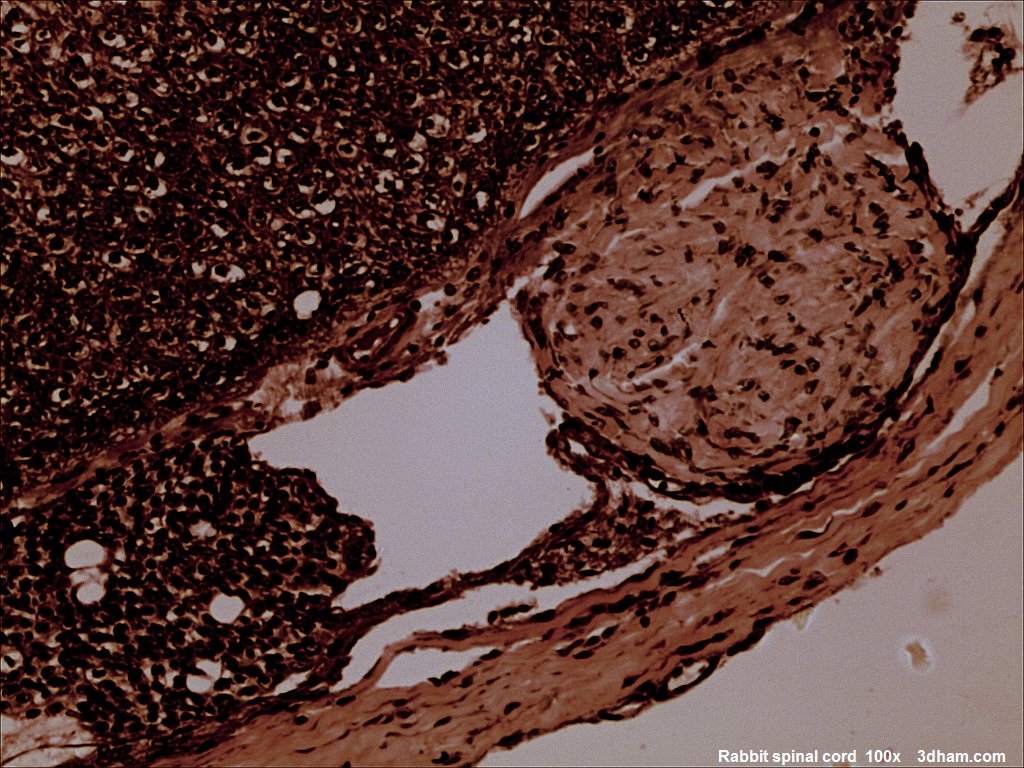 English: Rabbit spinal cord.
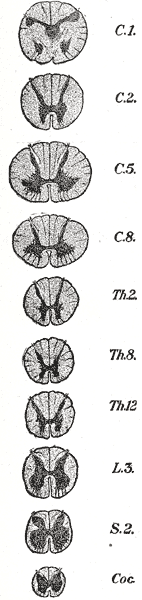 Cross-sections of the spinal cord at varying level...
 Cross-section through the spinal cord at the mid-t...
It is divided from front to back into the right and left cerebral hemispheres. Nerve fibers pass from one to another, so the left side of your brain controls the right side of your body, and the right side controls the left side, they intersect somewhere in spinal cord. The outer most layer of the brain is the cerebral cortex consisting of gray matter. The surface of the brain has many folds called convolutions, this increases the surface area. The cerebral cortex performs 3 major functions, sensory, motor, and associative. The sensory receives and interprets impulses from sensory organs. The motors initiate impulses responsible for voluntary movement. Associative is responsible for memory, learning, and thought. Beneath the gray matter is an inner area called white matter. White matter consists of myelinated nerve fibers, and connects each hemisphere and other parts of the nervous system. The...
NICE JOB BUT CHECK THIS OUT AS WELL
Consideration of disorders of the nervous system is the province of neurology; psychiatry deals with behavioral disturbances of a functional nature. The division between these two medical specialties cannot be sharply defined, because neurological disorders often manifest both organic and mental symptoms. For a discussion of functional mental illness, Mental Illness.
Diseases of the nervous system include genetic malformations, poisonings, metabolic defects, vascular disorders, inflammations, degeneration, and tumors, and they involve either nerve cells or their supporting elements. Vascular disorders, such as cerebral hemorrhage or other forms of stroke, are among the most common causes of paralysis and other neurologic complications. Some diseases exhibit peculiar geographic and age distribution. In temperate zones, multiple sclerosis is a common degenerative disease of the nervous system, but it is rare in the Tropics.
The nervous system is subject to infection by a great variety of bacteria, parasites, and viruses. For example, meningitis, or infection of the meninges investing the brain and spinal cord, can be caused by many different agents. On the other hand, one specific virus causes rabies. Some viruses causing neurological ills affect only certain parts of the nervous system. For example, the virus causing poliomyelitis commonly affects the spinal cord; viruses causing encephalitis attack the brain.
Inflammations of the nervous system are named according to the part affected. Myelitis is an inflammation of the spinal cord; neuritis is an inflammation of a nerve. It may be caused not only by infection but also by poisoning, alcoholism, or injury. Tumors originating in the nervous system usually are composed of meningeal tissue or neuroglia (supporting tissue) cells, depending on the specific part of the nervous system affected, but other types of tumor may metastasize to or invade the nervous system (see Cancer). In certain disorders of the nervous system, such as neuralgia, migraine, and epilepsy, no evidence may exist of organic damage. Another disorder, cerebral palsy, is associated with birth defects.
2 out of 2 people found this comment useful.