"The Hungry Ocean": A look at the book and Oceanography.
Linda Greenlaw's "The Hungry Ocean" revealed to me a lifestyle in which I had only minor previous knowledge from The Discovery Channel, and other semi-educational television shows, of a profession that is both dangerous and exciting. Being a enthusiast of the ocean and the lifestyles that are attached to it, I was intrigued by this book.
The basic idea and plot of this book was one of Linda's monthly sword fishing trips aboard the Hannah Boden, along with her six-man crew. Each crew member, Ringo, Charlie, Kenny, Peter, and Carl, has a comical story to tell that is all of their own.
The story begins in September with preparation of the Hannah Boden for a fishing trip to the Grand Banks. 'Steaming out' to the fishing grounds takes a week because they had to find the correct ocean temperature and set out their fishing gear. Once the 1000 hooks have been set into the ocean the process has been completed and the boat must stream back to the first buoy to start the extensive procedure of bringing the gear back into the boat.
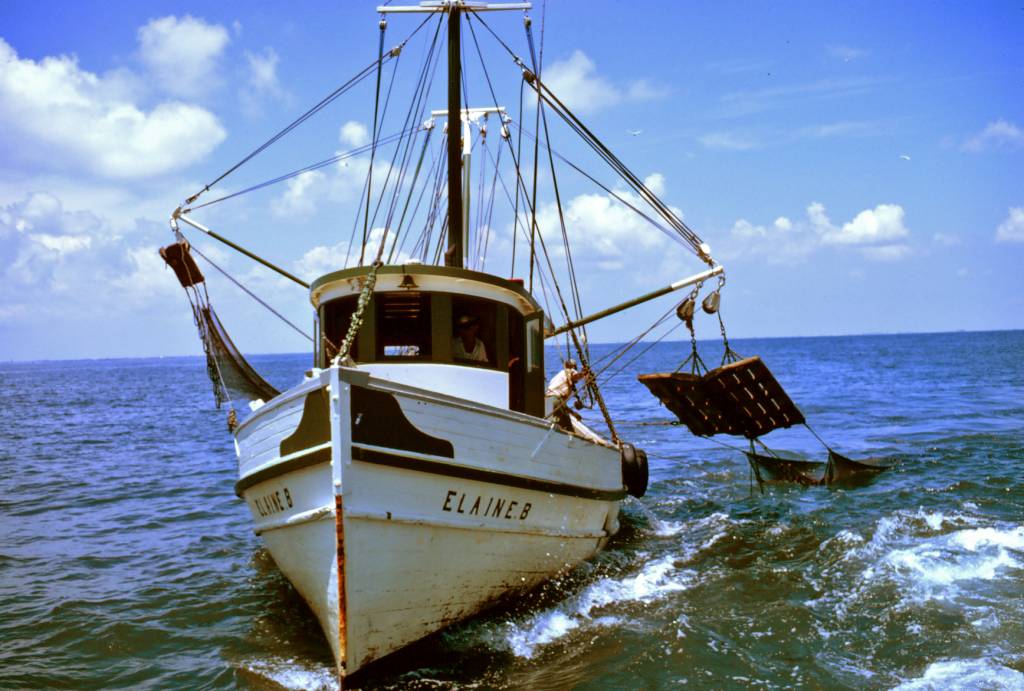
The duration of a usual trip is anywhere from ten to fifteen days of fishing. Within this book there is description of the excitement of sets with 100 plus fish and the disappointment of less than 10 in an entire set. Linda also describes the advantages and disadvantages of being the captain of a fishing boat. The main advantages being that she receives the biggest paycheck and gains the respect of other fisher people for being the only woman sword boat captain, while the disadvantages include dealing with the crew problems, keeping on top of the best fishing grounds and beating other boats to the punch, and also dealing with whatever mother nature throws at the ship...
More Oceanography
essays:
"El Nino and it's effects on coral reefs" What is El nino and how does it affect the ocean?
... affected. Ocean fish, many native to California waters are also largely affected. Many coastal fish migrate north and south in search of cooler waters and food supply. Many fish, not able to migrate, die from lack of food or unbearable temperature ...
The Whaling Industry Today - Norway and Japan
... take into account how limited of ability whales have to reproduce. More scientific research of the minke and fish populations in the Antarctic Ocean should be considered before acknowledging the findings of a country that is so obviously biased. There have ...
Our World's Oceans: Their Importance to Our Planet
... to these types of devices and techniques. There are many similar stories for other fish in the sea. It's just that cod was accepted as the fish that could not be fished out. Time has proven this thought wrong. Ocean ...
This is a standard informative report on Krill. Everything about this sea species. Size, mating, eating, living locations. Well written.
... in 1970 humans started to harvest krill for human consumption, farmed fish, and sport fishing bait. Japan and ... legs strain food from the water as they swim (Cordell Bank). Krill eat phytoplankton; single-celled plants that hang out near the top of the ocean. The krill spends most of it's time deep in ...
Oceanography as viewed from space
... with manned and unmanned space systems. The space systems can be satellites and/or space shuttles that observe various features of the ocean such as sea-surface winds, sea-surface temperatures, waves, ocean currents ...
The Coral Reef Ecosystem
... temperature changes, or global warming. Carbon dioxidealso contributes to the disappearance of the coral reefs. Biological erosion, such as waves,predators can also affect corals. The importance of the coral reef is that they are thehabitat and nursery grounds for fishes ...
This is an essay I did on explaining how gravity works as well as how it effects the tides... How high tide and low tide work
... Tides 2000). So from this we might expect that the oceans would simply bulge up on the Moonward side of the Earth. But this is not the full story. Both the Moon and Earth exert forces on each other ...
Degradation of the Coral Reefs
... tropical oceans. The reefs are home to several species of marine animals such as the morays, eels, urchins and cucumbers, and many more. Fishers like to go fishing around the reefs to catch ...