Hurricane Katrina.
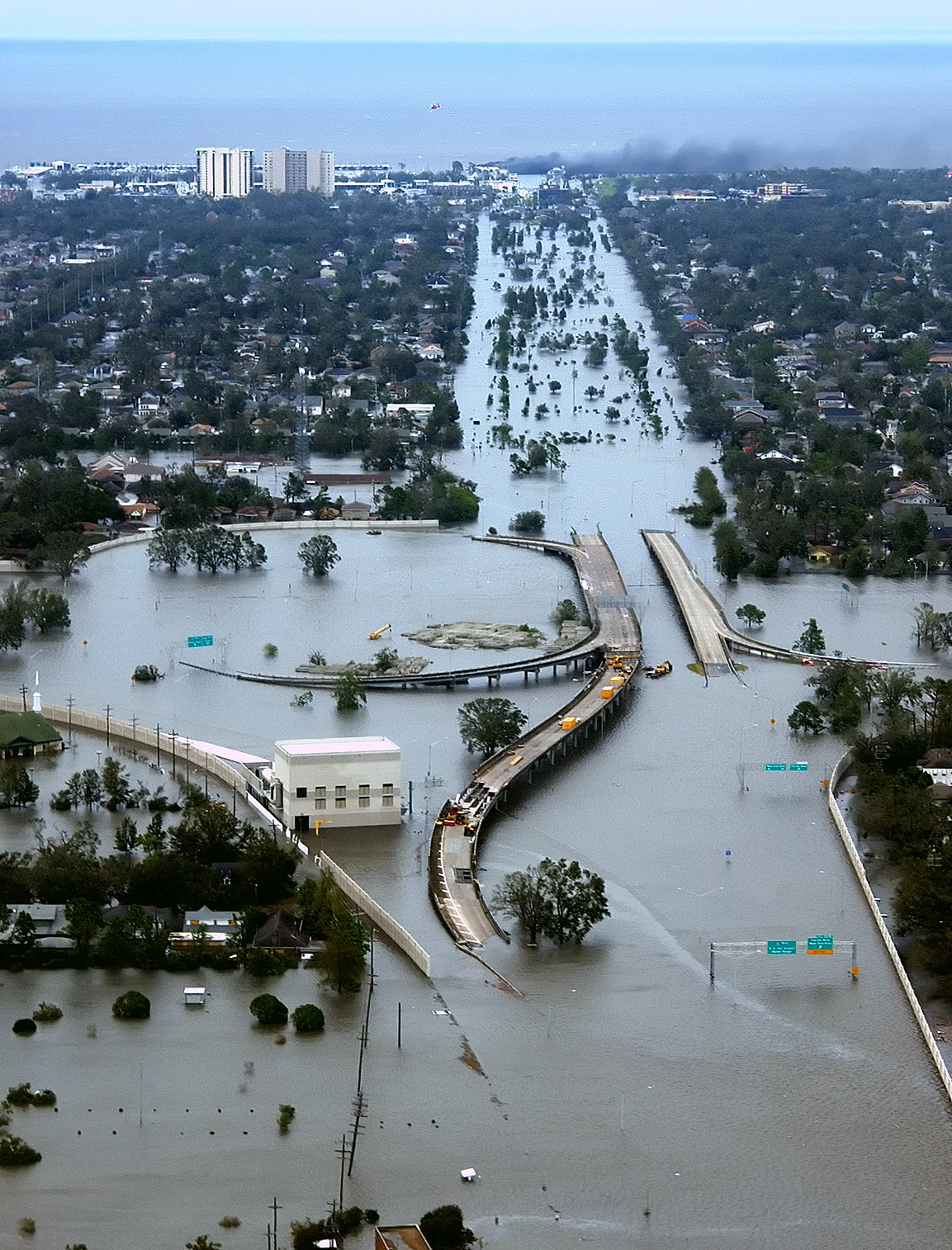

Hurricane Katrina was the eleventh named tropical storm, fourth hurricane, third major hurricane, and first Category 5 hurricane of the 2005 Atlantic hurricane season. It was the third most powerful storm of the season, behind Hurricane Wilma and Hurricane Rita, and the sixth-strongest storm ever recorded in the Atlantic basin. It first made landfall as a Category 1 hurricane just north of Miami, Florida on August 25, 2005, then again on August 29 along the Central Gulf Coast near Buras-Triumph, Louisiana as a Category 4 storm. Its storm surge soon breached the levee system that protected New Orleans from Lake Pontchartrain and the Mississippi River. Most of the city was subsequently flooded mainly by water from the lake. This and other major damage to the coastal regions of Louisiana, Mississippi, and Alabama made Katrina the most destructive and costliest natural disaster in the history of the United States.
The official death toll now stands at 1,322 and the damage from $70 to $130 billion, topping Hurricane Andrew as the most expensive natural disaster in U.S. history. Over a million people were displaced -- a humanitarian crisis on a scale unseen in the U.S. since the Great Depression.
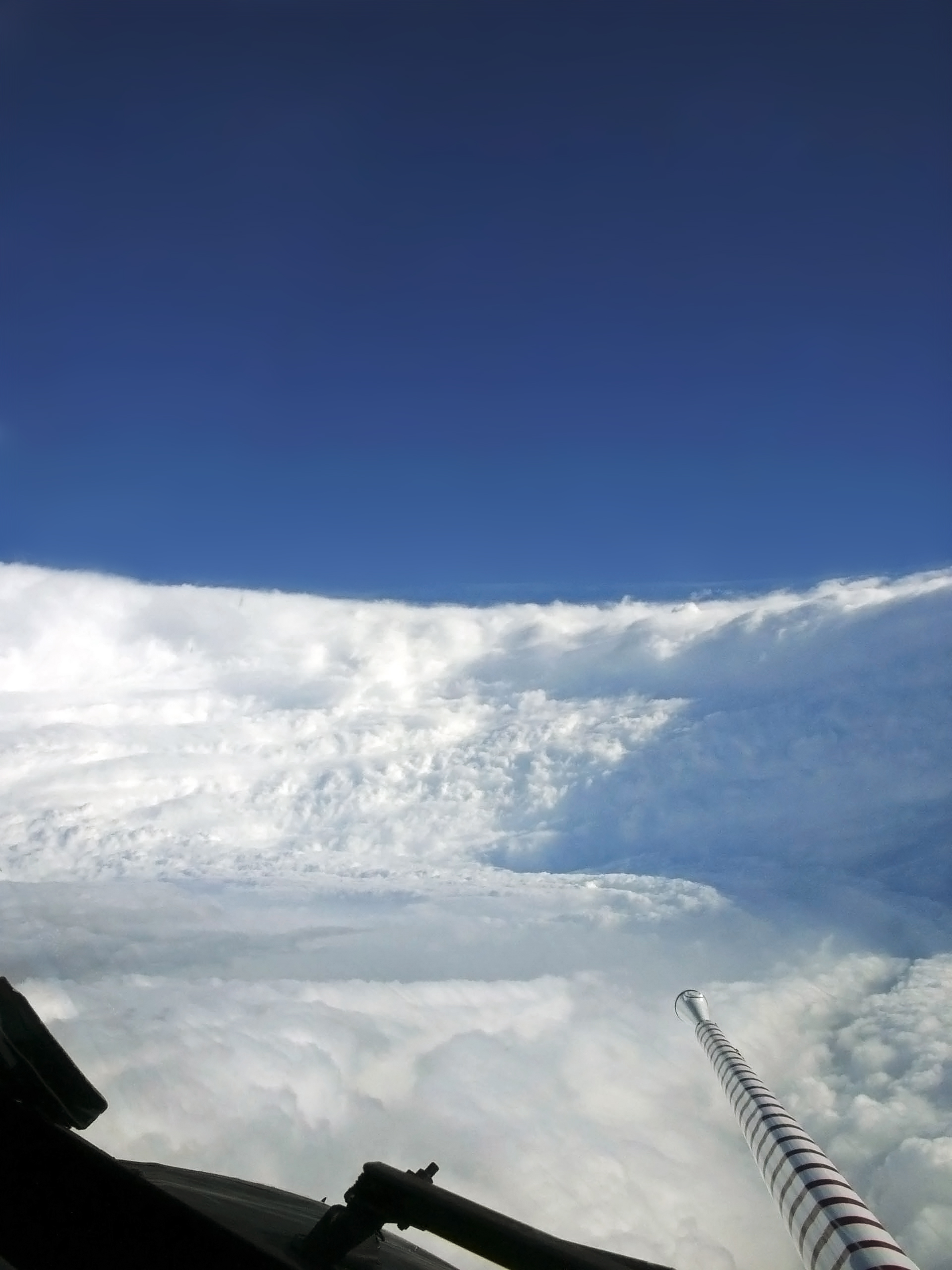
In Louisiana, the hurricane's eye made landfall at 6:10am CDT on Monday, August 29. After 11:00am CDT, several sections of the levee system in New Orleans collapsed. By early September, people were being forcibly evacuated, mostly by bus to neighboring states.
Federal disaster declarations blanketed 90,000 square miles (233,000 km") of the United States, an area almost as large as the United Kingdom. The hurricane left an estimated five million people without power, and it may take up to two months for all power to be restored. On September 3, Homeland Security Secretary Michael Chertoff described the aftermath of Hurricane Katrina as "probably...
More Meteorology
essays:
A Statistical Account of Hurricane Katrina and it's Effect on the Gulf Coast, Posed Question: Would this natural disaster have occured the same way if the politicans in command had been different?
... one of the strongest storms to impact the coast of the United States during the last 100 years. With sustained winds during landfall of 140 mph (a strong category 4 hurricane on the Saffir ...
Disasters, speaks of the study of hurricanes
... part of the United States and have been part of one of these storms. Also the data was much easier to research. Most people think of the Atlantic when they think of hurricanes. The first ...
The Ozone Layer: What Does It Do And What Happens When It's Gone?
... normal. The natural production of ozone will heal the ozone layer completely in about 50 years (U.S. EPA). Paul Fraser of the United States Environmental ... damage to eyes, including cataracts, and may possibly even weaken the immune system (Ozone Depletion Index). It has been found that some major ...
Hurricane Andrew - The Facts and The Experience
... part of Louisiana. At this point the winds were going at about 120 mph. One day later the hurricane became a depression and then it finally ended. Andrew destroyed whatever it hit. It was the most expensive natural disaster up ...
Hurricane Katrina.
... a hurricane just destroyed thousands of peoples lives. Many of the victims were homeless and starving. On September 2, 2005 he finally sent food and supplies to Louisiana (cnn ... all of that I do not know why but he did. We can take donations from the millions of people in the United States but ...
Dealing with floods mainly in Canada. Past floods, prevention, flood management etc
... s history) was only $40,000. This is how the community of Arnold was able to reduce flooding: *A greenway to supplement the floodplain of the Mississippi River. *Stream maintenance to clear vegetation and debris from storm water ...
Description of meteorology and different fields meterologists can work in
... up the door to many more opportunities. Depending on the specific field of interest, meteorologists can work in many different places. The United States government is the largest employer in the country ...
Tri-State Tornado
... crossed the Mississippi River about 75 miles southeast of St. Louis, then followed a northeast course as it plowed through southern Illinois and southwestern Indiana before finally dissipating. The tornado exacted its greatest toll on southern Illinois. Speeds of the tornado ...