The Ideas of John Locke.
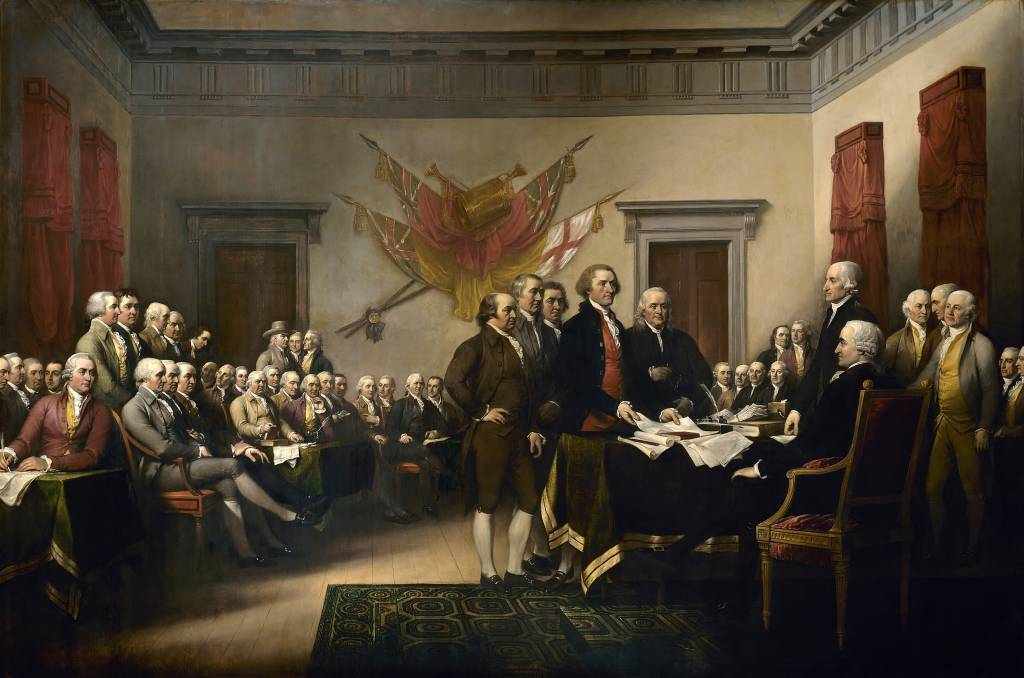
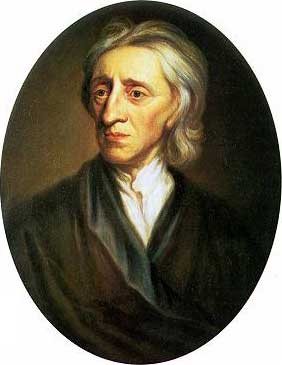
John Locke was born in England in 1632. He is widely regarded as the father of liberal philosophy. However Locke is best known for his political ideas published in his book Two Treatises on Civil Government. The ideas expressed in this book were the rationalization behind many revolutions all over the world, including the American Revolution against Great Britain. Locke's ideas also had a profound influence on America's founding fathers and are clearly evident in both the Declaration of Independence as well as the United States Constitution.
Contrary to the views of previous philosophers such as Hobbes and Rousseau, who believed that people turned their right to be sovereign over themselves to their government, Locke believed that people were entitled to retain certain inalienable rights. Therefore, a government must respect person's individual rights thus limiting its power over the people. Locke believed that citizens had a social contract between the ruler and his subjects. If the ruler did not protect the natural rights of the people, then they had the right to revolt. When writing the Declaration of Independence, Thomas Jefferson used the idea of a social contract to explain why the colonists had the right to revolt. Locke also believed if a ruler fails to uphold the natural rights given to them, the citizens have the right to revolt against the ruler. The colonists' rights were being violated by taxes imposed by British parliament where there were no representatives from any of the colonies. Jefferson used Locke's philosophical views to show the cause of the Revolution was just.
Locke believed that a government should perform two functions. The first being to protect the moral rights of the people and the second to provide for public goods, which are services that require the efforts of many people to produce and...
More Modern Philosophy
essays:
It compares Hobbes, Locke and Rousseau in regards to social contract, the state of nature and each of their ideal governments.
... a state of nature and that in accepting government he still retained natural rights. Locke's view influenced the makers of the American Constitution: Jefferson held that the preservation of natural rights was an essential part of the social contract. Rousseau ...
The Recall Election in California
... right of the people to sign the petition against Gray Davis. His ideas have been widely spread and he has proved to be very persuasive with the American colonists because of the use of his ideas in the Declaration of Independence ...
A biography of John Locke.
... Bill of Rights (1689), the French Declaration of the Rights of Man (1789), and the U.S. Bill of Rights (1791)."(pg 610) John Locke had two major contributions, the Two Treatises of Government and ...
This is a essay on he enlightment thinkers. Focusing on Locke and Rousseau. This was my term paper for my history Of Civilizations class.
... our founding four fathers, played a major role in the American Revolution. One of the things he is most famous for is writing the "Declaration of Independence". In the "Preamble", Jefferson justifies America's break from British power. He states that ...
The Division of Property
... the American Neil Armstrong be the sole owner of the EarthÂ’s Moon? The United States National ...
Social contract theorists: Hobbes vs. Rousseau This paper compares and contrasts Thomas Hobbes and Jean-Jacques Rousseau and then I discuss who I think has the stronger position and why.
... certain rights to the state to maximize one's gain, he disagrees with a social contract that is favored by Hobbes. Rousseau believes that men in state of nature ...
Jean-Jacques Rousseau Philosophy Paper
... Jacques Rousseau directly influenced the Decloration of Independence in the United States. While writing about the state of nature between 1757 and 1761, he said that all men are created equal, which can be directly related to the Declaration of Independence ...
John Locke
... the Declaration of Independence, it states individuals have certain basic rights that cannot be taken away by any government. "...they are endowed by their Creator with certain unalienable right, that ...