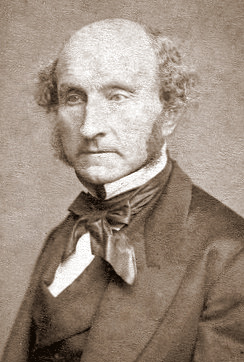
Individual freedom.
Individual Freedom
How important is the freedom of the individual? In the present societies, people are concerned with individual liberty and all sorts of freedom, freedom of speech, freedom of religion, freedom of free association and so on. John Stuart Mill, an 19th century European philosopher wrote extensively about individual liberty. Mill argued that the society should have minimal interference on the liberty of the individual and should only do so in order to promote true individual development. Mill is concerned with progressive liberalism; the aim is to promote individual happiness. The government has to play a minimal role in providing basic conditions like social welfare and social health but should not interfere with individual initiative. A social structure should be put in place to promote individual welfare thus leading to individual happiness and growth.
Mill wrote that in history, liberty was more about the protection of the individual against the tyranny of political rulers "who derived their authority from inheritance or conquest" (1034). It has always been necessary to have leaders oversee the day-to-day affairs of various societies and prevent anarchy. The leaders guarded the weaker members of society from being exploited by the stronger. The leaders commissioned by the to keep law and order. " But as the king of the vultures would be no less bent upon preying on the flock than any of the minor harpies" it was necessary to limit the power the ruler had over the people (1034).

Mill emphasized that times changed and people reasoned that there was no need to have rulers whose interest was opposed to the interest of the people. There was a need to have elected individuals lead the people but their leadership could be revocable at the people's pleasure. In this way, people felt confident that the powers...
More Modern Philosophy
essays:
John Stuart Mill - "On Liberty": "The Liberty of Action."
... some of the rules we consider essential. John Stuart Mill is a strong believer in individual rights of privacy and freedom. According ...
The Moral Philosophy of John Stuart Mill
... heart of John Stuart Mill's Utilitarianism is a concern which can be traced back to the Biblical parable of the house built on sand - an improper foundation. With this in mind, Mill audaciously sets out to develop a ...
Happiness, refers to John Stuart Mill's ideas
... many varied materials and issues that induce pleasures in each individual, and intrinsically, this emotion remains the ultimate goal, John Stuart Mill, a nineteenth century philosopher, correctly advocated the pursuit of happiness, and maintained the concept that above all other values ...
Why were later 19th century social thinkers attracted to the idea of 'evolution'?
... principle of thought'. The general subject of evolution proved so popular to late 19th century social thinkers because it developed in a welcoming environment of reform ...
Mill and Locke's conception of Freedom
... promotion of individual interests. John Locke and John Stuart Mill are two philosophers who have left an indelible mark on the concept of freedom in political societies. John Locke favours greater freedom for ...
Marcuse's critique of Jean Paul Sartre's Being and Nothingness is discussed, and a response is offered from the perspective of a critical rereading of Sartre's text.
... oppressive social structure is sustained by "bad faith" on the individual level. He reinterprets the phenomenon of other ... absurdity of Sartre's ontological justification of our "being For-others" should be self-evident. The equation of "freedom of interpretation ...
Motivations for Happiness: With Regards To The Planets of The Apes and John Mill
... famous philosopher, John Stuart Mill, once theorized the motivations for happiness. He explains that there were two classes; one was the external motivation from the hope of pleasing ...
Utilitarianism: founding fathers, strengths and weaknesses of act-utilitarianism and rule-utilitarianism, other forms of utilitarianism, and recent philosophers
... recent philosophers of this school of thought. This idea of the greatest good for the greatest number was developed by Jeremy Bentham. Although the ides of utilitarianism is often traced back to and credited to Jeremy Bentham, John Stuart Mill carried ...