The Cold War era was an extremely frightening reality check to the world that the threat of nuclear destruction was dangerously present. Two significant figures during the later years of the Cold war were Mikhail Gorbachev and former president Ronald Reagan. Gorbachev's goal was to ultimately rid the world of nuclear threat, and most of all, the weapons themselves. Reagan, on the other hand, was attempting to abolish the nuclear threat coming from Russia while keeping the weapons possessed by the U.S. operational. Out of these two men, Gorbachev had the most impact in the ending of the Cold War, handling everything as peaceful as possible.
After two previous General Secretaries, Gorbachev became the leader of the Soviet Union. Following previous instances where Gorbachev proved he could handle the job, such as leading a crisis-management team and handling meetings with British Prime Minister Margaret Thatcher, he was determined to improve the Soviet economy.
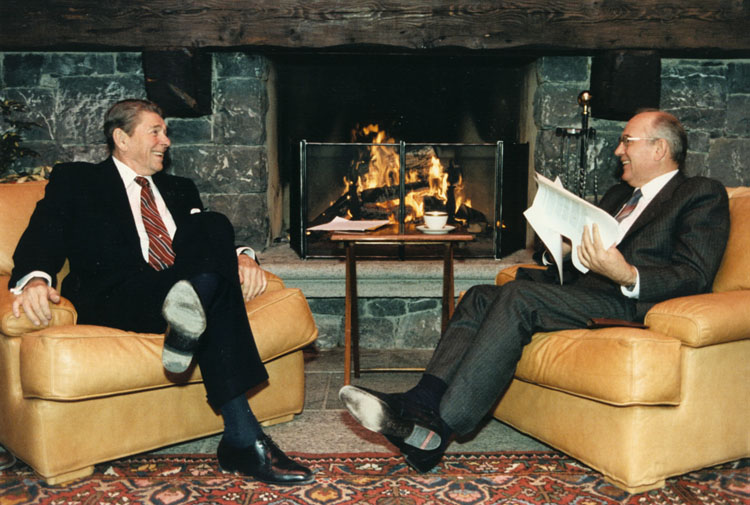 English: US President Ronald Reagan and Soviet Gen...
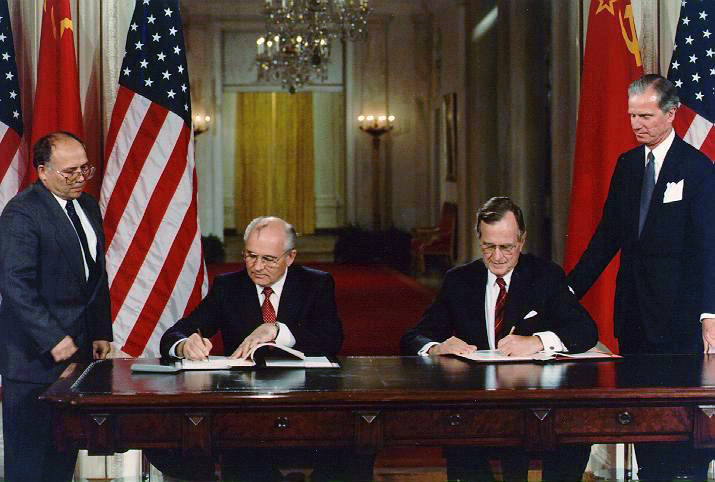 English: President George H. W. Bush and President...
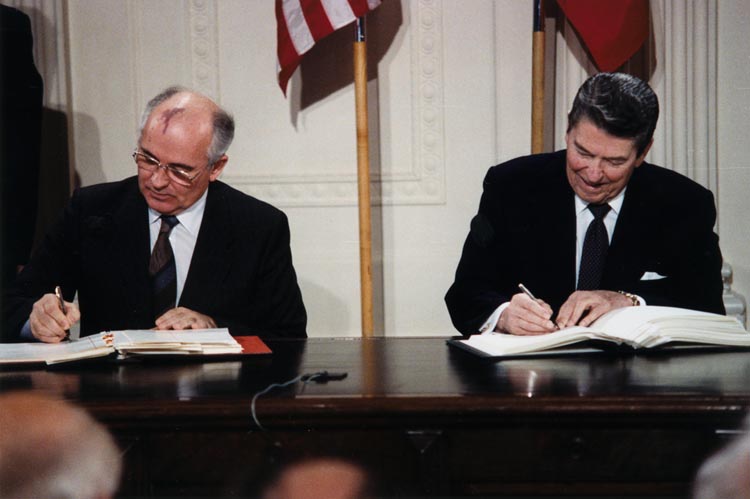 English: President Reagan and General Secretary Go...
He appointed the best-suited government candidate to each of their positions once he took over and made a few moves to begin his reconstruction of the economy, like raising the drinking age from eighteen to twenty-one due to its negative affects in the economy and culture as a whole. This was also when he began making proposals to eliminate all nuclear weapons. He met in 1985 with President Reagan at Geneva to discuss what should be done about the arms race. In order to emphasize his desire for peace, he removed several thousand troops from Afghanistan in 1986.
In June of 1987, the Supreme Soviet enacted into law Gorbachev's reform program. This allowed for experimentation with free markets. That summer Gorbachev went into seclusion and wrote Perestroika, which dealt with the ways that other countries handled their economies. With this attempt at new ideas, Gorbachev made...