Inter-Organismal Transport System in Humans
The circulatory system, or the internal transport system, is extremely complex. It involves organs that are absolutely vital to the survival of the human such as the heart as well as organs that are microscopic such as capillaries, but are also essential to the entire process. The system in humans combines the purposes of the heart, blood, and blood vessels to transport oxygen and nutrients. It has extremely numerous functions, including oxygen distribution and attainment, waste absorption, regulation of body temperature, and defense mechanisms against foreign substances. The human requires every aspect of the circulatory system very regularly and constantly in order for it to survive.
One of the transport systems most critical functions is to transport oxygen and nutrients to organs and tissues throughout the body. There are two absolutely vital processes that occur in the circulatory system. One, Systemic circulation, every major organ with blood, and the other, Pulmonary circulation, carries blood between the heart and lungs.
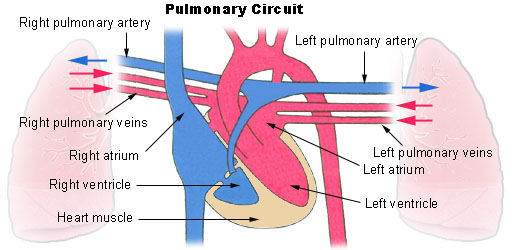 Diagram of pulmonary circulation. Oxygen-rich bloo...
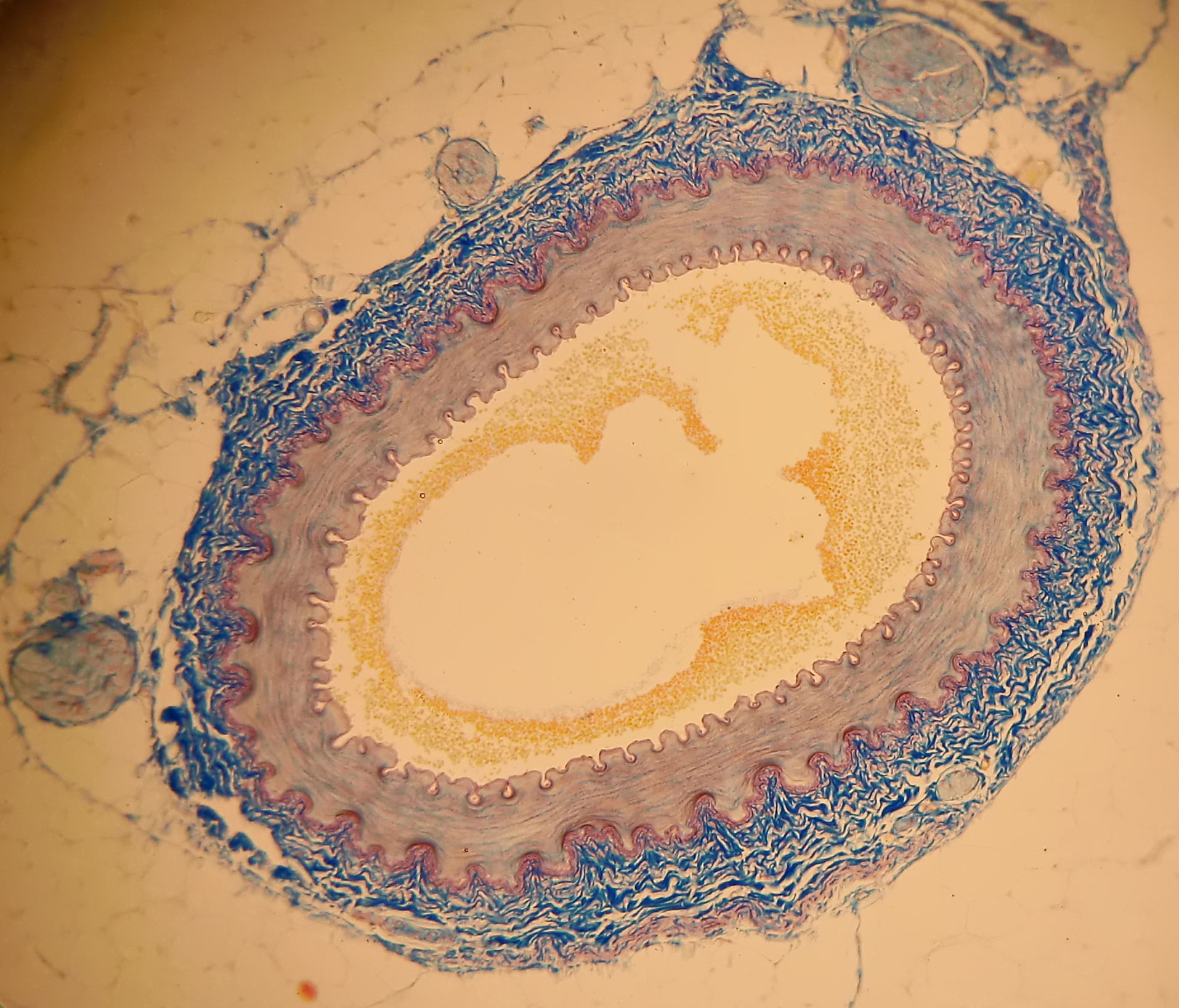 English: Cross of a human artery
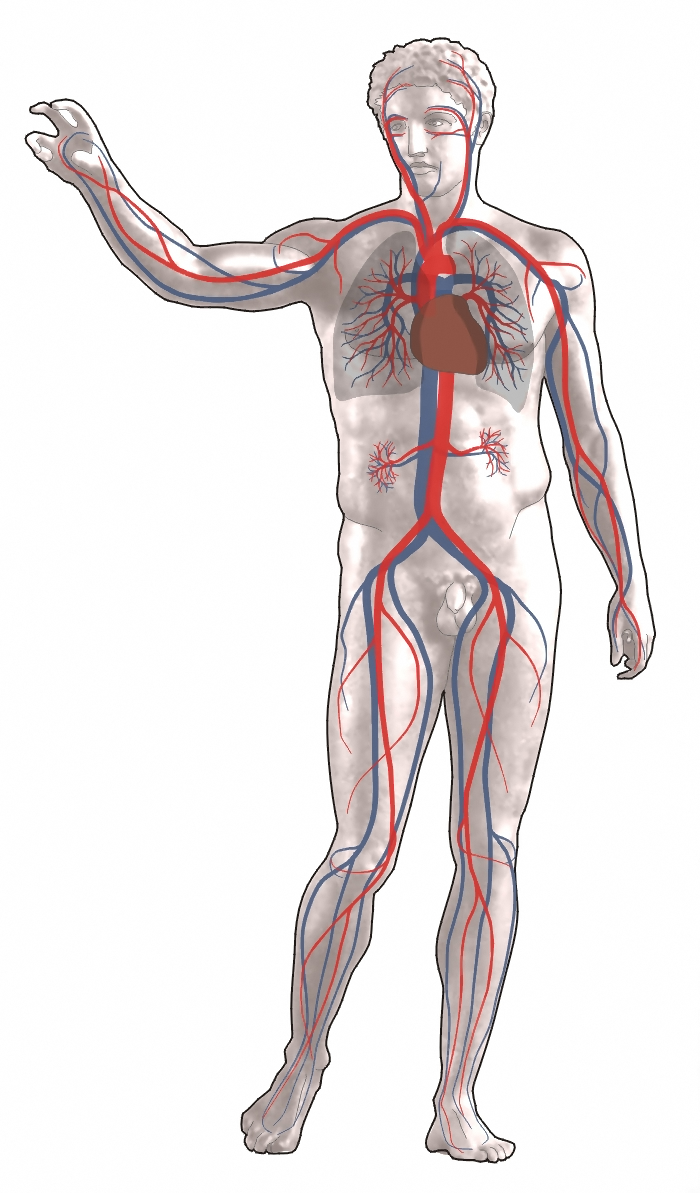 Blood circulation: Red = oxygenated Blue = deoxyge...
Systemic circulation begins at the heart where oxygen-rich blood is released into ventricles through the aorta. It is then pumped through progressively smaller areas, the arteries and arterioles when it finally reaches the microscopic capillaries. Since capillaries are so small, their walls are easily permeable. Oxygen and nutrients from the blood diffuse through the extremely thin walls across to the interstitial fluid. The nutrients and oxygen then diffuse from the interstitial fluid through the cell membranes. And additionally at the same time, carbon dioxide and other waste products diffuse through the interstitial fluid, and cross the capillary walls where the enter the blood. The blood carries the waste away. After the blood delivers oxygen and nutrients and absorbs the waste, the oxygen-free blood in the capillaries starts on its way back to the heart. Blood...