In recent years radio and the Internet have been permanently intertwined. Recently, radio has begun to be broadcast over the Internet, and Internet content has begun to be broadcast over the airwaves. For this exchange of positions to occur, there needs to be a change in transmission of sound from the standard analogue of radio, to the digital nature of the Internet.
Analogue audio will become extinct in the near future. Although sound in nature and our own hearing is analogue, the capturing, storage and transmission of analogue sound is difficult without losing quality. For example, if one keeps making copies of an audio tape, the quality gets worse every time; in the same way, each time analogue sound is modified or retransmitted, it loses quality. Digital audio uses a binary code representation of the continuous stream of data. Once in this form, it can be modified in any way without any degradation of the original sound.
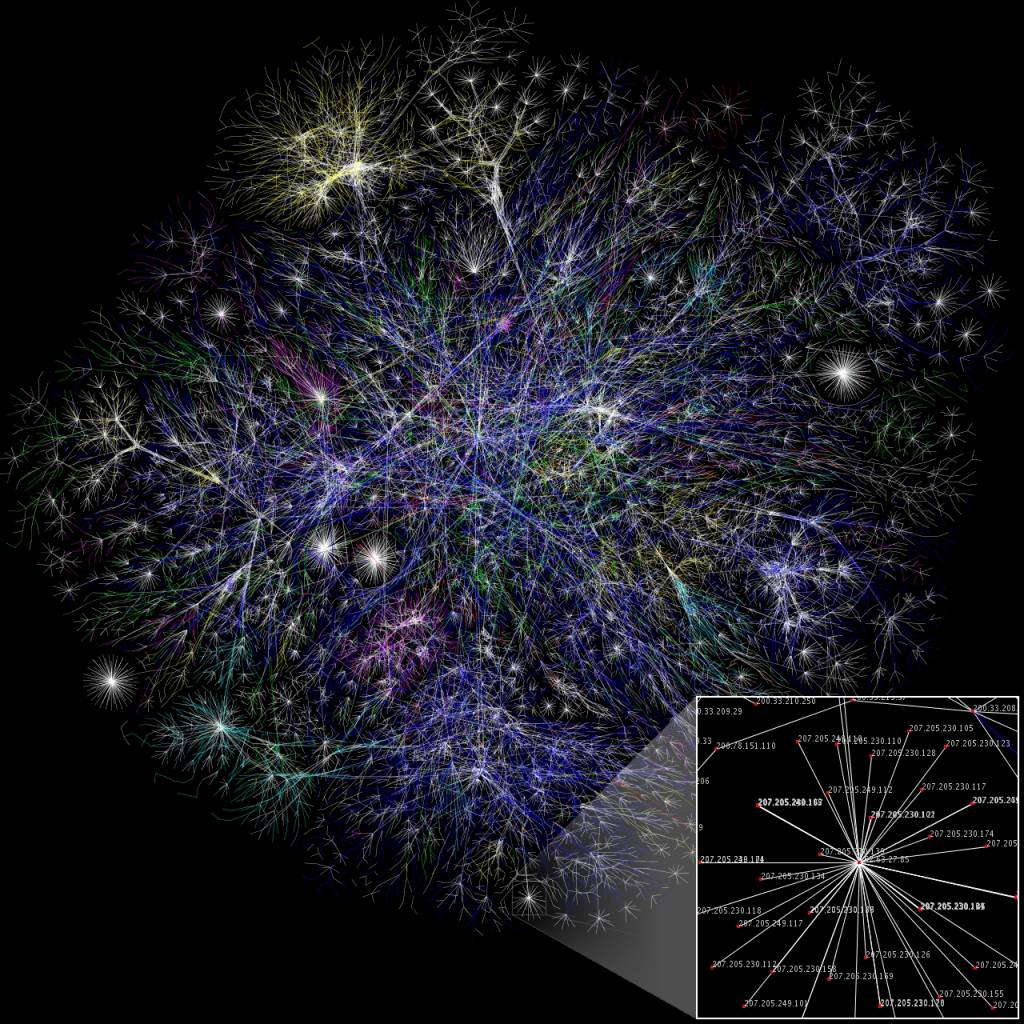 This image was selected as a picture of the week o...
 Internet!
 English: Transmission antenna
One can make copies of copies with digital audio, and the hundredth will be exactly like the first.
The great advantage of digital audio with respect to radio is the possibility of listener interactivity. Currently, any interactivity is limited by the inability of the individual talk to the other end of a radio transmission chain. When one switches stations on our radio, there is no interaction, we are simply selecting from a series of predefined options, just like changing channels on television. If you switch from one station to another, none of the stations know about it, and can do nothing to make their programming more interesting than their competition.
The Internet has no such limitations, from the ground up; it was designed as a mass communications medium that was two ways. With the Internet, there is no broadcaster or...