There are several proposed mechanisms by which nitrous oxide may cause post-operative nausea and vomiting (PONV). Some of these mechanisms include bowel distention and decreased gastrointestinal function, changes in middle ear pressure, and increase in sympathetic nervous system stimulation, and activation of opioid receptors in the brain.
Bowel distention may contribute to nausea and vomiting in two ways. Nitrous oxide is known to diffuse into body cavities and this increase in bowel volume may cause nausea and vomiting. Bowel distention can also occur when air or gas is forced into the gastrointestinal system by mask ventilation (Muir). Scheinin et al state that the use of nitrous oxide delays bowel function and this decrease in motility may increase the incidence of PONV.
It is documented that nitrous oxide can cause large fluctuations in middle ear pressure (Perreault). Changes in middle ear pressure may irritate the vestibular system and cause nausea and vomiting by putting traction on the round window membrane (Wilson).
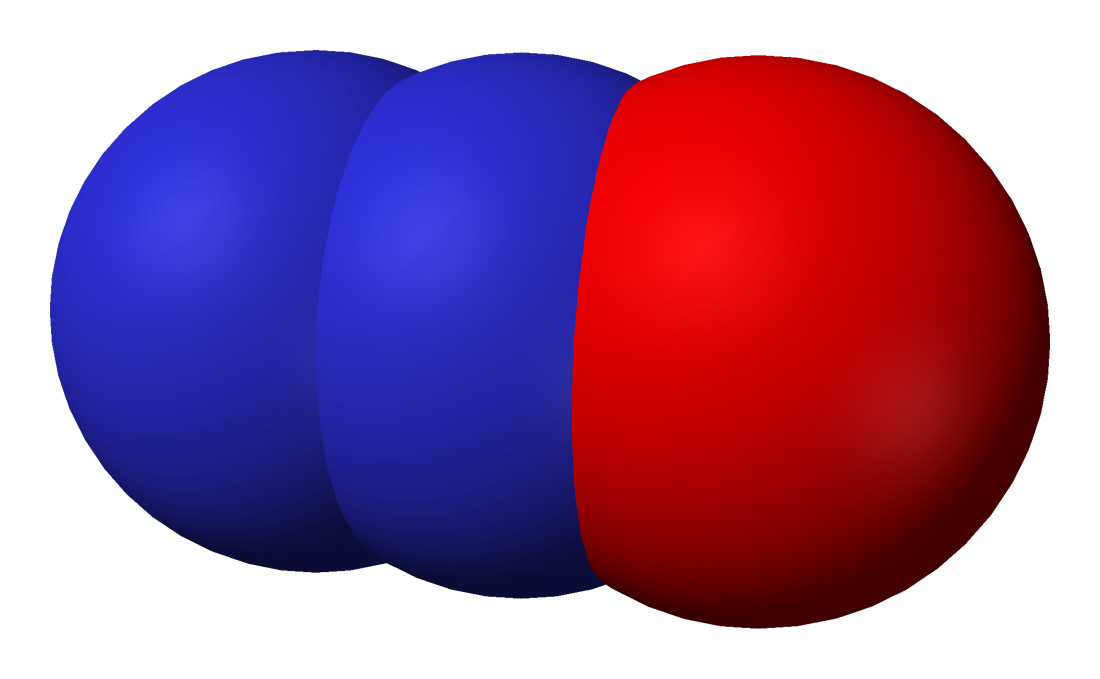 Space-filling model of nitrous oxide, N 2 O
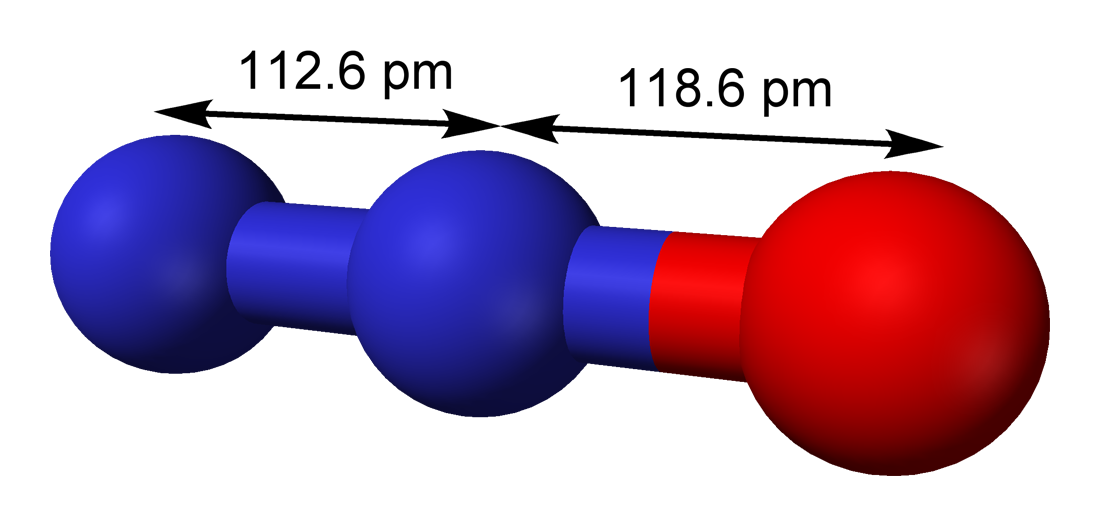 Ball-and-stick model of nitrous oxide, N 2 O, with...
 English: Medical grade Nitrous Oxide tanks used in...
The administration of nitrous oxide causes an increase in middle ear pressure. When nitrous oxide administration is discontinued, the nitrous oxide rapidly diffuses out of the ear causing a collapse of the eustacian tubes which prevents the equilibration to atmospheric pressure (Perreault).
The administration of nitrous oxide can also cause an increase in the sympathetic nervous system stimulation leading to the release of catecholamines. This release of catecholamines is correlated with an increase in PONV (Muir, Eger, Gillman, Murakawa).
Finally, since nitrous oxide is known to provide analgesia (Eger) it is also proposed that it may act as an opioid receptor agonist and produce nausea and vomiting in the same way that morphine does.