Dual Language program, also referred to as Enriched Education program, is a bilingual program where the minority and majority children work together to meet the language and academic needs in two languages. The aim of this program is not only to add the second language to the one the children already know, but to foster children's academic growth in both languages. Although the aim of dual language program is clear and set, issues still arise. I will be discussing two different issues; the students' equality and the financial support.
First, in dual language program, its' aim is additive, meaning "children can add one or more foreign languages to their accumulating skills and profit immensely from the experience-cognitively, socially, educationally, and even economically" (Lambert, 1984: 19). However, opposite feature, subtractive, which is a situation where "children are forced to put aside or subtract out their ethnic languages for a more necessary, useful, and prestigious national language" (Lambert, 1984: 19), can be seen.
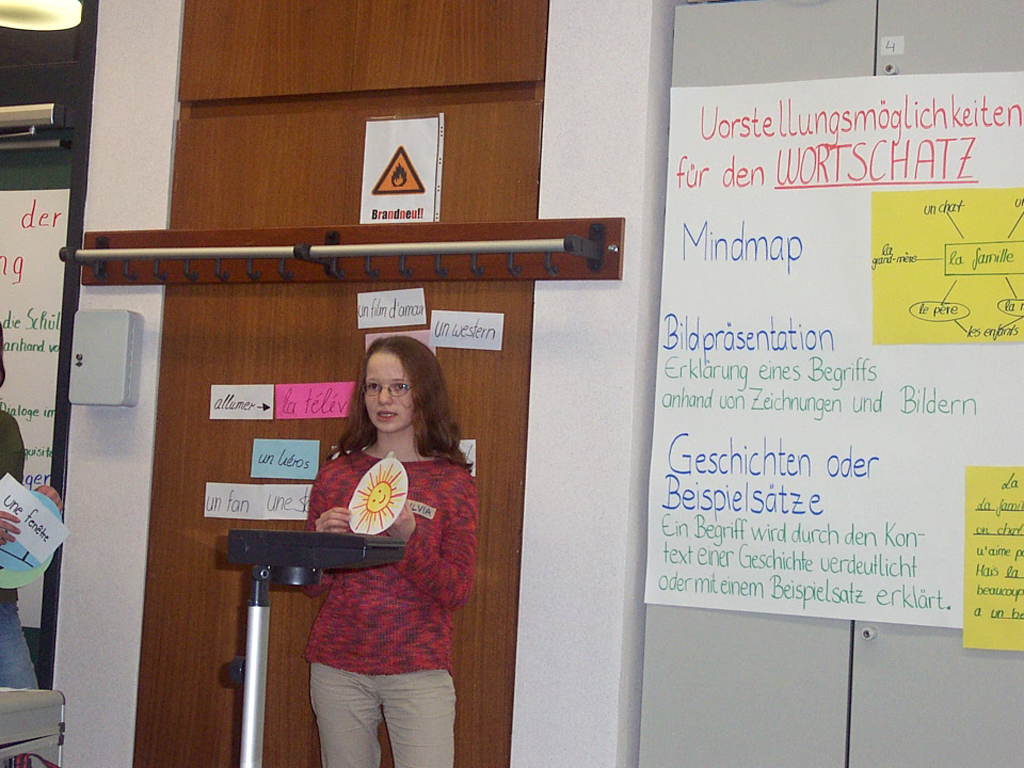 Classroom scene, student as teacher
 Dual-language notice, Gibraltar Coach Terminal, Gi...
 English: One trespasser only ... who presumably sp...
In additive bilingualism, the identity of the student is not lost; whereas in subtractive situation, teacher and facility lack in consideration. This has become a problem in minority schools. If teachers, for example, have negative preconceptions or low expectations towards the minority students, this will provide negative influence to the students, which leads to the loss of self-confidence and discourage towards academic achievement. In order to advance dual language program, the equality in value for language and culture of both minority and majority students are necessary.
Next, dual language program requires administrative and financial support. Compared to native language schools, it could easily be assumed that the special language programs cost more, since special material, administrative support, and qualified teachers are needed. Here, although the academic material may be costly, the teachers are probably the most costly subject.