John Maynard Keynes
"John Maynard Keynes is doubtlessly the most important figure in the entire history of economics", that is a powerful statement that I can't really make a good decision, however based on the books and information that he has provided I would suggest that he is a major player in the evolution of twentieth- century economics. He developed theories that were regarded as probably the most influential social science treatise of the 20th Century, in that it quickly and permanently changed the way the world looked at the economy and the role of government in society. Never before had a book have so much influence.
The ideas of Keynes are still relevant in today's society as the market must be under control and balance the different levels of our economy. He initially started working in the tradition of the Neoclassical Marshallians at Cambridge, the impotence of Neoclassical theory in explaining the Great Depression of the 1930s led Keynes to construct an entirely new theory - a more "general" theory of the economy - which broke him off from the Neoclassicals.
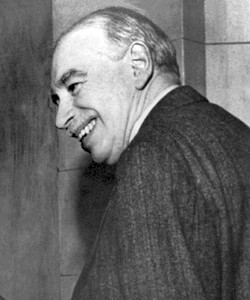 John Maynard Keynes Русский: Джон МеÐ...
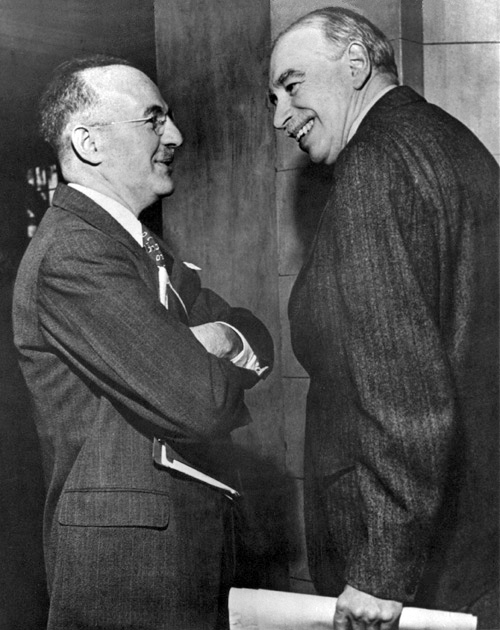 Assistant Secretary, U.S. Treasury, Harry Dexter W...
 English: 46 Gordon Square, London (United Kingdom)...
Keynes stated,
" I shall argue that the postulates of the classical theory are applicable to a special case only and not to the general case, the situation which it assumes being a limiting point of the possible positions of equilibrium. Moreover, the characteristics of the special case assumed by the classical theory happen not to be those of the economic society which we actually live, with the result that its teaching is misleading and disastrous if we attempt to apply it to the facts of experience."1
Keynes sought to develop an explanation (AD-AS model) that could explain the determination of aggregate output and as a consequence, employment. He offered that the determining factor was aggregate demand.