Karl Marx, Emile Durkheim and Max Weber, acting at times as sociologists, economic theorists, and above all, social critics, each take pains in their writings to identify key flaws inherent in the capitalist system that had begun to dominate modern industrial society in the 1800s. In the increasingly urban, industrializing world of the nineteenth century, the socio-political landscape in Europe was characterized by a deepening, widening class struggle. Whether revolutionary or reformist, these thinkers felt obliged to address this struggle and to consider the role that capitalism had played in bringing it about. Ultimately, Marx, Durkheim and Weber each provide differing accounts regarding the ways in which the urban society of the 1800s was deficient, and what would be needed to fix it. Essentially, it is an underlying assumption about human nature and the nature of human society that affects each thinker's analysis of capitalist society.
Marx, more than any other theorist, concentrated his ire and directed his fury at the capitalist system.
 Karl Marx (1818-1883)
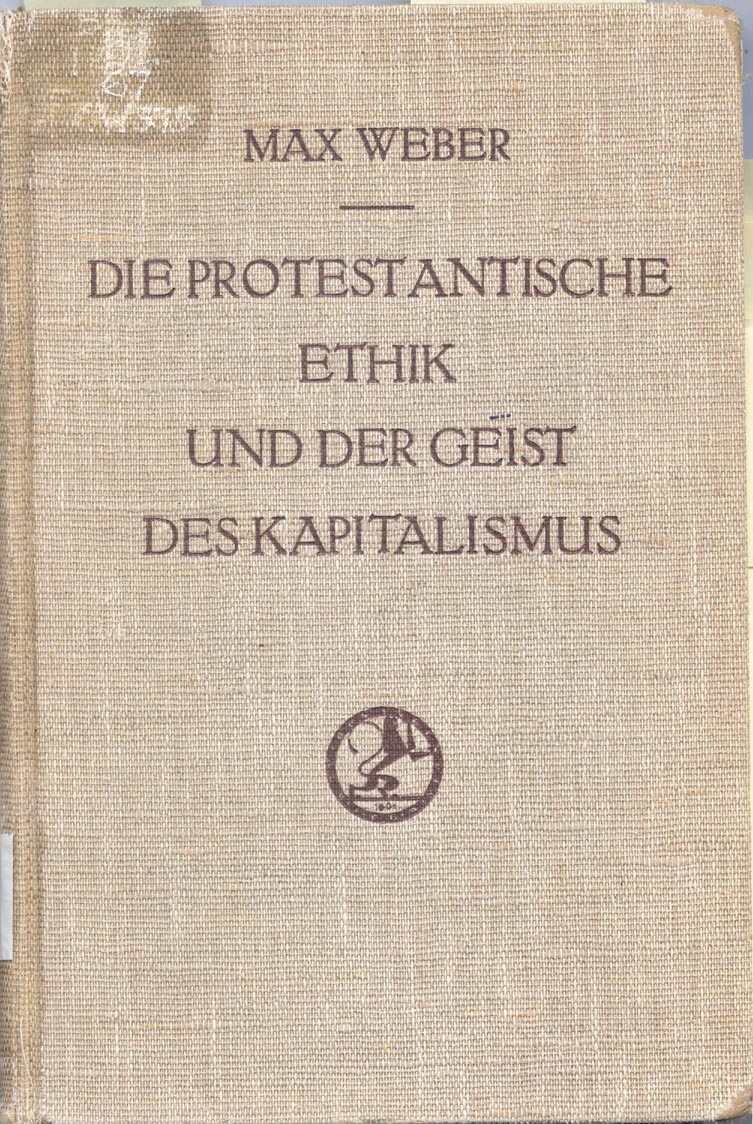 Cover of the "Sonderausgabe" 1934 edition of Die p...
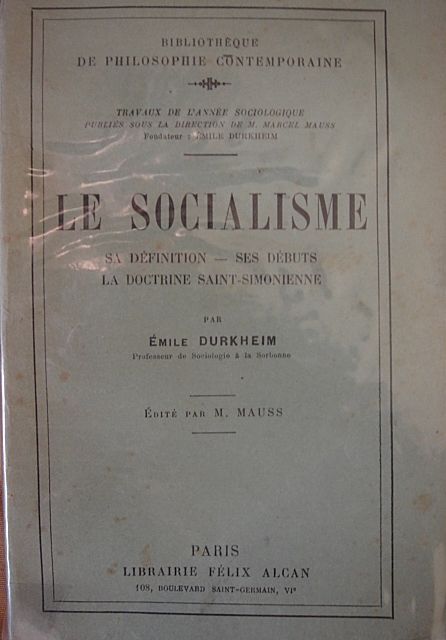 Couverture du livre de Emile Durkheim, Le Socialis...
The structures of capitalism, for Marx, were responsible for creating all of the problems of modern life. As such, the only way to solve these problems was to topple the structures. Unwilling to accept that certain "evils"--exploitation, alienation and endless expansion--were necessary components of the modern industrial system, Marx endeavored to overhaul the consciousness of the day by bringing into sharp relief the pernicious conflict between capitalists and workers. Hence, Marx, though not a paradigm sociologist by any means, was nothing if not a revolutionary as it pertained to social theory (Ritzer 20-23).
Marx was horrified by the capitalist system because it exploited the common worker by alienating him from the benefits of his only property, his labor. On Marx's analysis, the capitalist, in pursuit of the almighty profit, will pay his workers only what they require...