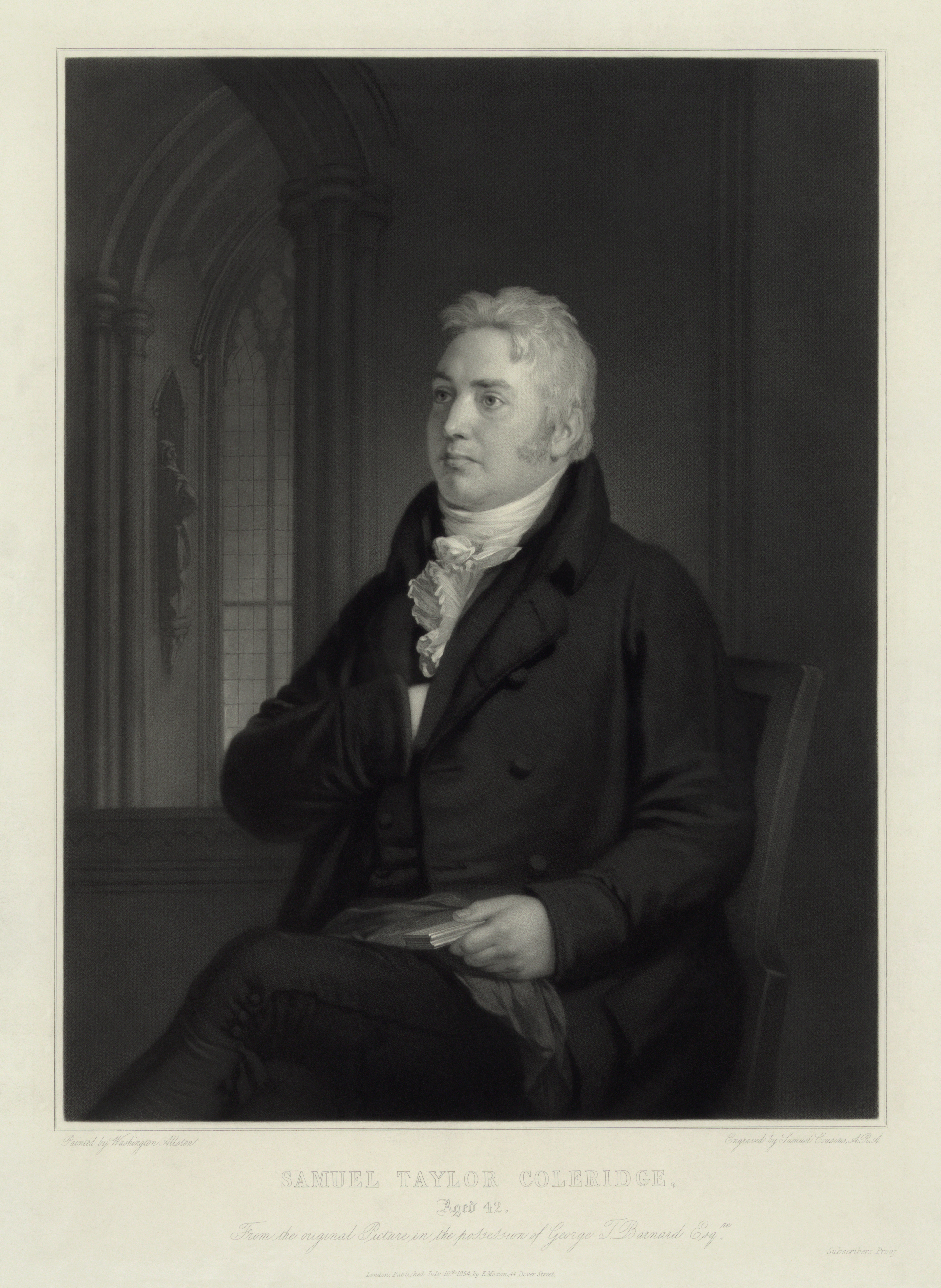
"Kubla Khan" by Samuel Taylor Coleridge
"Kubla Khan" is a romantic poem written by Samuel Taylor Coleridge. It has been known that Coleridge was addicted to opium and that he actually saw a vision while he was "high" on opium. And out of this opium-induced dream the poem "Kubla Khan" was created. Coleridge uses a lot of poetic devices in this poem such as sounds, imagery, and symbols. All the elements of this poem contribute to its implicit argument, that Coleridge's addiction to opium brought him pleasure and suffering.
One of the devices that Coleridge uses to show the pleasures and hazards of his addiction is sound. One of the first sounds in the poem is very violet an horrifying. It is of a "woman wailing for her demon lover!" The woman wailing is more like a person would feel when he or she needs drugs. There is so much pain and suffering in this word "wailing." Then Coleridge goes on to "ancestral voices prophesying war!" This sound is also very violent. These are the loud sounds that are foreshadowing violence and pain and suffering in the future. However, next sounds that Coleridge describes are more of pleasure than of suffering. It a sound of a dulcimer. It is very calm and relaxing. One enjoys the "symphony and song." This is like the very pleasure Coleridge gets after the suffering of longing for opium.
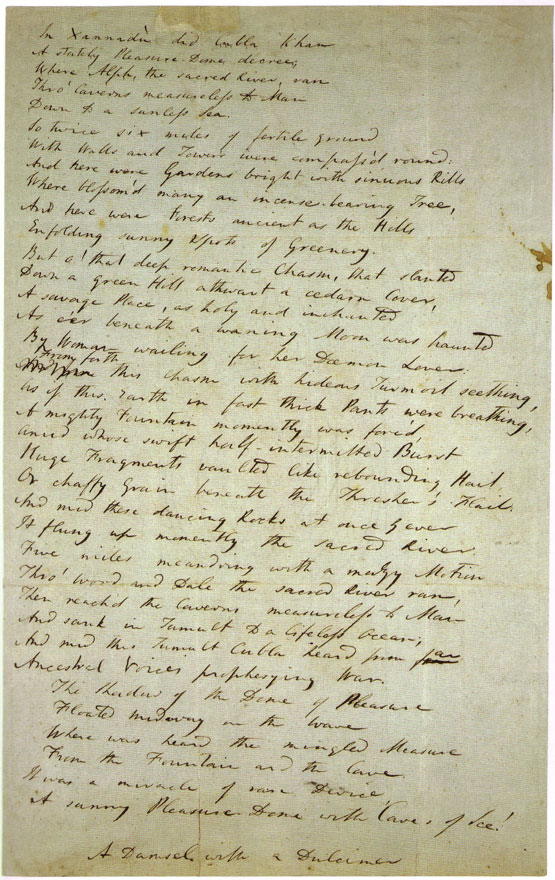
Another poetic device that Coleridge uses is symbolism. The "sunny pleasure dome" and the "caves of ice" are the most used symbols in the poem. They are the symbols for the pleasure and pain of drug addiction. The "sunny pleasure dome" symbolizes the heavenly place full beauty. These beautiful gardens and rivers and fountains surround it. Suddenly, there are "caves of ice." They symbolize hell and suffering of his drug addiction. The...
More Poetry
essays:
Harps and Abbeys: A Romantic Analysis of Nature; Explores William Wordsworth's poem "Tintern Abbey" and Samuel Taylor Coleridge's poem "The Eolian Harp."
... nature and the poets' responsibility to their readers and environment. Two poems which illustrate these characteristics are William Wordsworth's "Tintern Abbey" and Samuel Taylor Coleridge's "The Eolian Harp." While both poems utilize typical Romantic techniques ...
Poetic form and language in 'The Pains of Sleep' by Samuel Taylor Coleridge.
... nightmares and sleep disruption described in the poem are symptomatic of withdrawal from opiate addiction, an affliction from which Coleridge was known to suffer, and it is prudent to assume ...
Samuel Taylor Coleridge. Speaks of his work ,and includes eamples from some of his poems
... Samuel Taylor Coleridge, to those who know and understand his poems well, exists in three modes, as Philosopher, Poet, Friend. If the truth were told, we should all be obliged to admit ...
Write a sustained close analysis of 'Kubla Khan' paying attention to both the form and content of the poem.
... poets/poems/kublakhan-ex.htm). Holmes, R (1996). Samuel Taylor Coleridge: Selected Poetry. London: Penguin. (p 337). Howard, J.A (1999). Kubla Khan. (www.sesk.org/aesthetics/literature/english/romantics/coleridge/kublakhan ...
Kubla Khan Plot Mood Language Imagery
... round'. Imagery is also important for Coleridge to convey his imagination to the reader. There are images of paradise throughout the poem that are combined with references to darker, more evil places. On example of this is the 'demon lover' that ...
Transcendentalism and Poetry
... reference to the poem "The Eolian Harp" by Samuel Taylor Coleridge, one can detect the superfluous language used will instantly conjure images of deeper meanings underlying the subjects. And to convey ...
"Rime of the Ancient Mariner," and personal reflections.
... turmoil and was able to restore Catholicism and establish a working government and banking system. By 1804 he created the First Empire and ended the French Revolution. Samuel Taylor Coleridge was ...
A Biographical Analysis of "The Rime of the Ancient Mariner".
... by Samuel Taylor Coleridge, is a somewhat lengthy poem concerning the paranormal activities of a sea mariner and his crew. The work was constructed to be ...