In the late nineteenth century, a select few Americans separated themselves from the rest by fulfilling the American Dream.
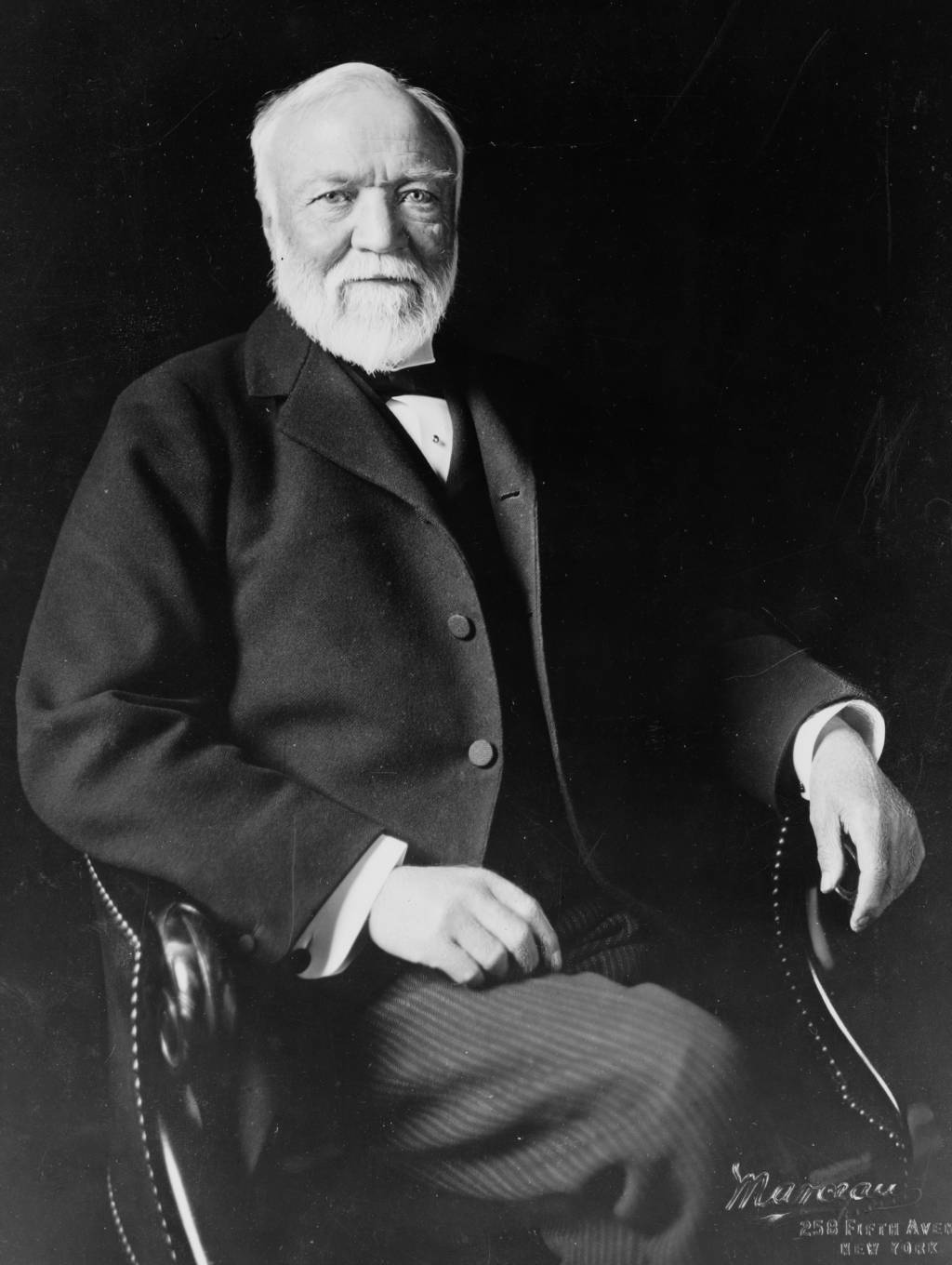
In the late nineteenth century, a select few Americans separated themselves from the rest by fulfilling the American Dream. William H. Vanderbilt attained wealth as a successful railroad executive when he joined the family railroad businesses and eventually succeeded his father as president. Andrew Carnegie became one the richest people through his domination of the steel industry. John D. Rockefeller intuitive business practices in the oil industry resulted in his addition to the history books as one of the wealthiest tycoons ever. To a large extent, it was fair to characterize the industrial leaders of the late nineteenth century as either "robber barons" or "industrial statesmen" because of their harsh business practices, philanthropic efforts, and opinion of the general public that were commonly seen in men of such economic stature.
Harsh business practices often resulted in successful industrialist being labeled "robber barons" because their success entailed others failure. Competition as Andrew Carnegie saw it was a double edged sword; he said, "The price which society pays for the law of competition, like the price it pays for cheap comforts and luxuries, is also great; but the advantages of this law are also greater still." (D. #C) John B. Weaver took note to the corruption entangled in trusts which several industrialist took advantage of. (D. #D) Mr. Weaver stated, "The main weapons of trusts are threats, intimidation, bribery, fraud, wreck, and pillage." (D. #D) Russell H. Conwell, an American Baptist Minister, the founder and first president of Temple University, and a lecturer pleaded the "industrial statesmen" label for most of the industrial rich. (D. #E) He went as far as to say, "ninety-eight out of one hundred of the rich men in America are honest. That is why they are rich." (D. #E) The illustration in document F clearly breaks down...
Reviews of: "In the late nineteenth century, a select few Americans separated themselves from the rest by fulfilling the American Dream."
:
More North American History
essays:
Some of the problems that many farmers in the late nineteenth century(1880-1900)saw as threats to their way of life(a)explain reasons for discontent(b)evaluate the validity of the farmers' complaints
... railroads, on the other end, took advantage of farmers by charging them excessive prices for shipping and storage--both equally frustrating the troubled farmer, who in a way resembled a larger economic ...
John D Rockefeller as a captain of Industry
... 1887 John D Rockefeller was a captain of industry and he deserves the title. He was an ingenious man who set up the way for big American cooperations of the future. Standard Oil was ...
Were the industrial leaders of the early 20th century robber barrons?
... dreams of the American public. The workers in the companies were shown appalling treatment, receiving little pay and no benefits. Through their fraudulently deceitful dealings, these men stole from the government, the people and the culture of America. The industrial leaders ...
Feminism in Canadian Teaching during the Nineteenth Century
... and farmers. This gender labeling carried over into the labour industry, where women were treated unequally due to their sex. Teaching ...
Where Nineteenth-Century Entrepreneurs Robber Barons?
... corporation. John D. Rockefeller and Andrew Carnegie, dominant businessman of the late nineteenth century, monopolized the oil and steel industries. These shrewd businessmen known a "Robber Barons" made billions of dollars and controlled their industry. Small businesses could ...
How Technological changes affected industry workers in the 19th Century (timed)
... industry. Small individual voices of descent that could not be heard before now spoke out in a booming tone of thousands of members. Labor unions such as the Knights of Labor and the American ...
David Nasaw's Going Out Book Review
... created a rise in interest of public amusements. As the industrial revolution was taking place in the late nineteenth century, more ...
To what extent were the following 19th Century industrial leaders either "Robber Barons" or "Industrial Statesmen"? Andrew Carnegie, John Rockefeller, Cornelius Vanderbilt
... peace. John D. Rockefeller (1839-1937) was the guiding force behind the creation and development of the Standard Oil Company, which grew to dominate the oil industry and ...
I really like this one.
This essay was not only informative, but easy to read. The writer kept my attention throughout the essay.
1 out of 1 people found this comment useful.