Karst is a type of topography in which the landscape is shaped by the dissolving of water on carbonate bedrock. Features of karst lakes are that there may be no visible stream flowing in, or none flowing out of then lake, sometimes there is neither. Karst lakes grow and shrink, some disappear completely, or some only exist in one season out of the year. Karst springs release a greater amount of water than normal springs and have poor water quality.
The cave i am writing about is called Lechuguilla and it is located in New Mexico. The deepest part of Lechuguilla is 1,632 feet and so far, a length of ten miles has been explored.
Since the cave is made out of limestone, it was assumed that it was formed by water flowing from the surface. However, the huge gypsum deposits lining the walls convinced geologists that the cave was formed by strong chemical reactions between ancient groundwater and hydrogen sulfide rising from an underground source.
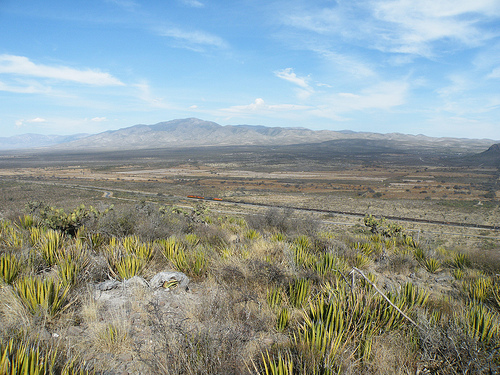 Agave Lechuguilla
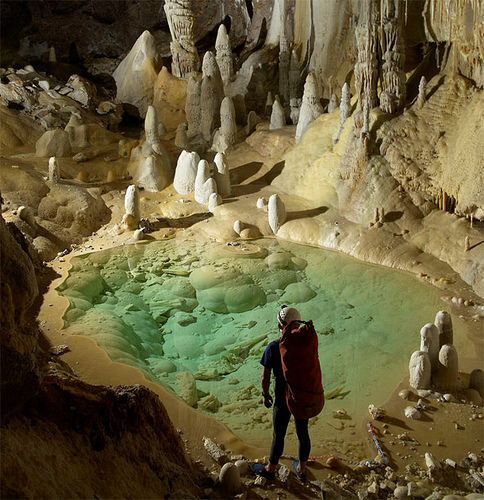 Lechuguilla
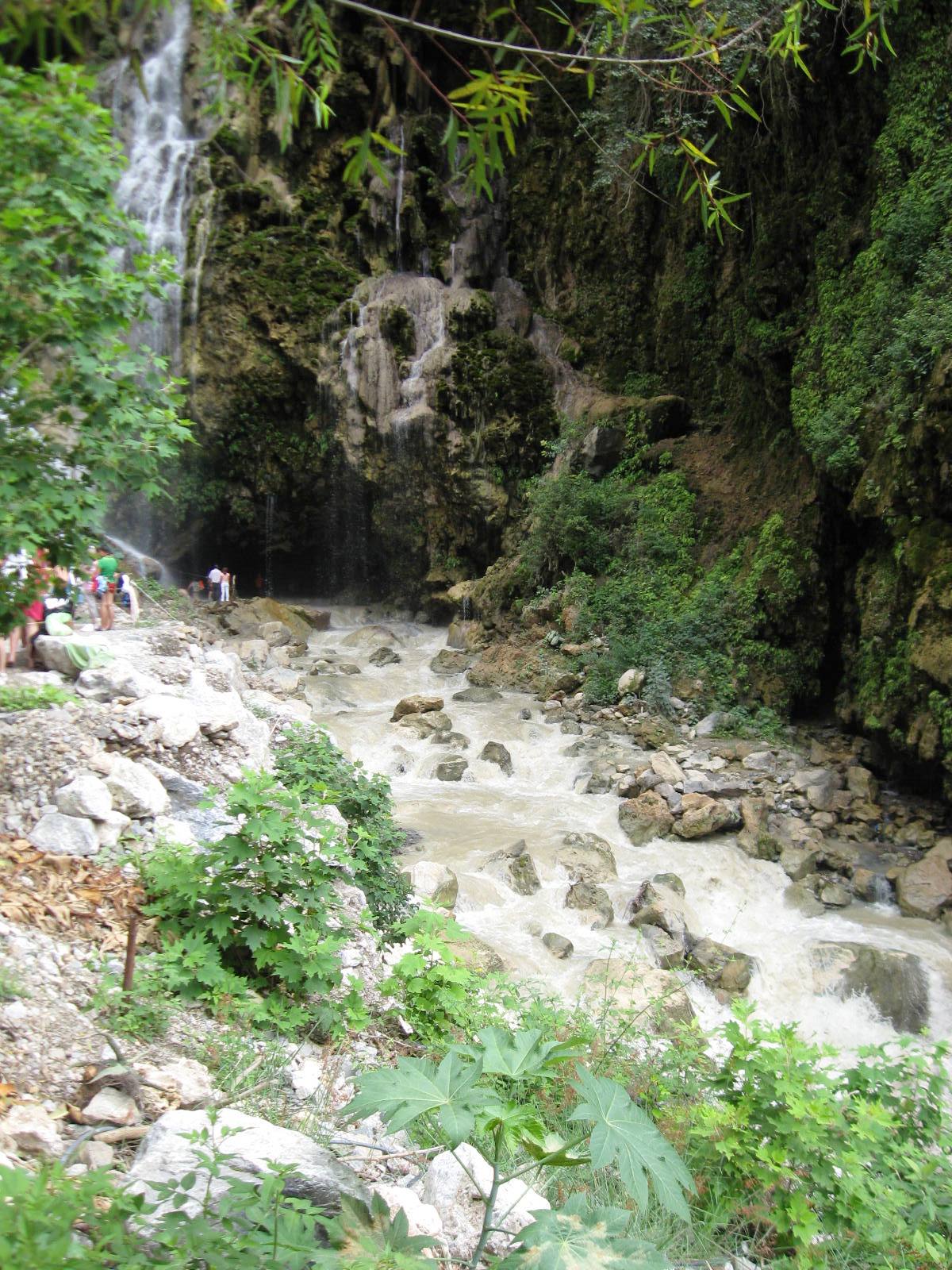 English: Karst cave with underground river exiting...
Besides microbial life, the only biology in Lechuguilla is the insect cave cricket, Hadenoecus subterraneus. Cave crickets are suited for the entrance part of Lechuguilla, where they reside, because of the cool, damp conditions that crickets need.
Lechuguilla has a unique environment because its microbial life has adopted to survive off of inorganic matter including sulfur, iron, and manganese deposits.
If we don't protect our cave environments, we will destroy unique and valuable organisms. Also, by destroying cave environments, we are destroying the home of animals that need that type of environment to survive.