The Legalization of Marijuana
Marijuana: Logical Benefits of Legalization
For most of human history, marijuana has been completely legal. It's not a recently discovered plant, nor is it a long-standing law. Marijuana has been illegal for less than 1% of the time that it's been in use. Its known uses go back further than 7,000 B.C. and it was legal as recently as when Ronald Reagan was a boy. So why all of the sudden is marijuana considered being so dangerous to society that the government has outlawed it at a federal level? The pros for legalization are vast in numbers, while the cons for it are weak and have false claims. The prohibition of marijuana is hurting Americans far more than marijuana ever could.
Marijuana is just one of the many slang terms used; cannabis is the correct name of the plant. Cannabis has a wide variety of purposes and hundreds of different varieties. One type of cannabis is named hemp. This type of cannabis is not for medical or recreational use, but instead is industrial and agricultural. Marijuana is usually the name given to the type of cannabis that people use for medical or recreational use. THC or its scientific name delta 9 tetrahydrocannabinol is the main psychoactive ingredient in marijuana. Industrial hemp has a THC content between 0.05% and 1%, while marijuana has a THC content of 3% to 20%. Industrial hemp is bred to maximize fiber, seed and/or oil, while marijuana varieties seek to maximize THC (NAIHC).
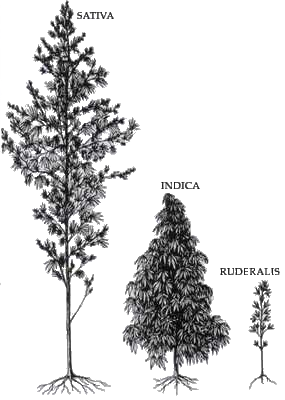
Hemp can be made into over 25,000 different products. These include paper, rope, and clothes. Hemp has many advantages over the current industrial giants such as cotton and wood. This type of cannabis grows extremely well in a wide range of climates and soil types. It has the amazing ability to be naturally...
More Issues
essays:
The pro and con of legalizing marrijuana
... use of marijuana as medicine. These well documented facts will prove beyond a doubt that MARIJUANA IS NOT MEDICINE. FACT: The psychoactive ingredient in marijuana (THC) is ...
Government of Canada - Climate Change Submission
... impacts of climate change and take advantage of new opportunities that may arise. 3.5 Increased oil sands production is expected to lead to an increase in GHG emissions, as shown in Figure 2. Actions being taken by the industry to ...
Finely v. the National Endowment for the Arts: One Battle in America's War over the Arts
... imposing content-based restrictions on protected speech." (Cunnane, 1) was part of a greater amendment to the National Foundation for the Arts and Humanities Act ...
This is an argument analysis concerning the issue of euthanasia.
... necessary and can lead to tremendous abuse, exploitation and erosion of care for the most vulnerable people among us. Prohibitions against euthanasia should not be lifted. (Assisted suicide is when ...
Alternative Incarceration:ARE BOOT CAMPS AN EFFECTIVE FORM OF INCARCERATION? Introduction & Overview of the Problem.
... in terms of prisoner behavior, attitudes, and recidivism. The investigation is also concerned with identifying what variables (e.g, offender status and history, demographics ...
Whose life is it? Reasons for legalizing euthanasia
... sort of social impact, and euthanasia has a long term and possibly heavy effect on our society. In history, the most notorious case of legalized ... is too close to murder and has so far been prohibited by the Criminal Code of Canada. "14. No person is entitled to consent to have ...
Kentucky Adult Corrections: Inmates with Mental Health Issues and the Facilities
... of all inmates are eligible to perform work in prison or community * *Approximately 5,000 inmates are enrolled in educational programs; ABE, GED, vocational and college. *Approximately 120 inmates work 6, 194 acre farm program *Approximately 750 inmates work in industry ...
Capital Punishment
... long term differences in the number of murders ... demonstrated but did not completely stop until after 1936. Throughout history, governments have been extremely inventive in devising ways to execute ...