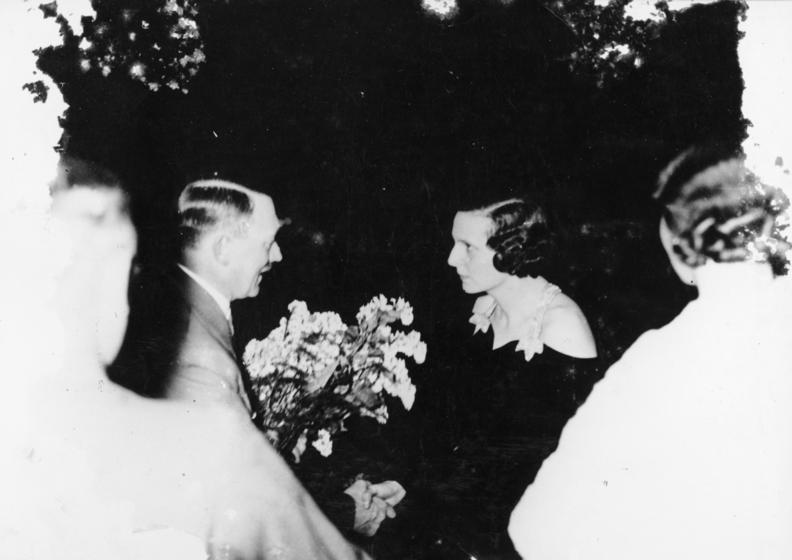
'Leni Riefenstahl's only significance was as a propagandist for the Third Reich'. In light of this statement, assess the significance of Leni Riefenstahl's work in Nazi propaganda until 1945
Leni Riefenstahl is most widely known for her films Triumph of the Will and Olympia. However, these works, despite being so far ahead of their time, there was and still remains much controversy surrounding them and there is a historical argument as to whether these films were propagandist in nature, or whether Riefenstahl was merely a careerist, aiming to advance her career in any way possible and as she says "What was I supposed to do, make a bad film?" Riefenstahl took advantage of 'manufactured consensus', i.e., as she controlled the cameras, she was able to control the footage her audience viewed, thus only allowing them to see what she wanted them to. Manufactured consensus also refers to the way many of her scenes appear to simply be the way things occurred, however they had been pre-arranged and choreographed by Riefenstahl. Through her editing and splicing of footage, Riefenstahl was able to amplify the effect of her movies and the impact they had on her audiences.
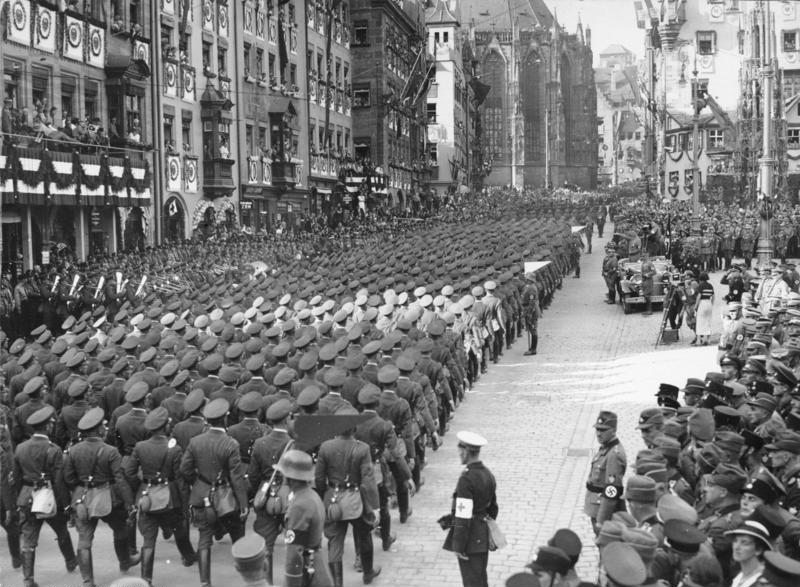
"Can an artist remain aloof of politics?" Historian SM Frapel argues that an artist most certainly can remain aloof of politics, as many had during the initial years of Nazi rule. However, these artists saw their works banned for failing to meet the requirements of the Reichskamera. What can be extrapolated from this, is that those artists who remained aloof from politics were never allowed to have their works screened or exhibited in Nazi Germany, and as a result, their careers were inhibited. However Leni was a careerist and would therefore do anything to have her work shown in public. She could have, as many intellectuals, scientist & other artists had done, left Nazi Germany and would have easily found work as a director in Hollywood, and with its high profile, she could have...
Reviews of: "'Leni Riefenstahl's only significance was as a propagandist for the Third Reich'. In light of this statement, assess the significance of Leni Riefenstahl's work in Nazi propaganda until 1945"
:
More German History
essays:
Albert Speer was clearly involved in Nazi terror
... that the Nazi party had racist overtones as right from the beginning Hitler spoke of the superior race and Speer still joined. In light of these matters it could be assessed that Albert Speer was involved in implementing and supporting the ...
Critically assess the role of terror and violence in the establishment of the Nazi dictatorship between 1933 and 1939
... most of the denouncements were made through selfish motives, their awareness of what would happen to the denounced, especially Jews, suggest some decree of support for the system and a growing social consensus ...
Assess the view that Leni Riefenstahl was documenting history rather than creating propaganda.
... closing. Triumph of the Will was shown throughout Germany to a public audience and is still highly regarded as a masterpiece. Leni Riefenstahl's ... century, Leni Riefenstahl remained relentless in denying the allegations made against her; whether she was a Nazi sympathiser and propagandist or ...
Germany disliked the "Treaty of Versailles" only because of the following reasons: a) Loss of land b) Cuts in their armed forces c) Reparations Do you agree with this statement?
... of the eleventh month, 1918, a cease-fire began. But still the problem of peace remained. Many people hoped that a peace settlement would prevent war ... the west." Peace was difficult to make because of the wide scale disruption to Europe during the war and the general ...
'Germany was economically united a decade before she came politically united.' How far do you agree with this statement?
... still put their interests before the Frankfurt's Parliament. But like the diet the Frankfurt Parliament would ultimately fail but for far more basic reasons, the parliament was split over how they wanted ...
Describe the Nature of a Totalitarian Regime, and Compare and Contrast Hitler's Nazi Regime with that of Stalin in Communist Russia
... to this level of power, as the King, Emmanuelle III still remained head of state, thereby keeping ultimate control; this was illustrated ... s Jewish population, achieved through concentration camps; executions and the wide spread gassing of whole communities. The speed of Stalin's ...
What role did the Nazi Party play in the revolutionising of German State and society between 1933 and 1939? With full Bibliography
... s bad experiences of an un-unified and split nation remained with them. The promotion of Gemeinschaft appealed to vast majorities ... as well as they had hoped. The class divide was still there. Germany's defeat in the First World War had ...
'The Weimar Republic was a failure.' Evaluate the accuracy of this statement with reference to events and individuals.
... and from 1924 to 1929 Germany was relatively stable. The Republic had combated the crisis hyperinflation had created, and while still battling with reparations, Germany was once again economically stable. However as Germany would soon find out with the onset of ...
Thanks
Reasonable essay, but lots of loose ends (greek - relevance?), useful for looking up critics of leni, biblio. would have been good.
3 out of 3 people found this comment useful.