Liberalization of World Trade:Latin America
New Latin America Model
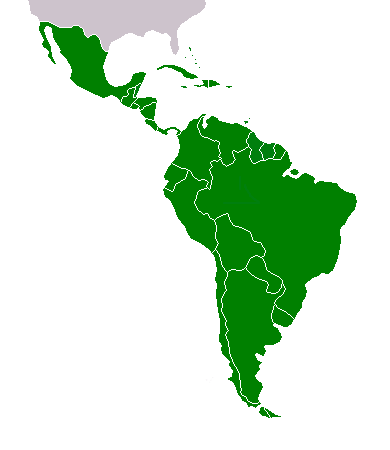
NAFTA, the free trade agreement between Canada, USA and Mexico celebrated ten years of its existence. The negotiations about the establishment of CAFTA (Central American Free Trade Agreement) are almost over and trade diplomacy is asking the question if SAFTA (South American Free Trade Agreement) is possible. Negotiations about the free trade zone of Americas were held in mid February this year. Liberalization has found a fertile ground in trade relations of the new continent, but initiatives from this part of the world are felt as far away as India. Also, initiatives for the establishment of free trade zone between 20 developing economies are revived.
For more than five years there are talks of connecting two existing systems of free trade - MERCOSUR (Southern Cone Common Market) and Community of Andean Nations (CAN), which includes Bolivia, Columbia, Ecuador, Peru and Venezuela. At the meetings of MERCOSUR group held in 1997 and 1998 such a possibility was mentioned and the Andean countries supported it with a lot of enthusiasm, but as it turned out only verbal. This initiative was brought up again in the year 2000 at the Summit of South America, and last year, improving and strengthening connections between South American countries became the highest political priority after Brazilian president Lula de Silva took office. Speaking often and very precisely about the need of strengthened unity of South American countries he made his first official trip abroad to a great neighbor - Argentina. It was the first time that president of the state went in search of support to his governments politics south, among neighbors, and not by tradition north - to Washington.
With plenty of enthusiasm he proposed that MERCOSUR expands to Chile and Bolivia, as associated members. By connecting MERCOSUR and Andean...
More Economics
essays:
The North Americam Free Trade Agreement (NAFTA)
... a developing country. By much of the world the NAFTA is often viewed upon as North America's answer to the European trading bloc. Many provisions of the NAFTA take their roots in the Canada-U.S. Free Trade Agreement ...
Central American Free Trade Agreement
... American Free Trade Agreement (CAFTA) is a trade agreement that is being negotiated between the United States and five Central American countries: Costa Rica, El Salvador, Guatemala, Honduras, and Nicaragua. "The United States is committed to opening markets around ...
International business: NAFTA, the North American Free Trade Agreement.
... already existing agreements of NAFTA, MERCOSUR, CARICOM (Caribbean Common Market), and the Andean Region (Bolivia, Colombia, Ecuador, Peru and Venezuela). It would be a great failure for the U.S. not to take the lead in negotiating this trade pact. Canada ...
Present the Advantages and Disadvantages of Globalisation, Examine how Global, Regional, and Bilateral Trade Agreements can Impact on the Global Economy?
... that Canada, Mexico and Chile gains from having access to America's vast markets. NAFTA also has plans to develop a Free Trade Area of the Americas (FTAA) for the entire American continent to ...
NAFTA
... nationalized, protected economy to one governed by market-oriented principles. Canada's participation in the Agreement can be seen as a defensive maneuver to ensure that NAFTA would not dilute the Canadian benefits of origin of goods so that free trade ...
International trade (protection)- Australia
... in developed economies *By opening world markets world trade has ...
NAFTA Regional Integration
... S. markets. Free trade also means that common food production and marketing systems that ensure food safety and improve food security can be developed across ...
Globalization and Inequality
... may thereby be reduced or even eliminated. Melitz (2003) models trade-related productivity gains achieved through sorting among firms that are heterogeneous ... in developing countries and the "underground economy" in richer nations. Keeping ...