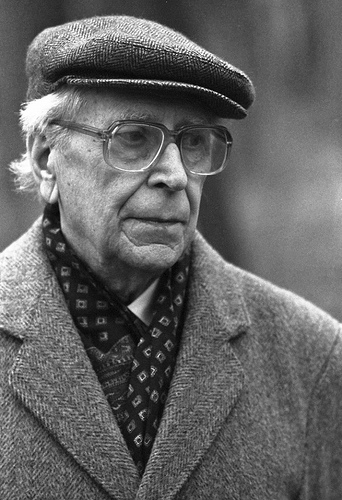
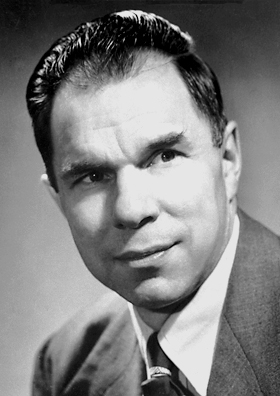
The Life of Dmitry Ivanovich Mendeleyev.
Dmitry Ivanovich Mendeleyev (sometimes spelled 'Mendeleev') is one of the greatest Russian chemists to have ever lived. One of his many accomplishments was devising a way to organize the known elements by showing that they exhibit a periodicity, or regular pattern, of properties when they are arranged according to their atomic weights. This meant that he could predict the properties of the next elements before they were discovered. Other investigations of his include the study of the chemical theory of solution, the thermal expansion of liquids, the nature of petroleum, and others.
His story begins in Tobolsk, a Western city in the vast region of Siberia. He was born on February 8, 1834, and was the youngest of fourteen or seventeen children (records do not agree). He was a handsome boy with curly hair and blue eyes. He was a mediocre student who learned science from his brother-in-law, who was exiled to Siberia for revolutionary actions in Moscow. His father, Ivan Pavlovich Mendeleyev, taught at the Tobolsk gymnasium, or high school. However, he became blind soon after the birth of Dmitry and lost his job. Desperate to support the family, his mother, Marya Dmitrievna Kornileva, who descended from an old merchant family with Mongolian blood, built a glassworks (glass-making factory) in the adjacent town of Axemziansk. Because she was a good businesswoman, this business prospered. Marya was determined to give her last two children good educations, and she directed Dmitry's education, being fond of him.
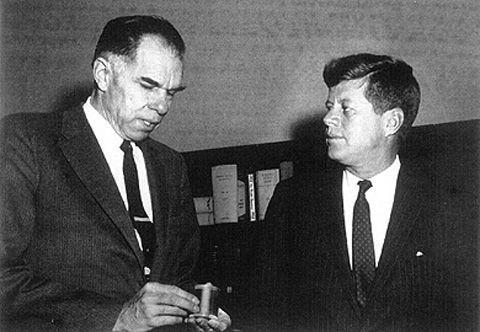
However, before Dmitry graduated high school at the age of sixteen, his mother's glassworks burned down, and his father died of tuberculosis (an infectious disease prevalent in underdeveloped countries) when he was fourteen. Still, his mother, now poor, was determined to send her youngest two kids to college. She rode on horseback to St. Petersburg,
More Chemistry
essays:
An Investigation into how the Concentration of Substrate will affect the Rate of an Enzyme Controlled Reaction
... each of the readings, the equipment was washed with water. This meant that, at times, there was more water than at other times ...
The Life of John Dalton.
... of chemical symbols and, having ascertained the relative weights of atoms (particles of matter), in 1803 arranged them into a table. In addition, he formulated the theory that a chemical combination of different elements occurs ...
The Effects Of Bacteria On The Rusting Process
... periodic table of elements, is a silvery-gray lustrous transition metal. It's widely known for having many uses, the most important being its strong structure and availability, making it an excellent building material. Iron was used prehistorically: · Genesis mentions that ...
Global Issues in the Environment and Extraction of Metals
... eye damage, and slow down photosynthesis. By having ozone, it protects living things from the harmful high-energy radiation from the Sun. What have humans done to damage it?Humans have damaged ozone by using Chlorofluorocarbons. Chlorofluorocarbons are greenhouse gases that ...
A very brief history of chemistry. Includes important scientists and their contributions to the advancement of chemistry.
... Russian chemist named Dmitri Mendeleev and a German chemist named Julius Lothar Meyer independently announced their discovery of the periodic law. The law is based on their observation that when elements are ...
The life and works of J.J. Thomson.
... kind; this matter being the substance from which all the chemical elements are ... students from all over the world. His experiments on the discharge of electricity through gases at low pressure led to the discovery of the electron in 1897, one of the most significant events in science ...
Investigation: How does channging the concentration of a substance affect the rate of reaction?
... I could place the rubber bung on top of it. This meant that the total gas produced in the 2 molar experiment was ...
"The Power of Gasification" Research paper, explaining how gassification works and history of coal energy.
... burned. This process is known as partial oxidation. It is through this process that the fuel, Syngas is produced through chemical bonding ... coal quota rose from 15million to 270million tons. At the beginning of the First World War, coal was needed at high ...