Limiting of Civil Liberties
Should the Government Limit Individual Liberties During Wartime?
Since the construction of the constitution, there have been discrepancies about it's boundaries. Specifically, when it comes to limitations of our civil liberties. Many cases have gone through the supreme courts pertaining to just this subject, from very large cases i.e. Korematsu vs. United States (arguing the constitutionality of FDR's executive order 9066) to the free speech cases, Tinker vs. Des Moines, or Schenck vs. United States. Here, in the middle of a war on terrorism, and on the brink of war with Iraq, war time security policies become eminent,, these cases and issues are brought into new light, but we must scrutinize policy to ensure that actions by our government uphold the principles of a democratic society, accountable government and international law, and that all decisions are taken in a manner consistent with the Constitution.
Security is given at the expense of liberty. That is, for one's peace of mind, one must sacrifice one's freedoms. For example, if you wish to protect yourself from people entering your house without consent, you must lock your door. The act of locking a door, hinders you from walking in and out freely, thus giving up a freedom for peace of mind.
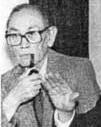
During World War II, Presidential Executive Order 9066 and congressional statutes gave the military authority to exclude citizens of Japanese ancestry from areas deemed critical to national defense and potentially vulnerable to espionage. Korematsu remained in San Leandro, California and violated Civilian Exclusion Order No. 34 of the U.S. Army. The question presented was: If the President and Congress go beyond their war powers by implementing exclusion and restricting the rights of Americans of Japanese descent? Korematsu's argument was that, it infringed against his 5th amendment right, also martial law had not been...
More Civil Rights
essays:
Legality of the Patriot Act - A Theft of Civil Liberties or The Protection Of American Life
... public policy by dealing with the branches of government who establish public policy in the first place. Many times, the legislative branch of government is ...
Preserving Civil Liberties In A Post-9/11 America.
... A). The Patriot Act did nothing but negate the accountability measures necessary to prevent violations of civil liberties. In the 1970's, Congress passed reforms limiting government surveillance ...
The Civil Rights Movement in the US
... by the expanding role of government in the economy and society. During the administration of President Franklin D. Roosevelt the federal government created federal programs, such as Social Security, to assure the welfare ...
Thurgood Marshall was probably the only black leader in American History who can argue that he defeated segregation where it really counts, in the courts.
... a Supreme Court Judge, Marshall went against rulings that were made by fellow Court Judges even though the decision was made years prior. In my opinion, Marshall's views were well placed at the time. The United States Constitution stated ...
This is an opinion essay on the first amendment in the United States' Constitution. This essay does include many factual things, but it mostly what I think about the amendment.
... to in the constitution. If America were truly free, people would be allowed, legally, to marry whomever they wish without the government interfering ...
Civil Liberties after 911
... this time around society will not expect us to speak up against injustice. New legislation will restrain the fundamental rights and freedoms guaranteed under the constitution. The right to be presumed innocent, to privacy of the person, and to free speech ...
Civil Liberties
... petition the government for a redress of grievances."-- Amendment One, Bill of Rights, United States Constitution. Thomas Jefferson once said "A democracy cannot be both ignorant and free." This was the common attitude of the enlightened men who settled in the ...
Slavery, Civil Rights, and the Constitution during the 19th Century
... Missouri Supreme Court's ruling in favor of Master Sanford (PBS, 2004). Civil War Amendments to the Constitution In the aftermath of the Civil War, the Thirteenth, Fourteenth, and Fifteenth Amendments were passed to abolish slavery and to aid the securing ...