"Lord of the Flies" by William Golding: Character analysis.
Beelzebub
Beelzebub, the demon of chaos, also known as Lord of the Flies, is indirectly referred as the demon of chaos. So chaos, violence, anarchy, and destruction are accordingly related to each of the characters in a specific way. In the novel "Lord of the Flies", William Golding uses specific characters to show their savage and chaotic side. It is a novel illustrating the various imperfections of human nature; William Golding employs symbolism to show that man is essentially evil. Golding uses the island to illustrate the decline of decency and morality among the boys. Ralph, Jack, Piggy, and Simon are the most important characters of the novel that relate to the Lord of the Flies in a certain way. Golding develops the idea that without the rigid rules of society, man's ability for destruction empowers savagery, and the demon of chaos in all of us.
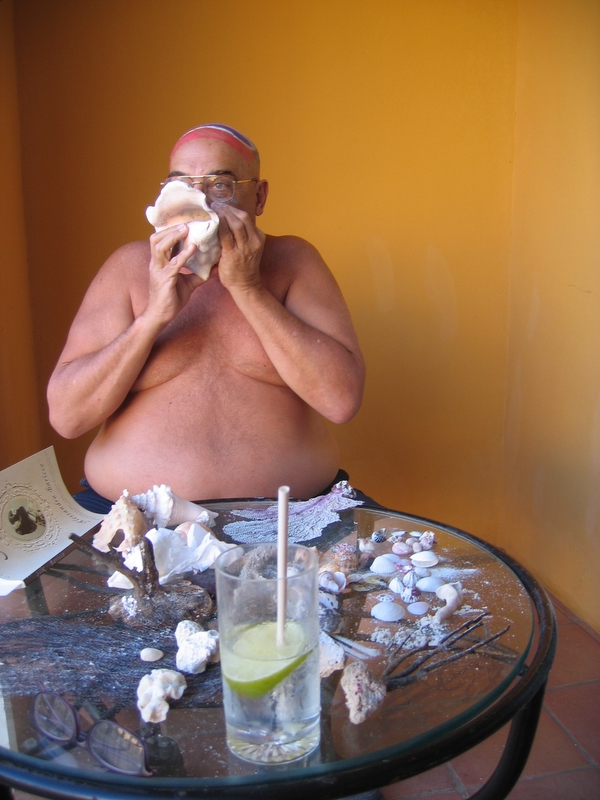
Ralph is the protagonist in "Lord of the Flies". He is elected as the chief of the group, " 'Who wants me?' Every hand outside the choir except Piggy's was raised immediately." (23) Ralph symbolizes democracy and order on the island. As the chief, Ralph takes it upon himself to establish rules for the group to follow and he stresses the importance of each boy doing his duty. Piggy embodies reason and intelligence. He represents the rationality and logic that is necessary in a civilized society. Ralph has hold of the conch shell, a sense of authority and leadership. The conch shell symbolizes order and democracy and the one who is holding it has the right to speak, "We'll have to have hands up, like at school... then I'll give them the conch"(33). It helps maintain order; therefore, it is a tool that fights the lord of chaos. When the conch is destroyed, it...
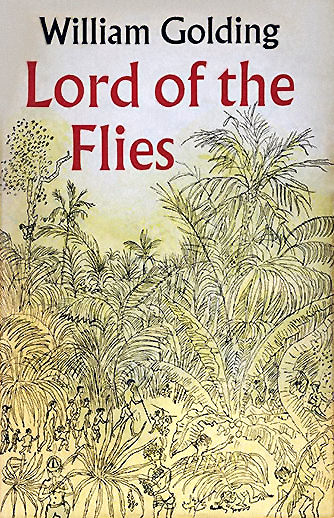
More "Lord of the Flies" by Sir William Gerald Golding
essays:
Leadership and Dictatorship: "Lord of the Flies"
... The Lord of the Flies", by William Golding, tells about a group of kids that are stranded on an island in the middle of nowhere ...
Perceptiveness on civilization and savagery of human nature reflected from william golding's lord of the flies
... William Golding. Lord of the Flies. New York: Berkley, 1954. Perceptiveness on Civilization and Savagery of Human's Nature Reflected from William Golding's Lord of the Flies Introduction Lord of the Flies, one of William Golding's many novels ...
William Golding's thesis of evil on the basis of "Lord of the Flies" as a reflection of the 1950's and Thomas Hobbes
... in "Lord of the Flies", the good and evil in human nature is the central theme in Golding's other novels (e.g. "The Inheritors" (1955) and "Pincher Martin" (1956)), too. Sir William Gerald Golding died ...
"Lord Of the Flies" Notes.
... important symbols in the novel, representing both the terror and the allure of the primordial desires for violence, power, and savagery that lurk within every human soul. In keeping with the overall allegorical nature of Lord of the Flies, the beast ...
"Lord Of the Flies" by William Golding
... to Piggy yourself. Lord of the Flies, one of William Golding's many novels, is a well written, well thought out novel that depicts the evils of human nature. This ...
Golding's "Lord of the Flies", emphasizes in the character Jack Merridew
... Lord of the Flies by William Golding, Jack Merridew, chief of the hunters, represents the hidden human passion and animal cruelty. The name ...
"Lord Of The Flies" by William Golding
... His novels are moral fables that reveal how dangerous and destructive human brings may be unless they are restrained by conscience. Golding won the 1983 Nobel Prize for literature. His most famous book, 'Lord of the flies' tells ...
"The Lord of the Flies" by Golding. An epic tale that depicts the different facets of the human spirit
... The adventure novel, The Lord of the Flies, was an epic tale that depicted the different facets of the human spirit. It was written by William Golding in the 1950's and recieved many awards. Idt was declared the "Outstanding Novel ...