Beethoven, Ludwig van (1770-1827), German composer, considered one of the greatest musicians of all time. Having begun his career as an outstanding improviser at the piano and composer of piano music, Beethoven went on to compose string quartets and other kinds of chamber music, songs, two masses, an opera, and nine symphonies. His Symphony No. 9 in D minor op. 125 (Choral, completed 1824), perhaps the most famous work of classical music in existence, culminates in a choral finale based on the poem "Ode to Joy" by German writer Friedrich von Schiller. Like his opera Fidelio, op. 72 (1805; revised 1806, 1814) and many other works, the Ninth Symphony depicts an initial struggle with adversity and concludes with an uplifting vision of freedom and social harmony.
Ludwig van Beethoven Ludwig van Beethoven is considered possibly the greatest Western composer of all time. He wrote symphonies, concertos, chamber music, sonatas, and vocal music.
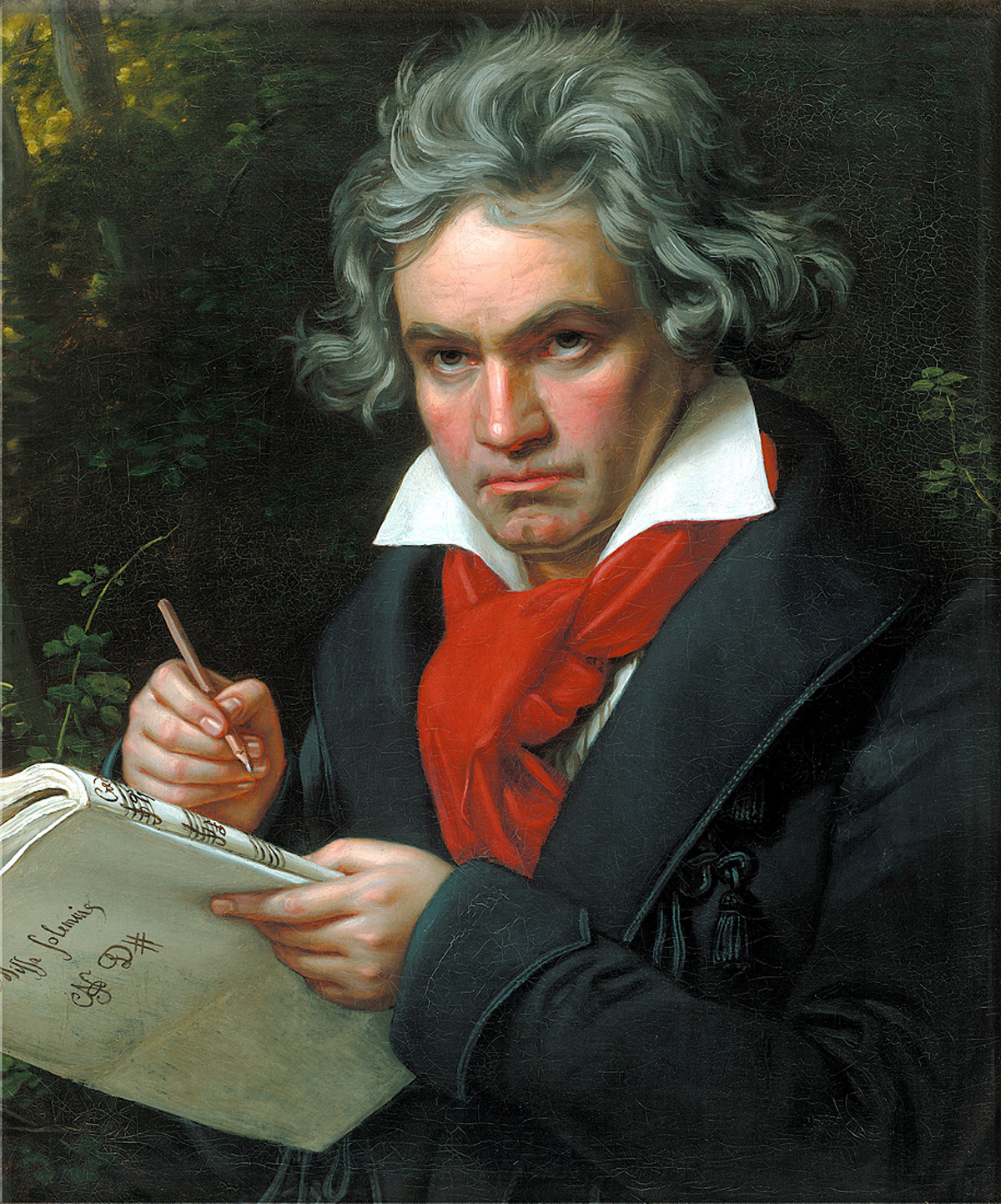 Portrait Ludwig van Beethoven when composing the M...
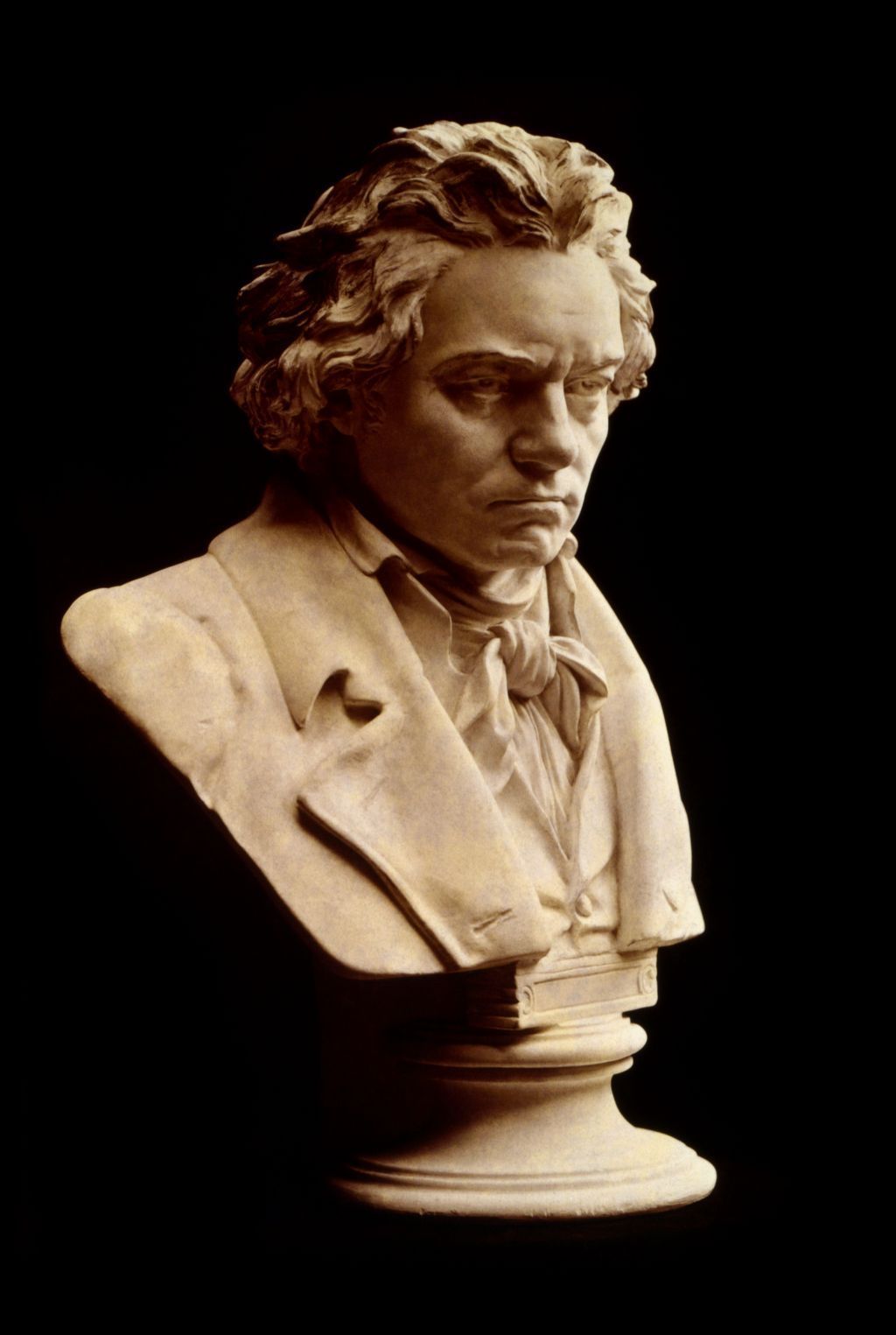 English: Photograph of bust statue of Ludwig van B...
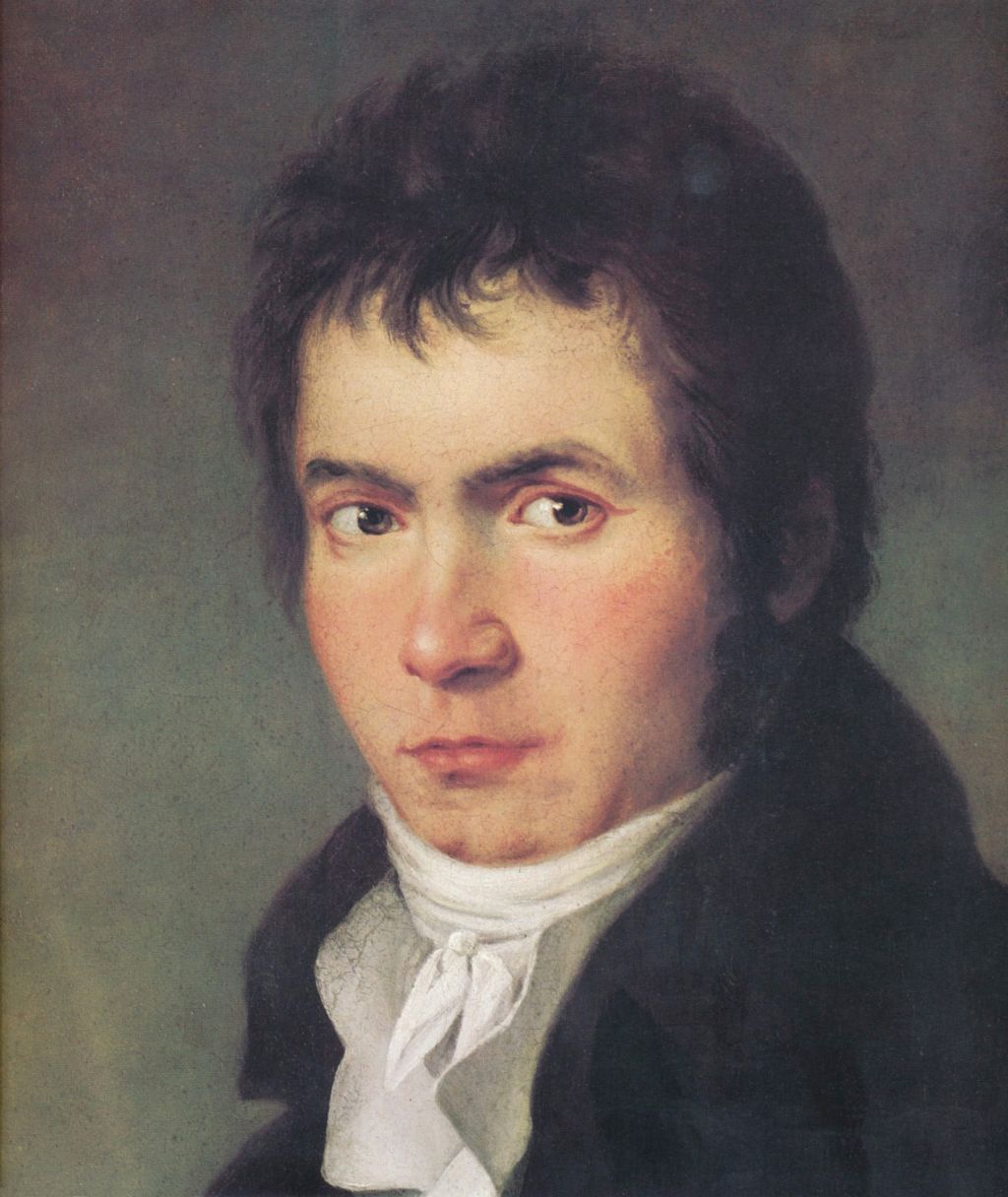 Portrait of Beethoven in 1804, by which point he h...
His best-known composition is the Ninth Symphony with its passionate chorus, the Ode to Joy. Beethoven began to lose his hearing in the 1790s and was completely deaf by 1818. Hulton Getty Picture Collection
II LIFE
Ludwig van Beethoven Quick Facts é Microsoft Corporation. All Rights Reserved.
Expand
Beethoven was born in Bonn. His father's harsh discipline and alcoholism made his childhood and adolescence difficult. At the age of 18, after his mother's death, Beethoven placed himself at the head of the family, taking responsibility for his two younger brothers, both of whom followed him when he later moved to Vienna, Austria.
dynamic timeline
Beethoven Composes the Ninth Symphony
In Bonn, Beethoven's most important composition teacher was German composer Christian Gottlob Neefe, with whom he studied during the 1780s. Neefe used the music of German composer Johann Sebastian Bach as a cornerstone of instruction, and he later...
Not too bad
This essay has good facts. However, they need referencing.
1 out of 1 people found this comment useful.