The main features of Communism and how far these principles were put into practise by one Communist ruler between 1900 and 1990.
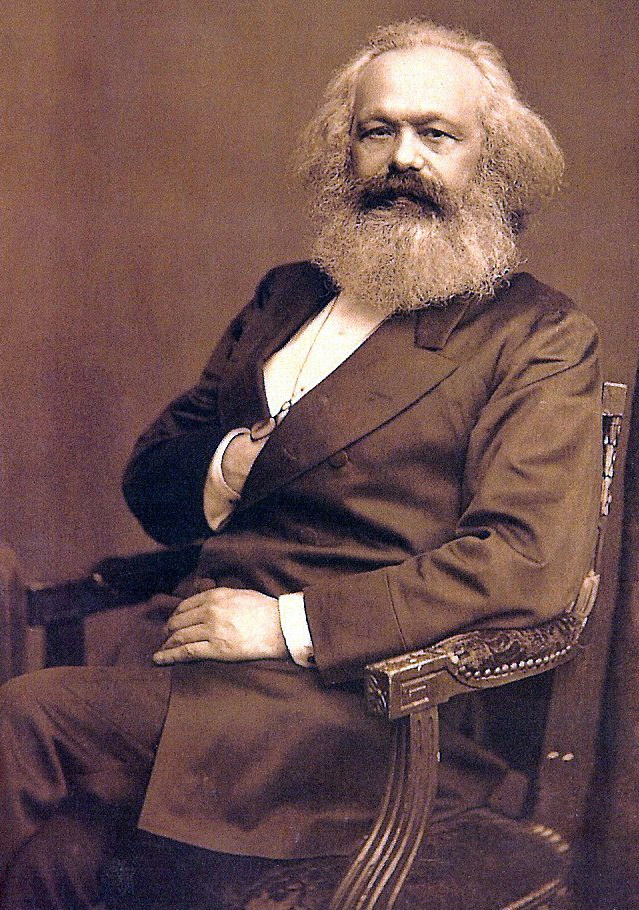
Communism follows the ideology of Karl Marx. It is a way of leading a country completely opposing the capitalist view of private ownership and free market. In Communism, the State owns everything and controls markets strictly. Marx had the idea that after implementing the ideology, the State and social classes would "wither away". These are reasons why Communism is so hated by Capitalists; it is the end of free ownership and upper-class rule.
An important tool in achieving these goals is nationalisation of foreign enterprise. Self-sufficiency, which is another aim of Communism, is achieved by limiting foreign trade and foreign intervention. The only way to make a country profitable by itself is to train experts and industrialise the country.
Stalin was one of the first Communist leaders, and followed Marx's ideas quite closely. When the Communists took over in Russia in 1917, the country was very backward and inefficient. Stalin ordered collectivisation of everything from farm tools to cattle, and everything was shared amongst the people and brought under state rule. He sent experts to study abroad and organised education for the people. He introduced the Five-Year-Plans, which were supposed to make Russia a wealthy, industrialised country in just a few years. But, lacking realistic planning, this failed miserably and as people started lying about the results to try and keep up with his mad goals. Factories were built and for some time, Russia really seemed to be making process after the many years under Tsars who weren't willing to do anything about the situation.
When he was finished with planning the industrialisation process, Stalin turned his focus on another key concept of Communism; destroying opposition and establishing a single-party-state. Although all other parties had been banned after the October Revolution, where the Communists took power from the Provisional Government,
More European History
essays:
The main reason why there was little opposition to the Nazi regime was its use of propaganda. explain how far you agree with this statement.
... life was the better one. After a while, the party came up with a motto; 'One People, One Nation, One Leader', they used this motto on the bottom of a propaganda poster, shown left; displaying a triumphant dictator, Hitler and his ...
Outline the main features of Trotsky's public life period 1917 to 1940
... 1936. He was murdered at the hand of a Spanish communist in 1940. Overall, Trotsky was an influential member up until ...
"He believed in the inevitable unification of Germany." How far is it possible to agree with this assessment of Bismarck's vision of German Unification?
... aim. He was able to successfully drive Austria out of German affairs and to achieve a German Empire. It is true that Bismarck believed in the inevitable unification of Germany but only under the terms that Prussia would be its leader ...
Was Henry The Eighth The Main Cause Of The Reformation In England?
... expensive things like clothes, paintings, books and furniture. This would communicate the message, Im Henry VII! Im powerful! I ... the church to reform and to have a new Church leader, so that they could worship the Lord properly. Also, under ...
What Were The Main Causes Of The Revolution In March 1917 In Russia
... riots before, why should this one be any different. Rodzianko, leader of the Duma sent a telegram to the Tsar telling ... it was too late. Railway workers would not let the train into the city. It was from that train that the Tsar finally decided to abdicate. Conclusion I think ...
The French Revolution: Assess the view that the main cause of the French revolution was popular discontent.
"Assess the view that the main cause of the French revolution was popular discontent" The main cause of the French Revolution was not popular discontent but rather the financial decline of France's economy together with other minor yet significant events. Popular discontent was an effect brought ...
What problems did Alexander II face in 1855 and how far was he successful in solving them?
... fatherland. In 1859, there were more than 40 million peasants enslaved to either private landowners or the state, others served as servants on the ... their emancipation and were the first step to developing the somewhat self-governing bodies called zemstvos. Zemtvos were introduced at both district and ...
5(b): How far were the roles of Bismarck and Cavour decisive in the unification of Germany and Italy?
... such Communist leaders as Mao Zedong and Palmiro Togliatti show a continuing faith in the spread of communism and world revolution. However Stalin had different ideas about how socialism should be created. Whereas both Marx and ...