Mantis Shrimp
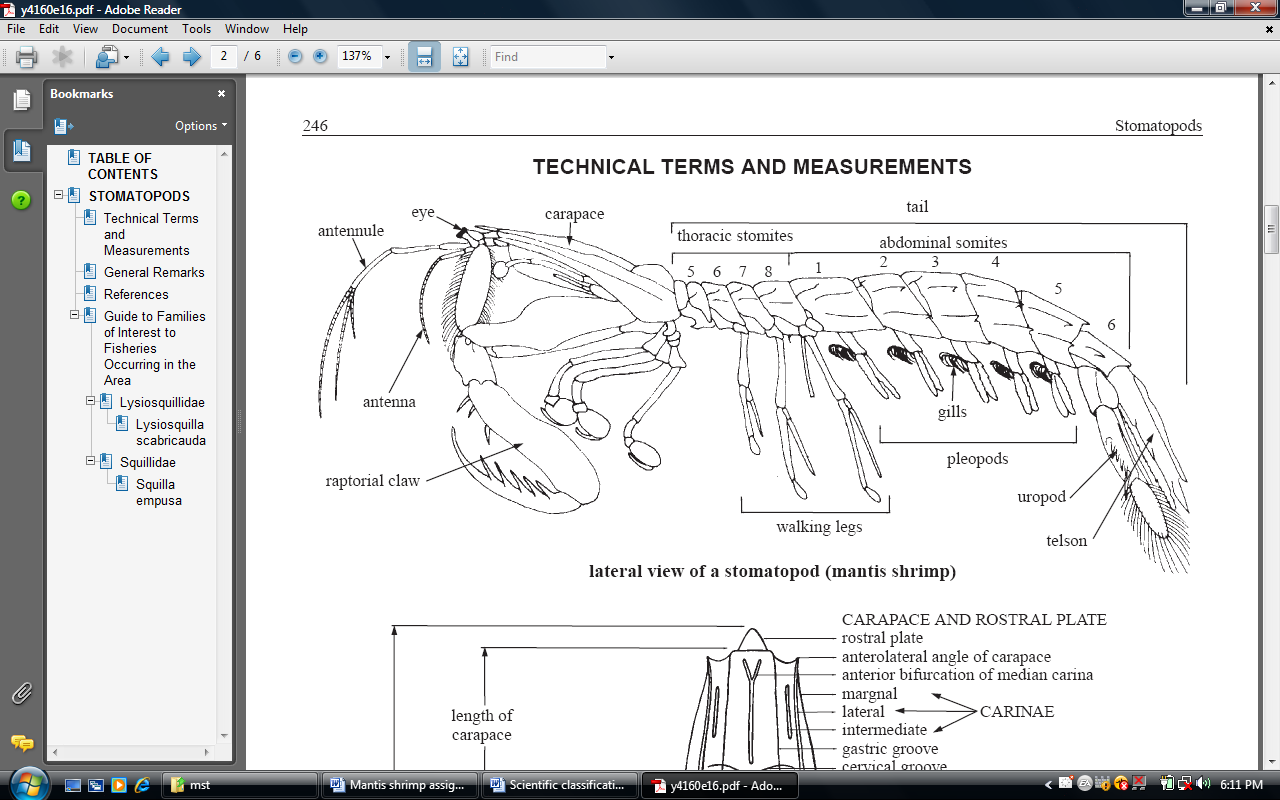
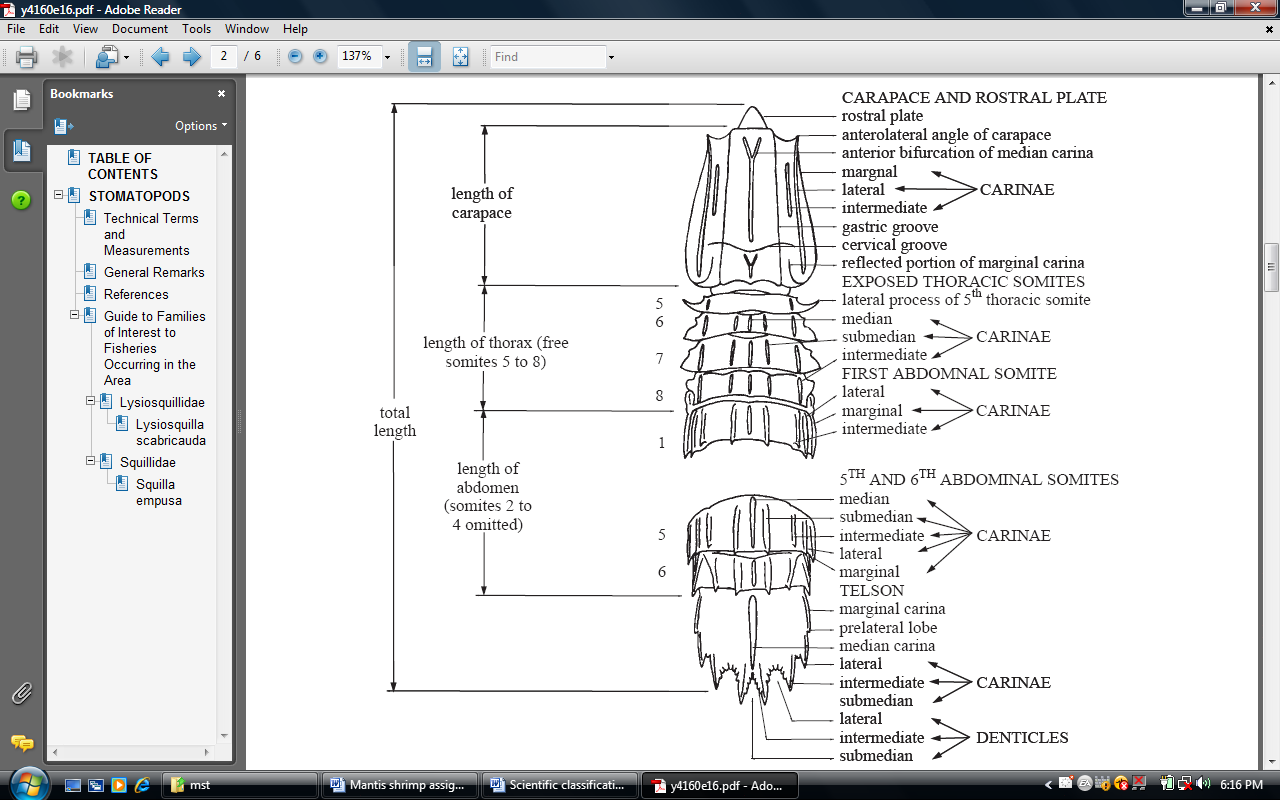
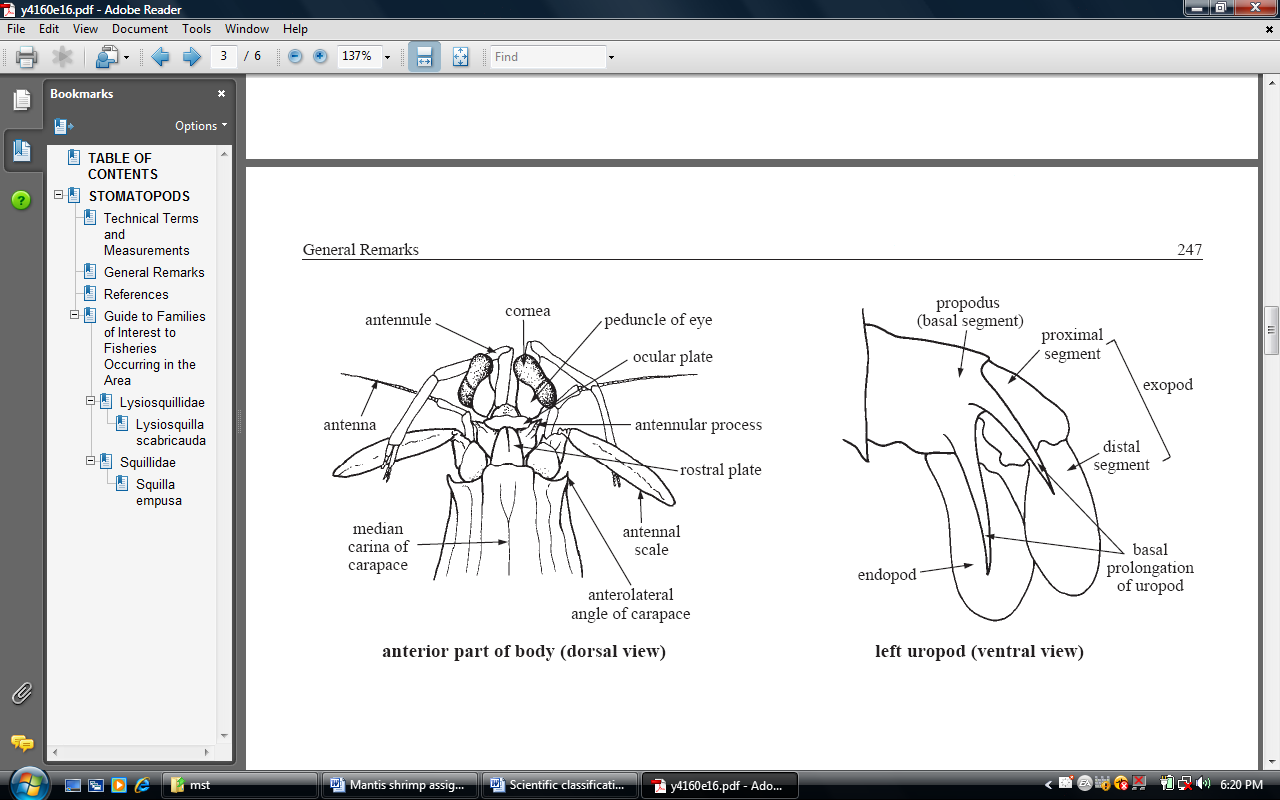
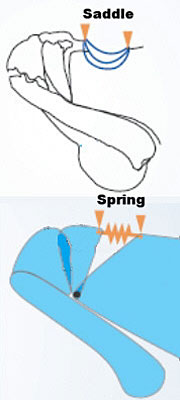
A Taxonomical Classification of the Mantis ShrimpKingdom: AnimaliaPhylum:ArthropodaSubphylum:CrustaceaClass:MalacostracaSubclass:HoplocaridaOrder:StomatopodaA fully labelled diagram illustrating the organisms structure and identifying specialist adaptations.
Mantis shrimp have many adaptations to survive in their environment there are 2 different types of Raptorial Claws. The first is the hammer-like claw which the mantis shrimp uses to bash its prey, defence and for altering its home. This type of claw is like a spring loaded hammer. It releases its spring-loaded hammer-like claw into a snail or crab shell too fast to see and smashes theShell with a loud bang. The shrimp also uses its club to break rock it will do this as a way of extending its burrow or cave. The speed of the strike (up to 50 mph, or 23 m/s) creates cavitation bubbles between the shrimp's hammer-like club and the struck object. The bubbles collapse, and generate heat, light, and sound. Though the mantis shrimp's tough club is impregnated with hard minerals it will still shed it and regenerate it every few months.
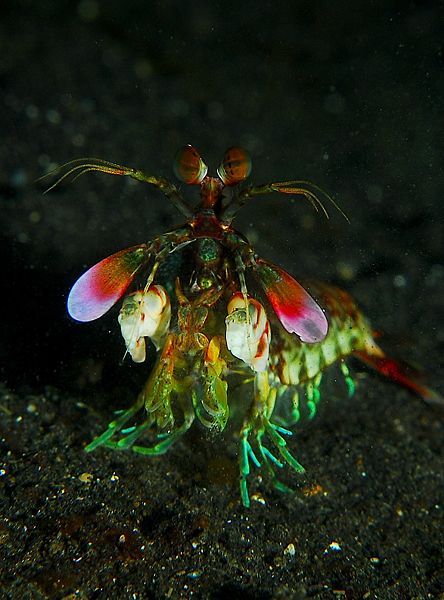
The other is the spiker which it impales fish in a fraction of a second.
Mantis shrimp possess hyper spectral colour vision, allowing up to 12 colour channels extending in the ultraviolet. Their eyes (both mounted on mobile stalks and constantly moving about independently of each other) are similarly variably coloured, and are considered to be the most complex eyes in the animal kingdomSome mantis shrimp will spend most of their lives in one burrow or cave whereas other mantis will walk and swim around the reef floor these ones though will still have a burrow to retreat to if there is danger.
Some species of mantis shrimp will remain with the same partner for more than 20 years. This behaviour is a special adaptation so that the mantis shrimp does not need to find a new partner every time it needs to breed.
They are neither shrimp nor mantids, but receive their name because of the physical resemblance to both the terrestrial praying mantis and the shrimp. Mantis shrimp do not have a large part to play in their marine eco-system. They keep the crab and snail populations down lower than if there are no mantis shrimps. The main role they play in the eco-system is when they are zoo plankton floating around the oceans feeding fish, whales and other wild life.
Human activities have had a small impact on the mantis shrimps population. Although the threat of humans isnt enough for us to be a real threat to their survival. The main reason for people killing them is the Japanese eat them raw as a delicacy. The reason humans are no big threat to them is that they have such high populations. They are quite hard to find in a reef this helps with their survival.
The mantis shrimps future will not really change from what its life is today because humans dont have a big impact on them and their habitats. The only thing that would really improve on their populations is if the Japanese people stop eating them.
In conclusion mantis shrimps are extremely intelligent and developed physically. They are the ultimate killing machine capable of smashing glass destroying crab shells and breaking rock with their appendages and can do this in a split second.
BibliographyUniversity of California: Secrets of the Stomatopod by Roy CaldwellS.N. Patek, W.L. Korff, R.L Caldwell. "Deadly strike mechanism of a mantis shrimp." Nature, vol428, 22 April 2004.
STOMATOPODSby M. Tavares, Universidade Santa Úrsula, Brazil
More Zoology
essays:
Marine Animal diversity and adaptation to life in the seas and ocean.
... change colour. Some species use bioluminesence to confuse predators and for communication (ANON., 2006, Cephalopod; Restrepo, 2003). Conclusion Marine organisms show a huge range of adaptations to ...
Electric Eel
... strong physical resemblance to true eels. . An electric eel is mostly tail. The internal organs are ... through the mouth (20%). The electric eel seems to have adapted and evolved to its preferred environment. It is able to ...
Endangered Species:The Rhinocerous Iguana
... The burrows beneath the ground also protect them from predators. Mothers will pick burrows with shrubs around the burrow (for the camouflage adaptation as ...
Adaptations of a Raccoon
... from trash cans. It also learnt to make its home in chimneys, attics, crawl spaces or dumpsters. Are the adaptations a physical part of the raccoon, or are the adaptations more of a behaviour that the raccoon uses? All of these ...
Predator/Prey relationships. In depth view of predator prey relationships. Covers mutualism, defense mechanisms, and coevolution.
... Mutualistic partners have obtained many adaptations through coevolution. Coevolution has led to a synchronized life cycle between many organisms and through mutualism many organisms have ...
This essays describes the life of a tiger. Very detailed explanation of physical characteristics, life style, habitat, and current statistics on the endangered species.
... camouflage in this thick brush, allowing them to ambush their prey. As a result of their adaptability, they are able to occupy a variety of habitats and ... mother tiger the remains are shared with her cubs. Prime physical condition requires that a tiger ingest 15-20 pounds of ...
Acting Fishy: Evolutionary Perspectives On Fish Behavior
... another organism in a fashion that is adaptive to one or both of the participants (Moyle, Cech 1996). These signals can be either visual, auditory, chemical, and or electric. Vision is ... A number of fish become so torpid (dormant) that even physical stimulus will not stir them. Though some fish do not ...
The Yellow Baboon- General Characteristics of Mammals, structure, scientific classsification, adaptions, communication and courtship
... colour of adults after about 3months. Scientific Classification The yellow baboon is known as Papio cynocephalus. It belongs to the family of Cercopithecidae in the Primate order. Adaptations ...