Generally, the Communist system in the Soviet Union and in China are practically identical politically, economically, with the reciprocal purges ect⦠However, Mao Tse-Tung and Stalin did not see eye to eye on many things and Maoism is considered today by most people to be a more developed stage of Marxism-Leninism. This is because of the historical and cultural background of China and because of her geographical position and climate which affects society.
Contrary to Russia, Communism developed in the countryside instead of in the cities. Thus it was a peasants' revolution rather than, as predicted by Karl Marx, a workers' revolution. The cities in China were at the beginning, anti-Communist.
The Chinese absorption of Marxism was highly selective. China took from Marxism those aspects which best suited the Chinese situation rather than force the Chinese situation to fit an overachieving ideology. Thus Marxism was to be the servant of the Chinese Revolution.
 President Nixon meets with China's Communist Party...
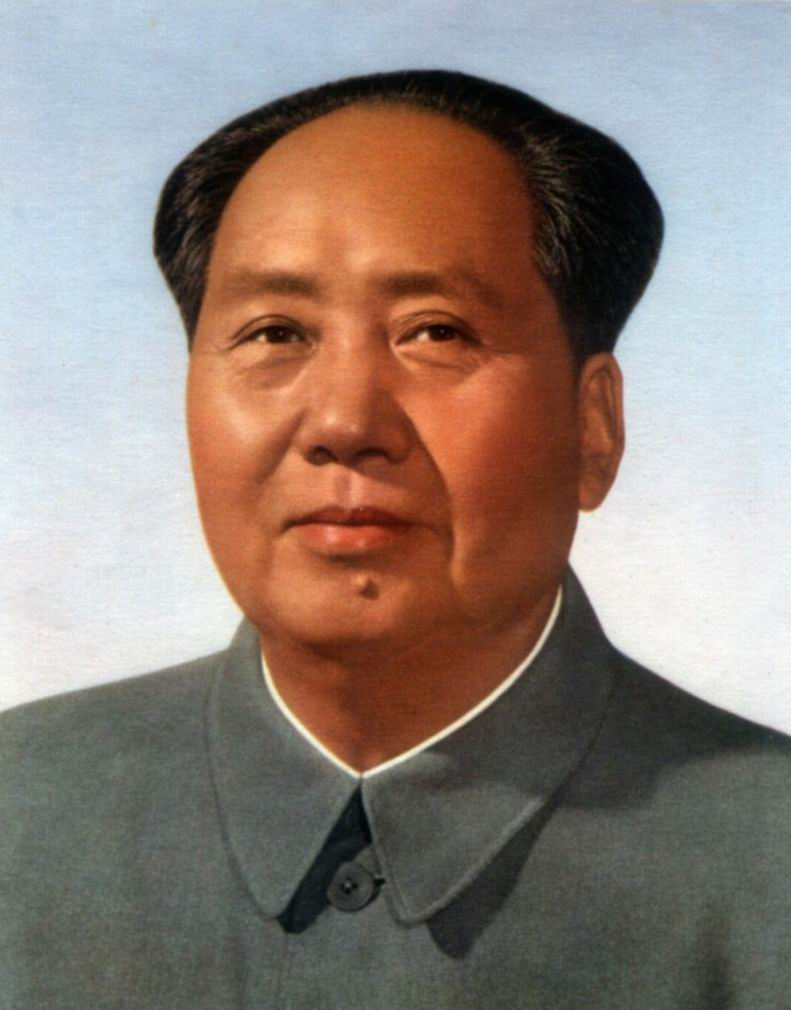 English: Mao's official portrait at Tiananmen gate...
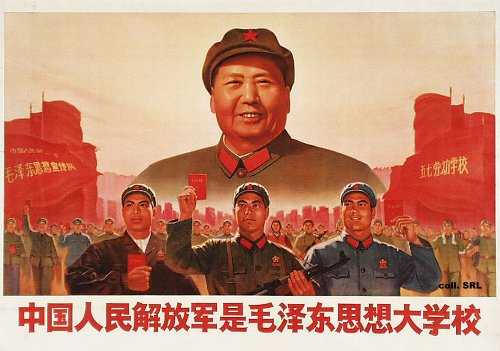 A poster from the Cultural Revolution, featuring a...
Mao Tse-Tung believed that adherence to pure Marxist theory would be suicidal and concluded that proletarian revolution based upon the urban areas was impossible in China since 80 percent of the people were peasants. Due to the warmer climate and more fertile land, peasantry was more popular in China.
This pragmatic solution led to the Revolution starting in the rural areas. The most important difference between Stalin and Mao is the comprehension of the word 'proletariat'. The Russians believed it meant, as Marx had, the industrial workers while the Chinese, by lack of sufficient workers, understood it as the peasantry.
The Great Leap Forward where everyone was put to work was another Maoist characteristic. For 100 days each year, the peasants were not working in the fields so Mao set them up to work in the off-season harvest after 1957. Millions of men and women were put...