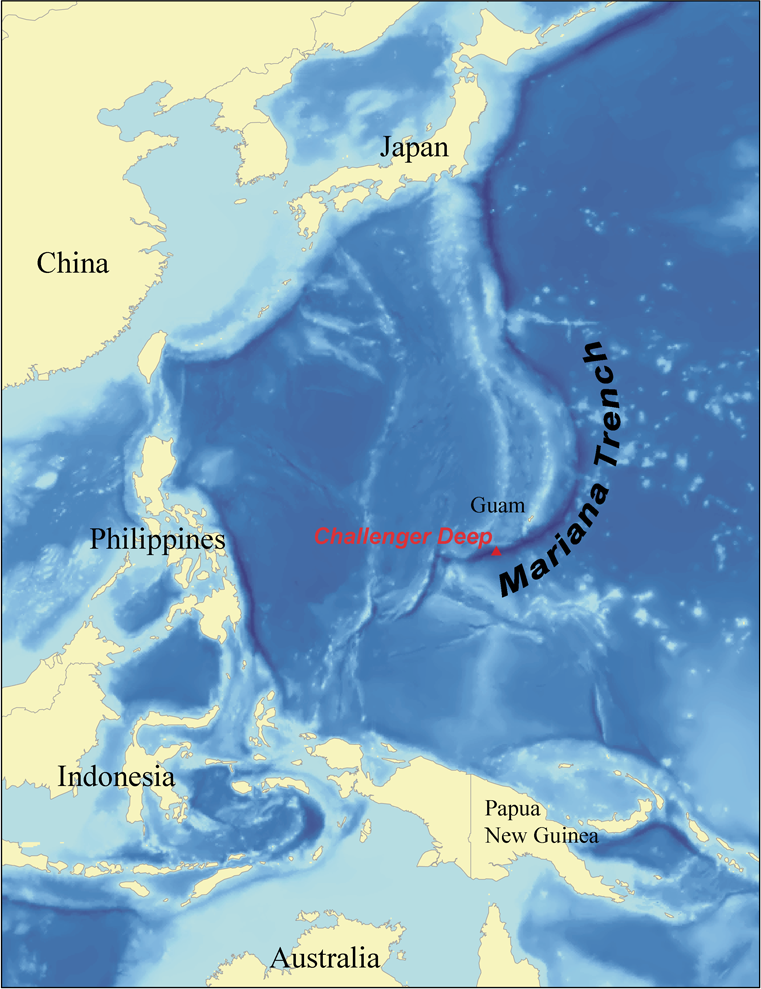
 Map showing the location of the Mariana Trench, de...
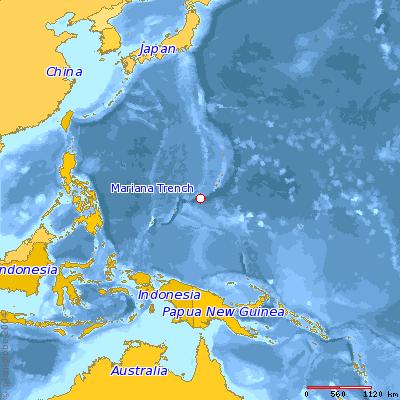 Location of the Mariana Trench
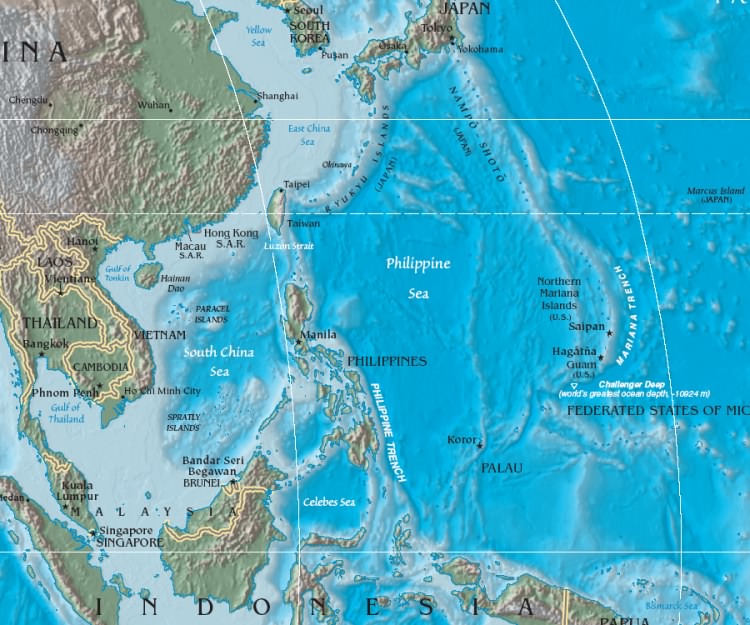 Mariana Islands at map-right, east of the Philippi...
An icy depth to below 0 degree temperatures, the Mariana trench is the deepest known trench to mankind. The trench is home to thousands of deep sea creatures that mingle down below sea level at amazing pressures. The deep sea is home to the largest ecosystem. Millions of inhabitants crowd at the bottom of the earth's ocean floor to live a quite life bothering no one. This trench is where the Pacific Plate and the Philippine Plate meet. Trenches are long, steep V-shaped depths in the sea bottom. They arise when two ocean plates bump against each other, and one plate shoves underneath the other plate. Often this also brings earthquakes. Trenches are average 2000 to 4000m lower than the rest of the sea bottom. Still all sorts of animals live in these thriving icy depths, where no daylight comes and where an enormous pressure is. Having an insight on the geographical features, the explorers of the trench, the organisms that live there, and its importance to the world, I hope to enlighten you more about the Mariana trench. A question I want to answer remains. With all the depths of the trench and explores who have investigated it how do the animals still survive down there?
What is the explanation for this crevice in the earth's surface? Plate tectonics, the "shell" of the earth consists of separate plates that move relative to each other. Plates are formed at ocean ridges and engulfed at trenches. The Mariana Islands owe their formation to the process of one plate thrusting under another. The Mariana trench is the location where the Pacific Plate ducks steeply under the Philippine Plate where it's completely dark. Most of the planet's oceans are very dark. At a depth of 150 meters (apx. 500 feet), there is little...