Marketing is defined as a social and managerial process by which individuals and groups obtain what they need and want through creating and exchanging products and values with others.(Kotler.P 2002 : 5) The goals of marketing is to attract new customers by promising superior value and keep and grow current customers by delivering satisfaction. There are five core concepts of marketing, which includes needs, wants and demand; products, services and experience; value, satisfaction and quality; exchanges, transactions and relationships; and finally, market and marketing.
After World War II, the variety of products increased and hard selling no longer could be relied upon to generate sales. Customers afford to be selective and buy products which can precisely met their changing needs with increased discretionary income. The key questions arose: What do customers want? Can we develop it while they still want it, and how can we keep our customers satisfied?
In order to response to these discerning customers, firms began to adopt the marketing concept.
 English: A schematic illustrating the evolving rel...
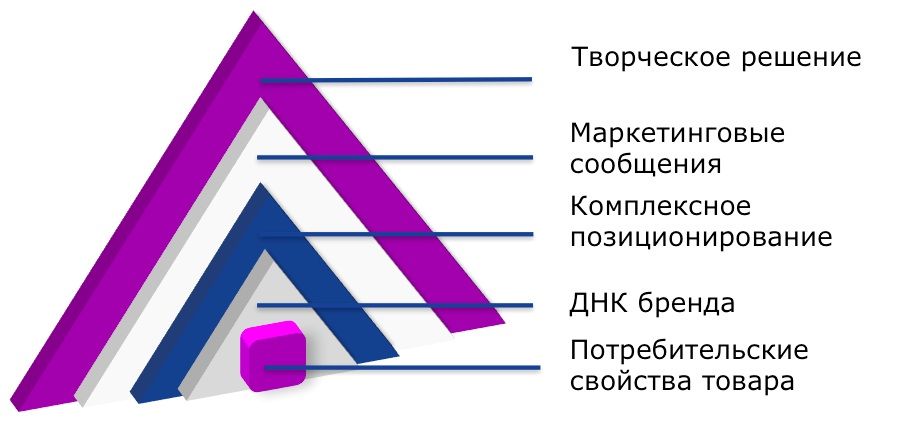 English: Marketing concept
 Former P&G logo
This involves focusing on customer needs before developing the product, aligning all functions of the company to focus on those needs, and realizing a profit by successfully satisfying customer needs in long-term. In other words, in the context of marketing concept, company must first determine what the consumer wants, then produces what they wants, then sells the consumer what they wants.
In marketing concept, more listening to and eventual accommodation of the target market occurs. Two-way communication is emphasized in marketing so "learning" can take place and product offerings can be improved. Business must first fulfill consumers' needs and wants. Marketing concept "holds that the key to achieving organizational goals consists in determining the needs and wants of target markets and delivering the desired satisfactions more effectively and efficiently than competitors" (online material #5)
To illustrate the marketing concept, Peter Drucker, in 1954 said:
"If we want to know what business is, we must first start with its purpose... There is only one valid definition of business purpose: to create a customer. What business thinks it produces is not of first importance - especially not to the future of the business or to its success. What the customer thinks he/she is buying, what he/she considers "value" is decisive - it determines what a business is, what it produces, and whether it will prosper." (Online material #4)
Marketing concept was considered a breakthrough in business philosophy. It's because it represented the antithesis of the product, production, and selling concepts. The marketing concept holds that businesses should first determine the existing needs in the marketplace and then design and produce a product to satisfy this need rather than taking an existing product and endeavoring to modify demand for it by reducing price or varying promotional technique.
Marketing concept plays an important part in an organization. According to the Customer Service Institute, it costs as much as five times as much to acquire a new customer than it does to service an existing one and that the customers tell twice as many people about a bad experience over a good one. According to their studies, 65% of the business of an average company comes from its presently satisfied customers. (Online material #4)
There are a range of firms gain success and earns at a very high profit through the use of marketing concept.
One of the examples of successful organization implementing marketing concept is JVC. JVC has been building and expanding its mobile electronics capabilities throughout the last decade, and it now markets a complete line of mobile audio equipment and accessories. In the December of 1998, JVC celebrated its success. (Online material #3)
JVC launched revolutionary and market-making products like the world's smallest CD changer, cutting-edge MD-to-CD receiver for audio aficionados, as well as JVC's loaded
car A/V system. JVC sees customers' needs and wants and made an attempt to fill their needs and wants, and satisfy them by expanding its product offerings and adding more varied and exciting features. They are very successful in satisfying their
customer that their customers know that with JVC, they are getting the very best sound for their dollar. JVC is so successful with its marketing concepts that they have become a global leader in the development and manufacturing of innovative audio and video hardware, as well as related software products.
Another example of successful firm is the Thayer Interactive Group (TIG), an online hospitality marketing firm. TIG sees that consumer behavior has changed. People are using the internet more than ever to make research of different options prior to booking travel, and that they are approaching hotels preemptively. Therefore, TIG targets individuals who are actively looking for lodging solutions at the precise place and time that they wanted to get.
Because they know that the consumers nowadays are buying based on "get more, pay little", their program offers the industry's first and only comprehensive suite of Web marketing services designed to administer all aspects of a hotel's internet presence, AND bypass excessive fees charged by third-party travel sites.
TIG even provides a customized "five-part program" - website development and content management; search engine marketing; guerilla marketing and online advertising; reporting and analysis; and proactive account management. The objective is to deliver the travel consumer directly to individually managed hotel Web sites which allows them to maintain control of pricing and avoid excessive third-party fees.TIG is so successful that it is already generating an average of more than $1 million in incremental revenue per participating hotel. (Online material #2)
Other successful firms which have adopted the marketing concept are such as Procter and Gamble, Wal-Mart, Marriott, Dell Computer etc.
The marketing concept is founded upon the assumption that consumers are knowledgeable, intelligent, and rational, and base their product purchases upon a careful consideration of the relationship between their own needs and product attributes.
However, do the consumers always know what is "needed"? In many cases, customers do not know what they want or even what is possible. For example, 30 years ago, how many consumers would have thought to ask for 24-hour Internet brokerage accounts and DVD players?
Moreover, by focusing on customers' needs, marketing concept ignore other important stakeholders. In order to implement marketing concept, a lot of research are needed to be carried out and it is very expensive to do such marketing researches.
In U.S., the latest consumerism movement has caused limitations to marketing concept as well. Nowadays, consumers assert their rights to products which are safe, economic, reliable, honestly labeled and advertised, and product's impact upon the environment. Moreover, consumerists have been very proactive in seeing that these "rights" are guaranteed, either by the firms selling the products or by the government of the U.S. In this, Peter Drucker blamed the marketers for failing their consumers and publics in using the marketing concept:
We have asked ourselves where in the marketing concept consumerism fits or belong. I have come to conclusion that the only way one can really define it within the marketing concept is as the shame it. It is essentially a mark of failure of the concept... (Drucker P. 1969). (Online material #5)
It is often taken for granted that the marketing concept is true. The concept is usually expressed as the assertion that firms which are marketing oriented will do better than firms which are not. This assertion is being put to test empirically by Massey University by comparing the financial results of firms exhibiting high levels of marketing orientation with those of lower levels. The result showed that there is actually no clear association between adapting in line with marketing concept and success. (Online material #1)
In order to adapt and implement marketing concept, firms have to be able to meet changing customer needs and wants, as well as competitor strategies. There are a number of firms such as General Motors and Zenith, which lost substantial market share because they failed to adjust their marketing strategies to the changing market. Top management in an organization must ensue that all employees are driven by marketing concept. They must be driven by the marketing concept before they can expect employees to whole-heartedly commit to it. In addition, top management should foster an organizational culture and set organizational values that embody the concept by encouraging cross-functional communication and coordination directed toward satisfying the needs of the customers.
Bibliography
Armstrong G & Kotler P, 2002, Marketing An Introduction 6th ed, Prentice
Hall, New Jersey
Online Material #1: Marketing Bulletin,1991,2,1-7,
http://marketing-bulletin.massey.ac.nz/article2/article1b.asp [22/9/2003]
Online Material #2: Business Editors,2002,Thayer Interactive Group Proves Marketing Concept to Hotel Industry,
http://www.findarticles.com/cf_0/mOEIN/2002_Oct_7/92536200/p1/article.jhtml?term=%22marketing+concept%22 [20/9/2003]
Online Material #3: Business Editors,1998,JVC Celebrates Success in Mobile Electronics With New Image and New Marketing Concept,
http://www.findarticles.com/cf_0/m4PRN/1998_Dec_15/53402065/p1/article.jhtml?term=%22marketing+concept%22 [20/9/2003]
Online Material #4: The Research Exchange Vol.5, http://www.ncddr.org/du/researchexchange/v05n01/adapting%20Marketing%20Concept.htm [23/9/2003]
Online Material #5: Robert D,Social Responsibility,Consumerism,and The Marketing Concept,1999,
http://www.sbaer.uca.edu/Research/1999/SMA/99sma110.htm [24/9/2003]