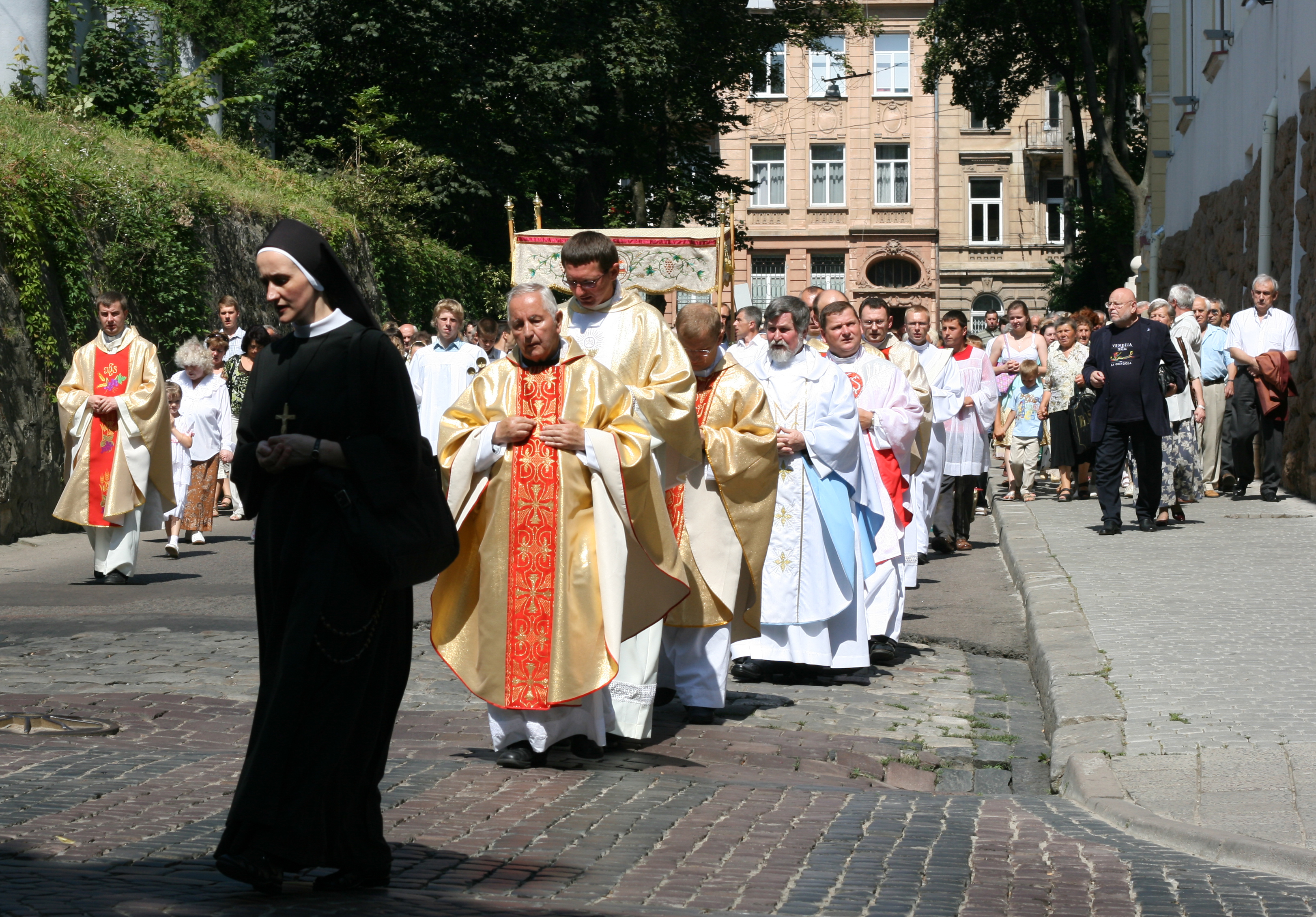
What it means to be Catholic, and the meaning of Catholicism.
Being Catholic means living a totally Christian life and having a catholic perspective. To Catholics, all people are basically good, but sin is a spiritual disease that wounded humankind initially and can kill humankind spiritually if left unchecked. Divine grace is the only remedy for sin, and the best source of divine grace is from the sacraments, which are various rites that catholics believe have been created by jesus and entrusted by him to his church.
The bottom line from the catholic perspective is more than an intellectual assent to an idea, Catholicism involves a daily commitment to embrace the will of god- whatever it is and wherever it leads. Catholicism means cooperation with god on the part of the believer. God offers his divine grace, and the catholic must accept it and then cooperate with it. Free wil is sacred. God never forces you against your free will. Yet doing evil not only hurts you, it also hurts others, because a catholic is never alone. Catholics are always part of a spiritual family called the Church. More than a place to go on the weekend to worship, the church is a mother who feeds spiritually, shares doctrine, heals and comforts, and disciplines when needed.
The cut to the chase answer is that Catholicism is the practice of roman catholic Christianity. Catholics are members of the roman catholic church, and they share various beliefs and ways of worship, as well as a distinct outlook on life. Cartholics are first and foremost Christians. Like jews and muslims, catholics are monotheistic, which means that they believe in one god, but catholics, like all Christians, believe that jesus Christ is the son of god, which is unique. The bible is inspired, error-free, and revealted word of god. Baptism, the rite of becoming a...
More Christianity
essays:
What does it mean to be a Christian: Gnostic vs. Pistic by Daniel Murray
... believe in Jesus are saved from the fires of hell? Or maybe there is something more, maybe there is something which has not been included in acceptable teachings of the so called Universal (Catholic ...
"To examine how Christianity influenced Mother Mary Helen MacKillop and the sisters of Saint Joseph to develop and change Australia's education system throughout the years of 1788-1900"
... a catholic education system in Australia. Mother Mary life began in Fitzroy, Melbourne in 1842. Where she attend mass every weekend in the midst of her religious mother and father. From a young age she believed that ...
How can, under Catholic laws, the killing of another human being be morally justified?
... Christian princes, as is evident from various papal decrees." (Teichman 1986: 54) This brings us to what actually constitutes a 'Just War'. According to a pastoral letter by the National Conference of Catholic ...
The origins of the Knights Templar and their effect on Christianity. It includes interesting facts and some personal reflection.
... spiritual, they did not need overwhelming numbers to put fear in their enemies. A downfall of the knights, from a military point of view, is that instead of denying Christ and living they chose to affirm their belief and consequently be ...
The Book of Revelation and the Interpretation of the Three Angels
... can be in some way perceived by all peoples even in creation (cf. ROM 1:19-21 ). Even Christian begin their creed, " I Believe in ... pge 184-187) In the Jerome Biblical Commentary and A Catholic Commentary on Sacred Scripture, the both have the same interpretation ...
What is the function of the Sign at Cana in John 2:1-12?
... become believers having a deeper faith in Him and salvation. The compassion Jesus has for humanity is revealed here as well. Jesus, being a compassionate person, would not have liked for such a sacramental occasion ...
Jesus and the Role of Sin in the Catholic Church
... .org/catechism/text/pt1sect2chpt2art3.htm "The Seven Sacraments of the Church." Catechism of the Catholic Church. U.S. Catholic Bishops. Retrieved on April 22, 2004 ... and dying in human form, such a concrete participation in the life of the divine would not be possible. The ability to expiate one's ...
What can be learnt from the Acts of the Apostles about life and society in the cities of the Eastern Mediterranean in the 1st century A.D?
... of life in the 1st century for which there is little correlative evidence" . Developments to Christianity was another reason why historians believe Acts to be so ... the Ephesians were angered because Paul was blaspheming against "her divine majesty" (Acts 19.27-28), namely the goddess Diana. This ...