Media Violence: Not the Real Culprit for the Problems of Society
Sue Waggoner
Professor Keene
English 1302
4 December 2003
Media Violence: Not the Real Culprit for the Problems of Society
Although the media can influence society in many ways, the media cannot be blamed for the actions of the public or eliminate the public's responsibility for the problems of society. Violence is a major problem in the United States. In any year, there are more murders in one of the major cities in the United States than in all of the British Isles combined. Media violence is a major issue with our lawmakers, especially those who are running for reelection. Violent behavior has always been an issue amongst politicians. Although the cause of violent behavior is a very complex issue, some people have wanted to find a quick fix to the problem. In the 1940s and 50s, comic books were named the number one reason for the rise in juvenile delinquency. Few thought about World War II or the fact that more children were being raised without a father (DotterWeich). In the 1970s, Congress instituted a rating system for movies so that parents could judge the amount of violence in movies before they allowed their children to watch them. Then in the 1990s the invention of the V-chip allowed to block television programs with sexually explicit or violent material (Kirszner and Mandell 564). The American Public has always tried to put the blame for violence on different kinds of media.
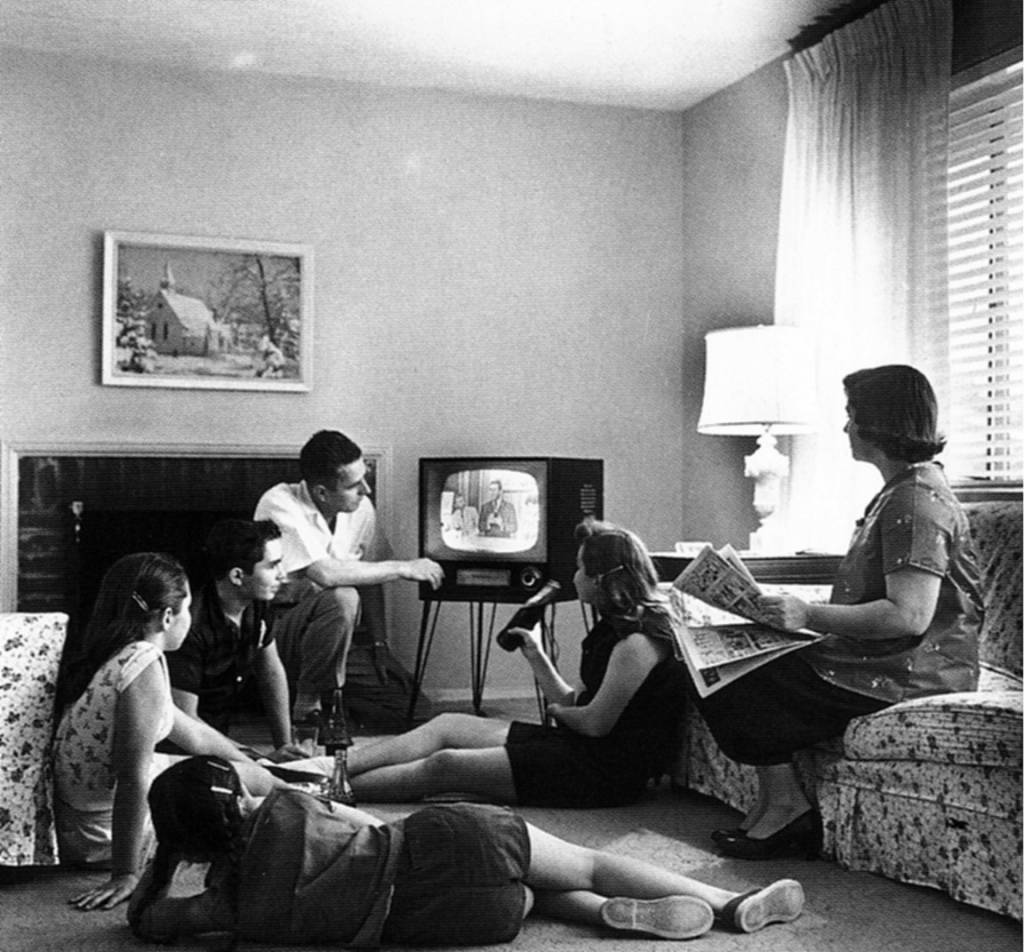
Many groups use television violence as an excuse to attack the medium. Because almost everyone in America has access to television, the use of it cannot really be regulated, and those who would like to control its use see TV as out-of-control and threatening. Women blame the prevalence of television violence on men, and religious groups claim that liberals foist...
More The Media
essays:
Studies Fail to Prove a Direct Link to Violence in Television Causing Real-Life Violence.
... that, "[the] per-hour rate in the united states of sexual and violent material and coarse language combines almost triples from 1989 to 1999," (Cutler 14). They fail to mention however that the juvenile crime ...
Media control
... on the decline in the United States in the last three years, yet coverage of violent crime has not declined. This type of journalism does not accurately portray the world ...
Mass Media.
... around the world came up with, and invented, the first actual motion picture around the same period, the late 1870s to the early 1880s. Many people in the United States of ...
How death is portrayed in the media that it affects on children and my feedback of it.
... different words to describe death. Generally, people that grow up in the United States tend to view death as a taboo subject and are ...
Analyse an event reported on by the media and the ways in which they position the viewer to respond to the event.
... throughout the article, the author quotes George W. Bush with comments such as "The United States stands side-by-side with Russia as we fight off terrorism." The inclusion of this extract from one of ...
How is the real world 'constructed in discourse', and how does the construction of the "real world" differ according to differing news styles and different media?
... view in 'Knowledge, Norms and Social Interests: Dilemmas for Documentary' which states that 'the belief in the possible objectivity of the subject...dominates the mainstream ...
the causes domestic Violence
... that the juveniles who commit violent acts are influenced by the mass media. For instance, arcade games like Mortal Kombat , which is a fighting game that displays graphic details. The essays also imply that comic books, magazines ...
The role of the mass media in American politics today.
... BBC in the United Kingdom have lost audience support and market share due to the dominant influence media moguls such as Rupert Murdoch and Kerry Packer possess. O'Shaughnessy states: Their influence on ...