The metaphysical view of reality that I support is from a monist position. Monism is
believing that everything in the universe is one kind or type. To be more specific, the view
within monism that I believe to be true is materialism. This is defined in our textbook The
Enduring Questions by Jerry H. Hill as a "belief that reality is composed exclusively of
matter and its patterns of organization." In other words, it is a view that everything that
actually exists is material, or physical. What it means to say something is material is that it
is extended in space. In an article titled "Philosophical Materialism," Richard C. Vitzthum
claims that "materialism has always inferred its theories from the best empirical evidence at
hand and has as a result always had its metascientific hypotheses scientifically confirmed
because the basic assumption of valid science has also always been that nature is governed
by coherent discoverable physical laws".
 21st Century Materialism: Graham Harman
 21st Century Materialism
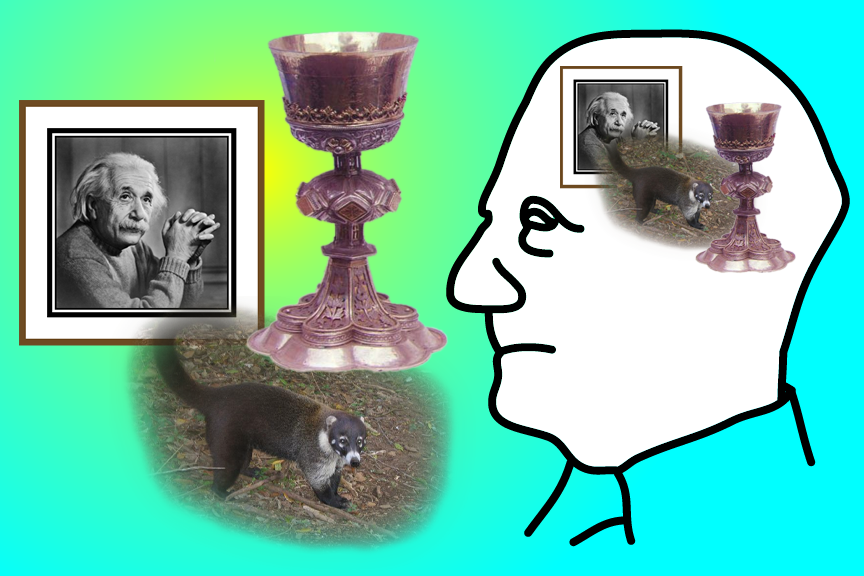 Cartesian-materialism
I honestly believe that everything is made up of a physical substance and that spiritual
substances don't exist. Paranormal or supernatural phenomena are either delusions or
reducible to physical forces. Some materialists, such as myself, are not necessarily atheists,
nor do they deny the reality of such things as love or justice, beauty or goodness. Thoughts
and wishes about something more than mere physical substances in the world can easily
influence an individual's life, but what we live by should be based on what theories can prove
the most facts, not which can carry the best hopes. And by that, I mean that there is
absolutely no way for dualists to prove that there are two kinds of "stuff" in the universe.
Granted, materialists have always had the difficult task of explaining how their materialism
can account for such psychological phenomena...
About the Mind
What you wrote about the mind impressed me. It needed the brain, so the brain is definitely physical matter that contains the mind also physical matter, as you believe in monism. The mind and brain are united all due to the fact of monism.
In addition, you called emotions differing from the action of alcohol and similar substances. The mind is definitely made of atoms for this!
Materialism is essentially true for me, as physics makes all the truth about even the emotions and thoughts.
Well done on how you spark thoughts and show enough details.
1 out of 1 people found this comment useful.