Operating Systems
In today's technological world, the realm of the computer operating system has come along way. Just ten years ago, a business had to use a UNIX, Macintosh or Microsoft 3.X with MS-Dos operating system and the support of other software programs to make the computer work resourcefully. Today, businesses have several different choices when putting together their computer operating system.
At my work, they utilize nothing but Microsoft applications and database client / server based technology. They are using a few other proprietary software applications (SPMS, Fastdata, SLDcada) but all are compatible with Microsoft's software. From a perspective of most mainframe modeled systems, which is where just seven years ago, moving to client/server represents a dramatic transition involving technological and organizational change that can often be far more complex and costly than many vendors or pioneers admit (Vizard). The school recently upgraded from an Oracle database and Microsoft NT client / server operating system.
 Windows NT 4.0 screenshot
 Microsoft and Flickr
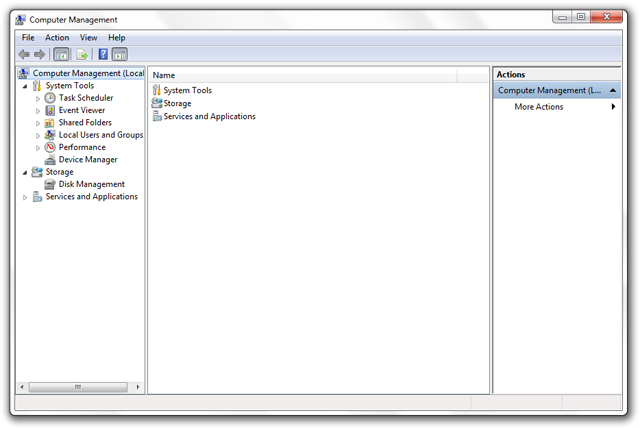 Microsoft Management Console
The current system which is Microsoft 2000 client / server system architecture allows us the capabilities for future upgrades and information system expansion.
Some of the advantages that my business was looking to gain from the conversion are:
ç Active Directory - allows management of servers, clients, peripherals and users from a single point. If used correctly this has the potential to make life much easier for systems administrators. You can use it to set permissions and properties on, say, a printer situated at another site.
ç IntelliMirro - This can take a snapshot of a client PC and use this information to automatically repair damaged files. It can also perform "install on demand" which means you can do a basic install of Office 2000 on a client PC and when it needs additional files, IntelliMirror will upload these in the background.
ç MMC - The industry joke is that to manage an NT network you simply have to remember which button to press. Well, if that's the case then 2000 makes it even easier because you can have all the buttons in the same application if you want. Instead of having a separate application (like DHCP Manager, User Manager, etc) for each thing you want to do, you can customize the MMC (Microsoft Management Console) for particular tasks. This is great if you have a member of staff who just needs access to certain server functions.
ç Terminal Services - Windows Terminal Server used to be a different operating system in NT4; now Terminal Services is integrated into the main o/s. If you have never used this before it is like going back to the days of dumb terminals where all the processing is done on the server. This means you can have a 386 running Windows 2000.
Although NT 4.0 was a similar operating system, the upgrade to server 2000 keeps us up-to-date with today's more recent technology. Also, Windows NT 4.0 is unable to support some critical hardware needs and when upgrading hardware you tend to cause the system to become unstable and render the "Blue screen of death" because of the changes. This seems to continue unless the complete operating system is re-installed, and NT does not support DVD ROM technology.
All things considered, Microsoft's latest software, and accomplishing the business plans that they proposed for the year. Keeping with the current technology, using the added benefits that 2000 offers, and continual system development has lead to the technical, economical, and operational feasibility that we envisioned when they upgraded their information system to Microsoft 2000.
Works Cited
Vizard, Michael, "The True Value of IT", InfoWorld Electric.,
February 15, 1999, (Vol. 21, Issue 7)