Money and its definition.
Money
Money was one arguably the most important invention for development to take place. Money has been independently invented at one time or another in each important civilization in the history of the world. There is also remarkable similarity in how the concept of money has evolved in different times in history and in different parts of the world.
Historically, money has usually gone through four stages. In the first stage, money is made of a rare material, and the value of the money is determined by the amount of the material it contains. In the second stage, money is made of another material, such as paper, with no inherent value but can be exchanged into the physical stuff. In the third stage, money cannot be exchanged into anything physical, but its value is determined by law or custom. In the fourth and last stage, inflation increases to the point that money becomes virtually worthless.
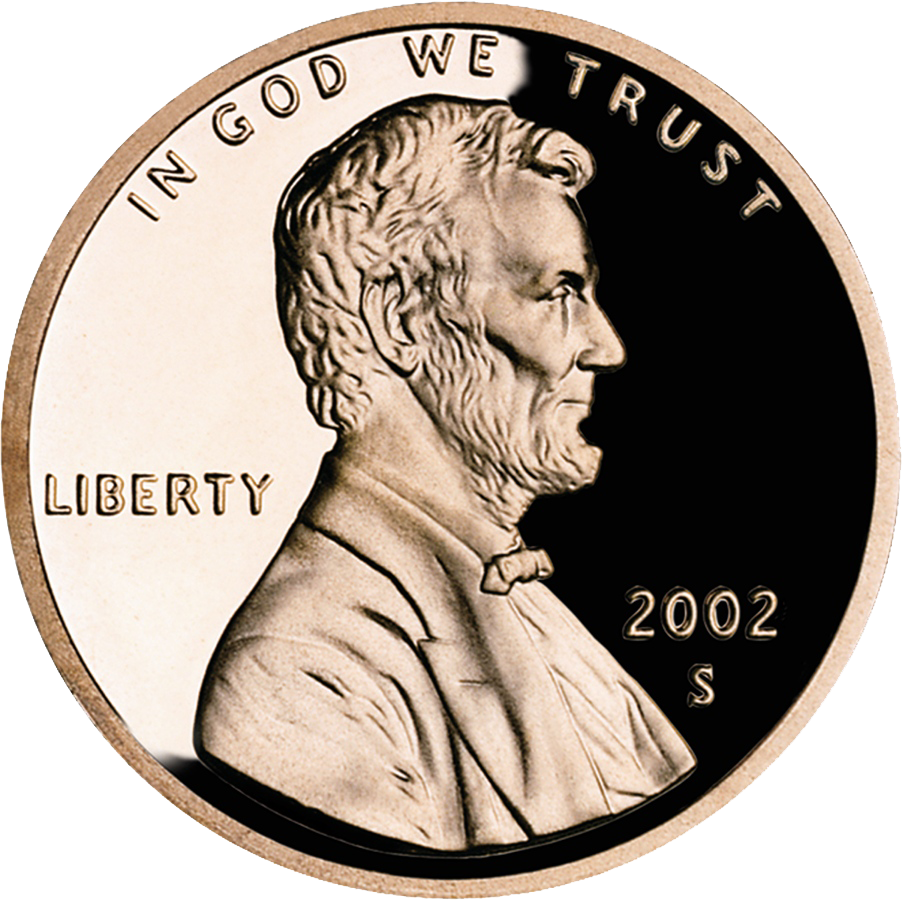
Physical money has historically come into existence to facilitate trade. In most cases some form of metallic money has been used, but there are also other examples, where shells, or even large stones (on an isolated island) have been used as money. Oil has been proposed by the great Soros. Gold and silver has been used in most of world, but other metals have occasionally been used. Bronze was the basis of the monetary system in early Roman times. Copper has also been used at times, for example in Spain and Sweden. In many cases, combinations have been used, with fixed exchange rates between different metals. Those fixed exchange rates have usually broken down as the relative value of the metals has moved due to changes in supply or demand.
Coins are the basis of almost every metallic monetary system. A coin in a physical...
More Economics
essays:
Summarize what the information in the table tells us about environmental impacts in different economic regions of the world and how these are changing.
... in different economic regions of the world are changing. It will do this by summarizing evidence provided in the course materials. Economic ...
The growth of New York's Business
... in the agricultural history of the state between 1825 and 1860. Farmers discovered that cows were their most relliable money-makers, since both the domestic and foreign market kept demanding more dairy products (Ellis, 273). Price flucuations became increasingly important ...
Marxist Theory Econmics
... of the history of the world. Marxism in its various forms has affected the world greatly throughout time. Both World Wars have involved communist countries to a great extent. Communism has gone wrong in many countries, with the state turning into ...
"A Poor Ending" by Bill Longworth. A solution to poverty in the United States
... it exist if the average CEO pay is more than one hundred times the pay of the average worker? In America, the most prosperous nation in the history of the world, unemployment ... people into a country every year and not expect an increase in poverty. However, some are too afraid of the PC ...
International Finance
... a world gold standard is sneaking its way in through the back door, which comes with no objection from the money changers who now hold two-thirds of the worlds gold ...
The United States five largest trading Posts in the world.
... number of different components manufactured in various locations in several countries. As global automakers rely on factories in many parts of the world to make cars, the demand ...
Globalization and Citizenship
... hopes of a better life. Due to globalization there is an increased awareness of the world's ... or world migration we have come to have a better grasp of world citizenship and this understanding has created a strong bond among the citizens of the world diminishing ...
Country report of UK and petroleum industry
... it spread throughout Western Europe and North America, eventually impacting the rest of the world. Gasoline Engines: With the invention of the internal combustion engine, and the advent of gasoline automobiles in 1885 by Karl Benz, petroleum soon became ...