Nicola Machiavelli- The author and his times. (background Notes)
THE AUTHOR AND HIS TIMES
MACHIAVELLI'S LIFE
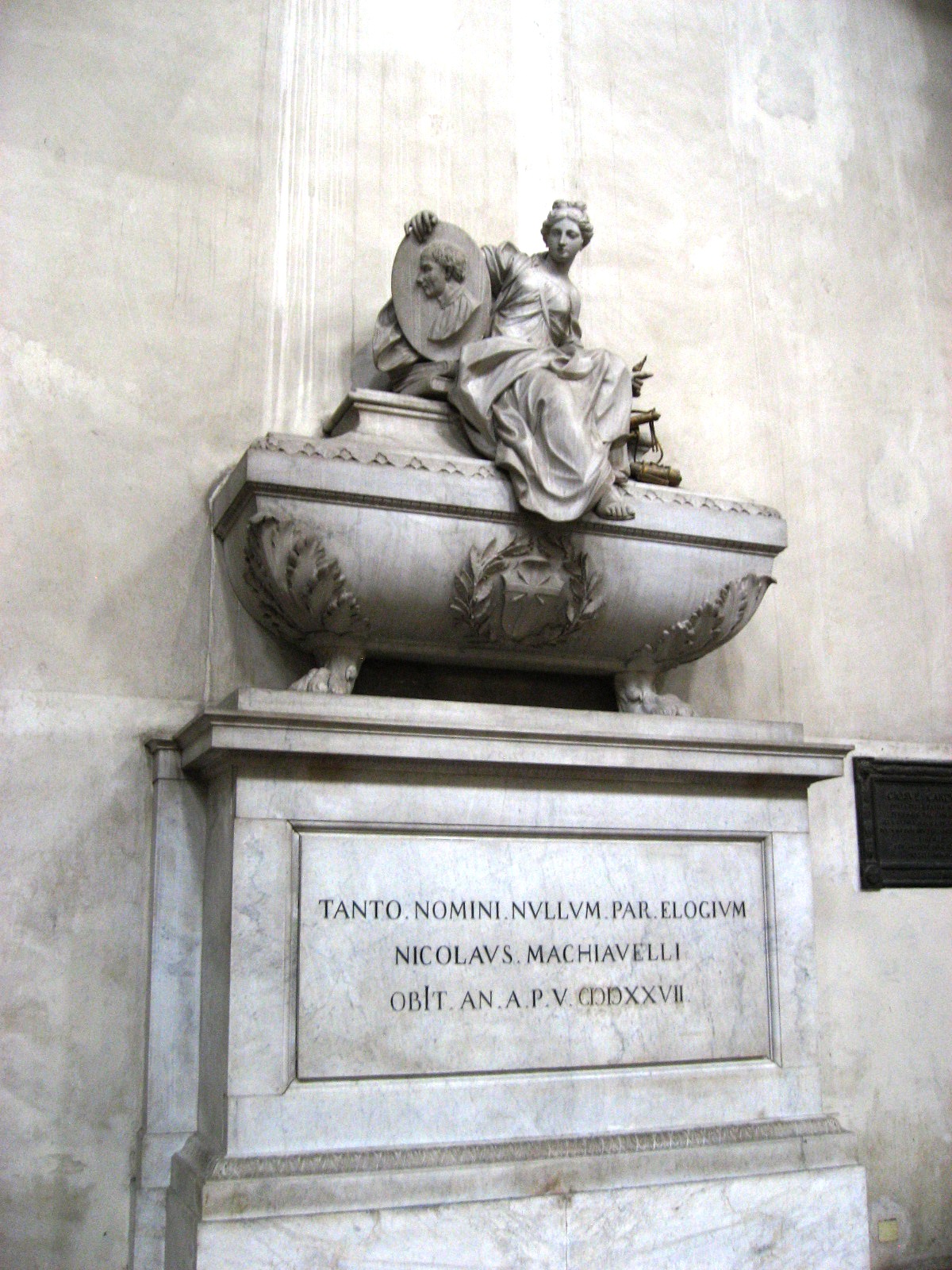
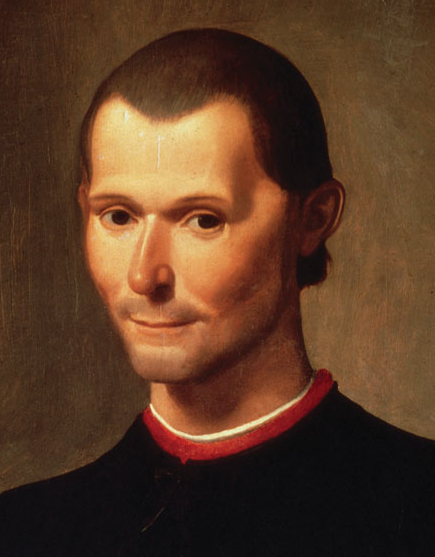
Living from 1469 to 1527, Niccolo Machiavelli saw what we now consider the height of the Italian Renaissance- a period that produced some of Italy's greatest achievements in the arts and sciences, but that also produced horrible scandals and the establishment of foreign domination over the peninsula. Brought up while members of the powerful Medici family were masters of Florence, he studied the classics and learned to read and write in Latin. He also showed a keen interest in, and the ability to learn from, the world around him. He was a diplomat, a student of history, and a writer of comedy- and his sharp and unique insights changed the face of political science forever.
Machiavelli was born in Florence on May 3, 1469. We first hear of him playing an active role in the affairs of his native city in 1498, when the government dominated by Girolamo Savonarola, the Dominican friar whose puritanical views had influenced Florence for the preceding four years, fell from power.
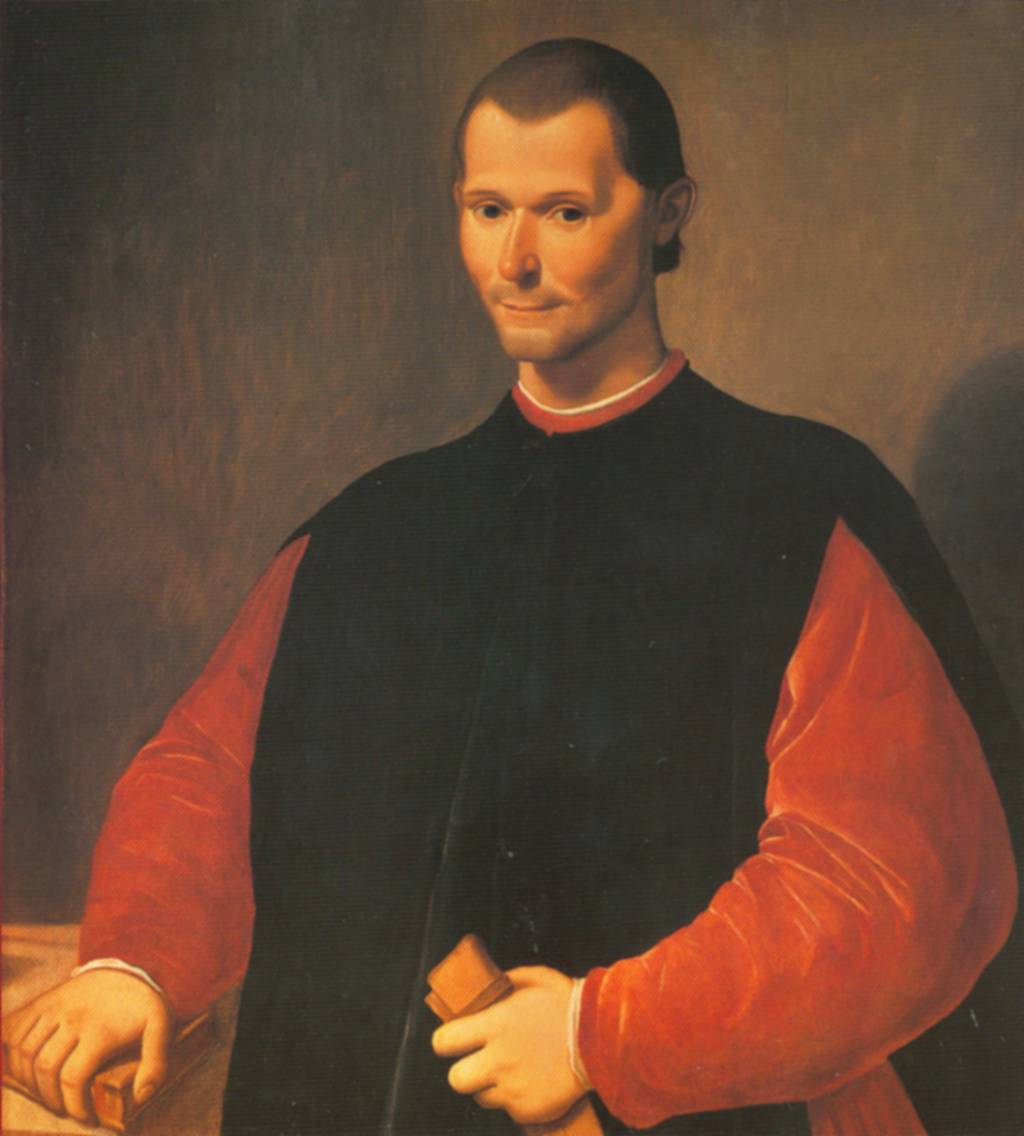
One of Savonarola's supporters who lost his position as a result was Alessandro Braccesi, head of the second chancery, an office responsible for all correspondence related to the administration of Florentine territories. At first the post was left unoccupied, but after a short delay the little known name of Niccolo Machiavelli was put forward as a possible replacement. He was only twenty-nine years old at the time and apparently had no previous administrative experience. His nomination was confirmed, however, and he was appointed second chancellor of the Florentine Republic. It was an enormous opportunity, and the experiences and insights he would gain in the post would be used later in writing The Prince.
At the time Machiavelli entered public service, there were already well-established standards for filling...
Reviews of: "Nicola Machiavelli- The author and his times. (background Notes)"
:
More Psychology
essays:
Love and Living Erich Fromm's Utopian Society This paper is 10 pages long not including the abstract and is in APA format
... support al higher authority figures that work in their best interest. The bases for all actions are to achieve power and taking from other to increase ones own ... feeling of isolation from nature. The isolation began in the renaissance the thought that humanity, not God, was the center of ...
The Pros and Cons of Cross-sectional and Longitudinal approaches to the study of development
... . The first developed a high interest in job security and family life while the second developed an interest in education. The uncontrollable externality ... the appearance of new skills or characteristics or the speed they were achieved. A simple example is that of physical growth in height; a study ...
Personal Identity, refers to the mind, body, and soul; comments on the author John Perry
Personal Identity can be broken down into three areas: 1.) Body 2.) Memory and 3.) Soul. In John Perry's 'A Dialogue on Personal Identity and Immortality' these composing aspects of personal identity are discussed at length. In the reading and class discussions the body was defined clearly as a ...
Gender Bias In The Workplace And Pay Inequalities
... white males and only a few minorities. We have an established pay scale but the scale is not always followed. There ... fail. "In sum, it is the relationship between social roles, interests, intergroup relationships and organizational culture norms and values that set ...
Autism: An essay for my abnormal Psych class outlining the disorder and its details
... respond negatively to physical affection and they will show no interest in making friends. They will have delayed language development and ... 2001, p1, 17). Autism is found throughout the world, in families of all economic, social, and racial backgrounds. Typically, about 20 ...
The three main theorie of Sigmund Freud and his contribution to society.
The Contributions of Dr. Sigmund Freud Sigmund Freud is the Jewish neurologist turned psychiatrist from 19th century Austria who is considered by many to be the father of the modern psychoanalytical method. The theories of Dr. Freud revolutionized the way society perceived mental workings and the ...
Differences between the extraverts and introverts of Hans Eysenck
... has been with us a good many years now, and not everyone is impressed by the sum of it's achievements." (Shackleton, 1984, p. 63). The common belief that there are significant differences between extraverts and introverts suggest that extremes would ...
How does "unwanted" sound effect the physiological and psychological performance differently than "wanted" sound
... see psychological effects of the human body through experimentation is very difficult. The study of human behavior is a social science, and therefore direct laws are harder to form because of vagueness, ambiguity, and emotive overtones in the subject matter, and ...
Opinion
I find this piece of work very informative.
0 out of 0 people found this comment useful.