Introduction
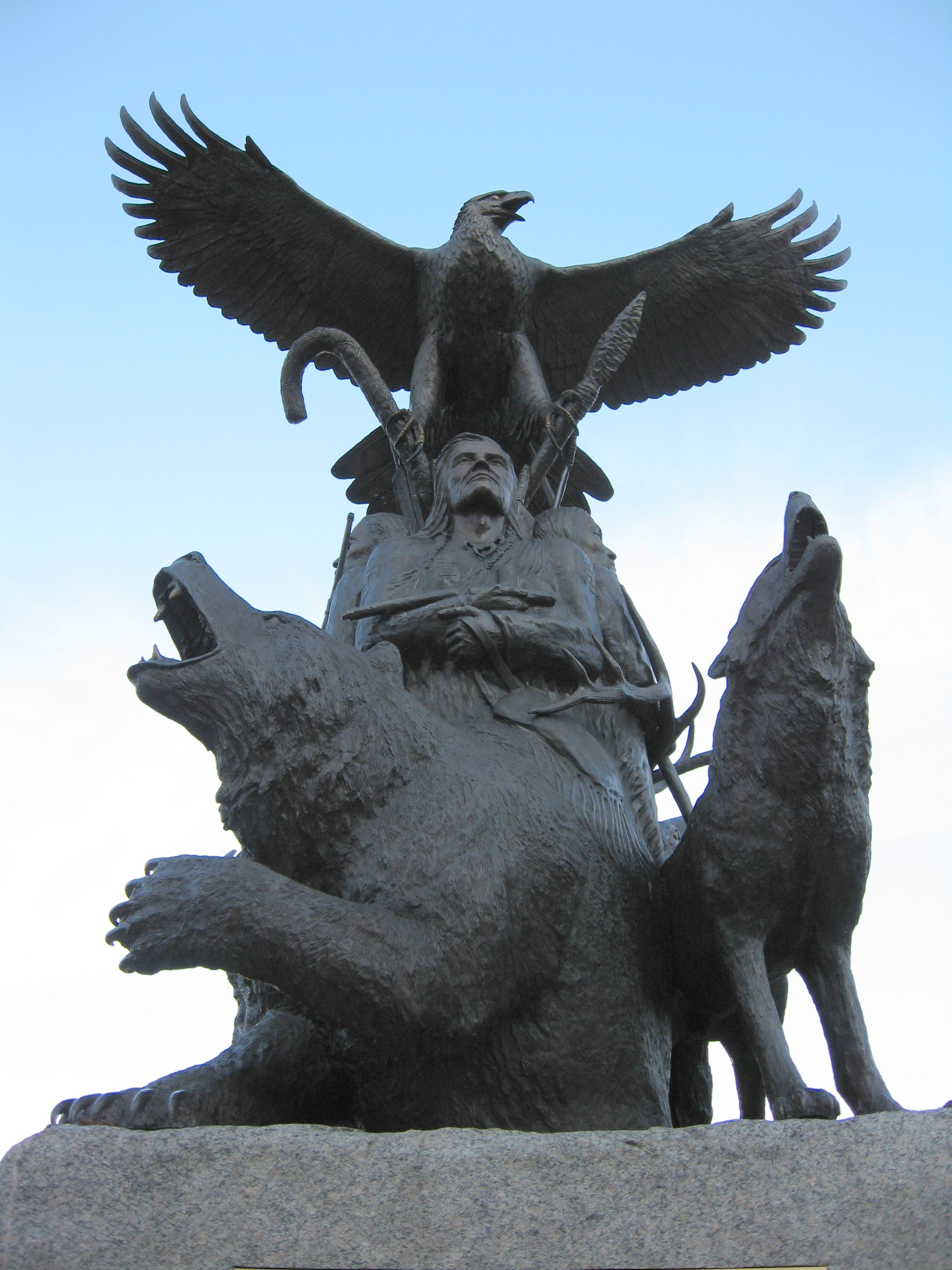 English: Monument to aboriginal war veterans in Co...
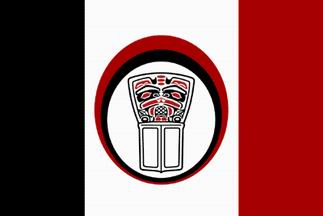 Flag of the Nisga'a Nation
 Tony Whitford
Self-government is essentially a contestable concept, one where there is no agreement over what it means, what powers a self-government should have, whether a self-government is subordinate to, equal to, or superior to, the other levels, provincial and federal in particular, of government in Canada. In 1998 the Nisga'a Nation signed a tripartite agreement between the people of the Nisga'a First Nation and the governments of Canada and British Columbia and became characterized as setting "a historic precedent," for the future of self-government and self-determination for the Aboriginal peoples in Canada. Though too premature to tell, as this agreement is less than a decade new, it certainly impacts Canada's federation, as this agreement sets a bar for other Aboriginal groups wishing to seek similar arrangements, precipitating a new trend for the reality of Canada. Of course, the nature of politics cannot evolve with out some discussion, for this reason I will explore the implications of this modern treaty on the citizens of the Nisga'a Nation.
The Supreme Court of Canada
While there is little contention that the courts have been the driving force in settling treaty negotiations, they are however lengthy and costly. That said millions of dollars has been spent on this agreement, evidently leaving the Nisga'a Nation autonomous in its governance of its citizens. It would be difficult to assume then, that during the thirty years of settlement negotiations and litigation, beginning with Calder in 1973, that the same amount of investment has been made to strengthen the capacity of the Nisga'a Nation and its citizens to govern themselves.
Politics and Leadership
What is most obvious is that over the last century the Aboriginal peoples of Canada have adopted western liberal values and in many ways assimilated accordingly to colonization. Hence, how are the self-governing Nisga'a Nation going to govern themselves differently, when their forefathers, in many ways have only been taught non-Aboriginal customs, values and language. Arguably, political leaders have had a poor reputation for not acting in the best interest of the people, despite the fact that Canada is a democratic state. How are the leaders of the Nisga'a Nation then, for example, Chief Joseph Gosnell, the driving force behind the Nisga'a settlement agreement, going to be any different than that of non-Aboriginal politicians? When the reality for all Canadians is simply this, bureaucracy manages the ways of which we function and operate. This appears contradictory to the so-called 'traditional values' Aboriginal peoples claim to possess and therefore infringes on their inherent right to be self-governing when the system of governance has not been traditional for well over a century.
The Constitution, 1982 and the Charter
Before one can even begin to grasp the impacts of Aboriginal self-government, one must acknowledge what the Constitution Act of 1982 states and whom it applies to with regards to the Aboriginal peoples' rights to claim self-government, through treaty negotiation in the first place. Therefore, the constitutional rights of Canada's Aboriginal peoples were given formal constitutional recognition in the Constitution Act, 1982, which in s.35 states:
35(1) The existing Aboriginal and treaty rights of the Aboriginal peoples of Canada are hereby recognized and affirmed.
(2) In this Act, "Aboriginal peoples of Canada" includes the Indian, Inuit and Metis peoples of Canada.
(3) For greater certainty, in subsection (1) "treaty rights" includes rights that now exist by way of land claims agreements or may be so acquired.
(4) Notwithstanding any other provision of this Act, the Aboriginal and treaty rights referred to in subsection (1) are guaranteed equally to male and female persons.
In addition, s. 25 contains an interpretative clause that stipulates that
25. The guarantee in this Charter of certain rights and freedoms shall not be construed as to abrogate or derogate from any Aboriginal, treaty or other rights or freedoms that pertain to the Aboriginal peoples of Canada including
(a) any rights or freedoms that have been recognized by the Royal Proclamation of October 7, 1763; and
(b) any rights or freedoms that now exist by way of land claim agreements or may be so acquired
Regardless of whether a band has its own resources or not, regardless of whether it is located in the remote north or near a large city in the south, regardless of whether it is a reserve in the south or a community in the northern territories, the band (or community) and its government are heavily subsidized by the federal government. This dependency will however change dramatically as the Nisga'a Nation assumes more power. The Nisga'a Final Agreement includes a gamut of regulations and provisions including but not limited to the following powers over:
Lands, Land Title, Forest Resources, Access, Roads and Rights of Way, Fisheries, Wildlife and Migratory Birds, Environmental Assessment and Protection, Nisga'a Government, Administration of Justice, Indian Act transition, Capital Transfer and Loan Repayment, Fiscal Relations, Taxation, Cultural Artifacts and Heritage, Local and Regional Government Relations, Dispute Resolution, Eligibility and Enrollment, Ratification and finally Implementation.
The allocation of funds and resources then is of concern, as so many citizens of the Nisga'a Nation are not equally represented in the political discussions that have and will inevitably occur and impact the daily lives of the Nisga'a citizens.
The Nisga'a citizens-governance and leadership
Different cultural contexts, contestable concepts and constitutional provisions have severe impacts for Canada's Aboriginal peoples striving for autonomy. The citizens of the Nisga'a Nation require the capacity to govern themselves. The question however are what values will be adopted with their newly acquired governing status. A brief overview will be provided to present current statistics on how many Nisga'a people possess post-secondary education, in addition to the waitlists for education, success rates and costs involved to send a citizen of the Nisga'a Nation through at least four years of post-secondary education. The relevance of this aspect cannot be ignored as it speaks to the capacity of the Nisga'a Nation to govern itself but also addresses the painful reality for many Aboriginal people, that nepotism is often a preferred way of operation throughout band councils across Canada.
Another matter of concern is how the Nisga'a leaders themselves will be held accountable. The obstacles that the Nisga'a citizens face are really a matter of location. If a citizen of the Nisga'a Nation lives on reserve, access to and benefits from the Nisga'a Nation are greater than those living off reserve in such communities as Prince Rupert, Prince George and Vancouver. Additionally, in 1997 the financial support from the federal government, in aggregate, amounted to $20,000 for every status man, woman and child. How this money is distributed requires further investigation, though it is a reasonable assumption that these funds are not allocated fairly. Therefore the issue of accountability is one that can only be addressed with sensitivity and risk, for citizens of the Nisga'a Nation can face severe consequences for speaking out. These in fact are the day-to-day political implications of such self-government arrangements. Money has the potential to breed greed, leading people to compete for control, which in essence leads to corruption and misrepresentation.
Self-government and the subsequent impacts on Canada's federation- can there truly be three levels of government, neither subordinate to one another?
With the historic signing of the Nisga'a Final Agreement, it is inevitable that there will be fragmentation of Canada's nation state. Is Canada not at risk of losing some of its powers, if three levels of government exist within our classic federation? If so, perhaps it is too soon to tell, yet a question that requires some exploration and research. The Nisga'a Final Agreement will therefore be examined to realize these divisions of power.
Conclusion
What the future holds for the Nisga'a citizens is one that will be observed with curiosity and criticism. There is no doubt that enormous strides have been made over the last twenty years through the Supreme Court of Canada's interpretation of s. 35 of the Constitution and s. 25 of the Charter. However, the next decade will be most revealing as the divisions of power strengthen for the Nisga'a Nation and the implications are felt not only by the Nisga'a citizens themselves, but by Canadians at large.
Bibliography
Taiaiake Alfred, Peace, Power, and Righteousness: An Indigenous Manifesto (Don Mills: Oxford University Press, 1999).
John Borrows, Aboriginal Legal Issues: Cases, Materials & Commentary (Butterworths Canada Ltd. 1998).
Frank Cassidy, Aboriginal Self-Determination (Hignell Printing Ltd. Winnipeg, 1991).
Alan Cairns, Citizen's Plus: Aboriginal Peoples and the Canadian State (Vancouver: UBC Press, 2000).
Curtis Cook and Juan D. Lindau, Aboriginal Rights and Self-Government (McGill-Queen's University Press, 2000).
John H. Hylton (forward by Elijah Harper), Aboriginal Self-Government in Canada- Current Trends and Issues (Purich Publishing Ltd, Saskatoon, 1994).
John H. Hylton (forward by Phil Fontaine), Aboriginal Self-Government in Canada- Current Trends and Issues 2nd Ed. (Purich Publishing Ltd, Saskatoon, 1999).
Hon. Ronald A. Irwin, Aboriginal Self-Government in Canada: Federal Policy Guide (Minister of Public Works and Government Services Canada, 1995).
Patrick Macklem, Aboriginal Self-Government: Legal and Constitutional Issues (RCAP) (Canada Communication Group- Publishing, Ottawa, 1995).
Tom Molloy, The World Is Our Witness: The Historic Journey of the Nisga'a into Canada (Fifth House Ltd. Calgary, 2000).
Patricia Monture-Angus, Journeying Forward: Dreaming First Nations' Independence (Halifax: Fernwood, 1999).