Opposition to "Taiwan independence" and curbing risky activities of "Taiwan independence" forces are in the common interests of both China and the United States, and the Asian-Pacific countries, said Chinese President Hu Jintao Monday in Beijing.
Hu made the remarks in a meeting with visiting Secretary of State of the United States Colin Powell, who arrived here Sunday afternoon for a two-day visit to China.
Hu said the current situation across the Taiwan Straits is still very complicated and sensitive. The "Taiwan independence" forces' activities aiming at splitting the country remain the root of the cross-straits tension and the greatest threat to peace and stability in the region, said Hu.
He said he appreciated the United States' reiteration for many times that it adheres to the one-China policy, abides by the three joint communiques and opposes "Taiwan independence".
He said he hoped the US side to see clearly the nature and serious harm of the "Taiwan independence" forces and really turn its promises on the Taiwan question into concrete actions, which is crucial to safeguarding peace and stability across the Taiwan Straits and in the Asian-Pacific region, and the sound and stable development of Sino-US relations.
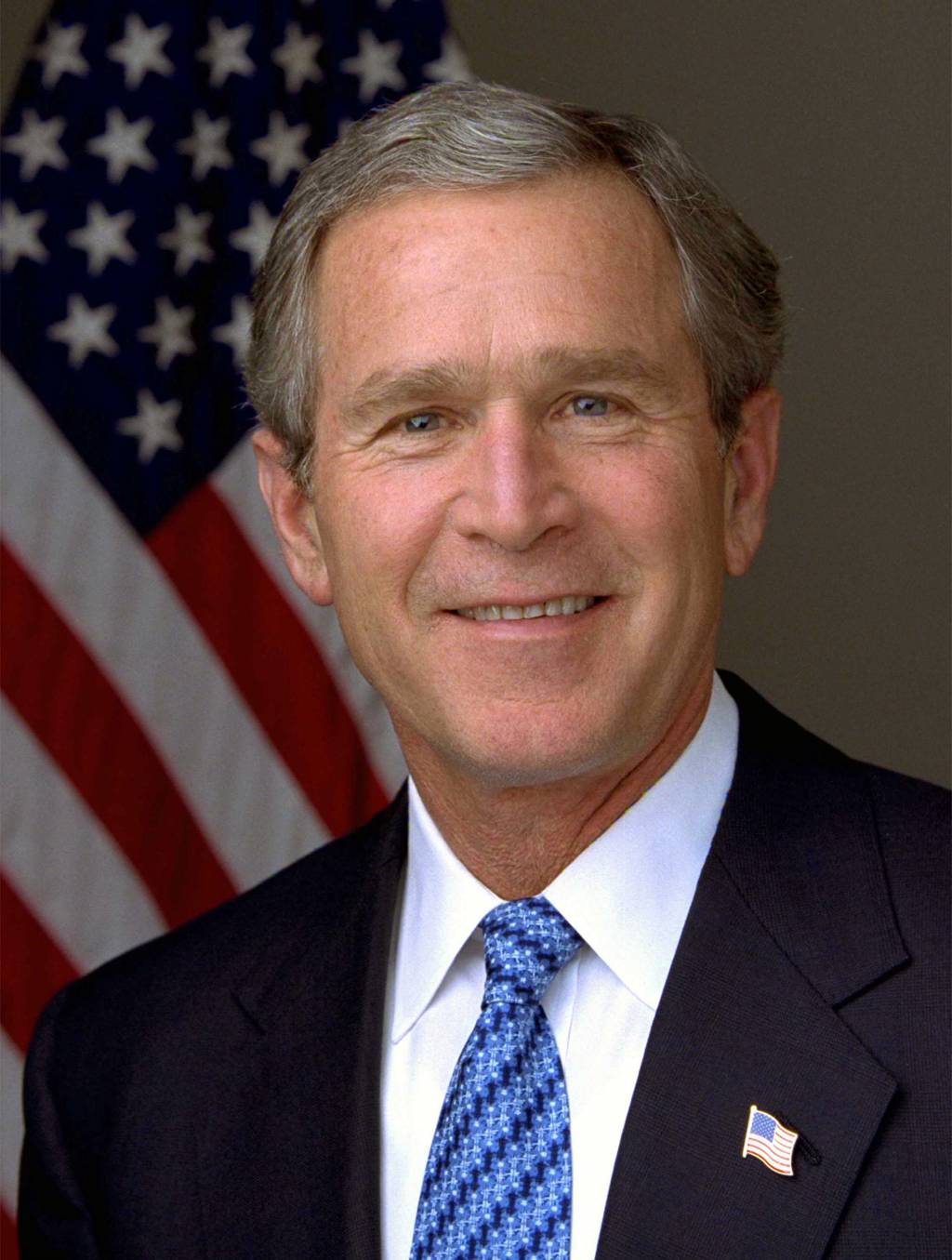 English: Official photograph portrait of former U....
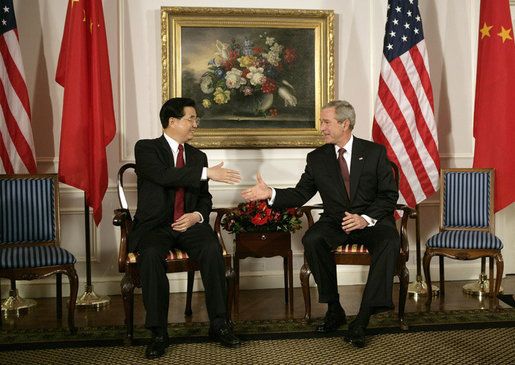 Hu Jintao with George W. Bush.
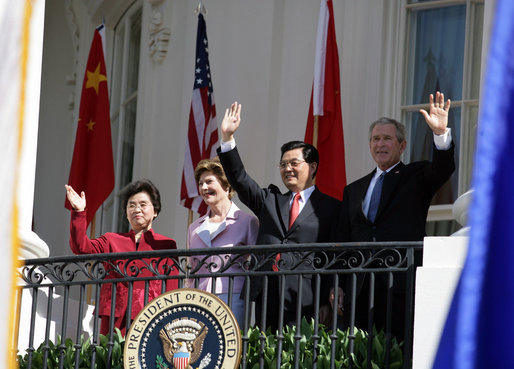 President George W. Bush, Chinese President Hu Jin...
China-US regular contact, dialogue of great significance
President Hu Jintao said that the regular contact and dialogue between China and the United States on bilateral relations and issues of common concern are of great significance to the development of Sino-US constructive cooperative relations.
He expressed his appreciation for Powell's positive contributions to the improvement and development of Sino-US relations during his term as US Secretary of State.
Powell extended US President George W. Bush's greeting to Hu and said Bush expected to meet Hu at the upcoming APEC meeting in November.
Powell started his two-day China visit on Sunday afternoon.
Beijing is the second lag of Powell's three-nation tour in Asia, after Japan. The US Secretary of State will also visit the Republic of Korea.
His China tour is believed to be the most important trip of the Asia tour, and is an important visit to push forward Sino-US relations.