Though the jihad declared by Osama Bin Laden against the United States can be seen as a conflict in many different angles, I feel that Samuel P. Huntington's definition of a clash of civilizations approaches the situation best, "The fault lines between civilizations are replacing the political and ideological boundaries of the Cold War as the flash points for crisis and bloodshed" (Huntington 29). The Cold War in Afghanistan, sparked by the U.S., resulted in several Islamic Fundamentalist groups, including Osama Bin Laden's network, the Al Qaeda. America's plan of having the Muslim community declare jihad on the Soviet Union backfired in a way unimaginable to the Central Intelligence Agency. The United States, not wanting to involve themselves in the war between Afghanistan and the Soviet Union, yet knowing that Afghanistan could not defend their territory on their own against the large Soviet army, had the large Muslim population in Afghanistan declare a jihad so other Muslims and Muslim countries would form alliances and defeat the Soviet Union (therefore, defeating the spread of communism).
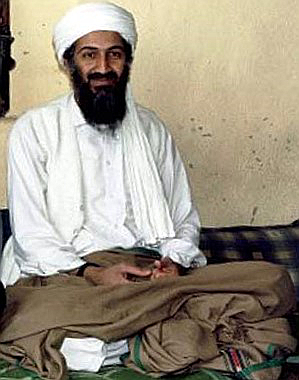 English: Osama bin Laden interviewed for Daily Pak...
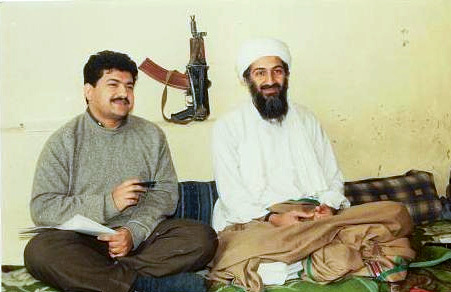 English: Hamid Mir interviewing Osama bin Laden fo...
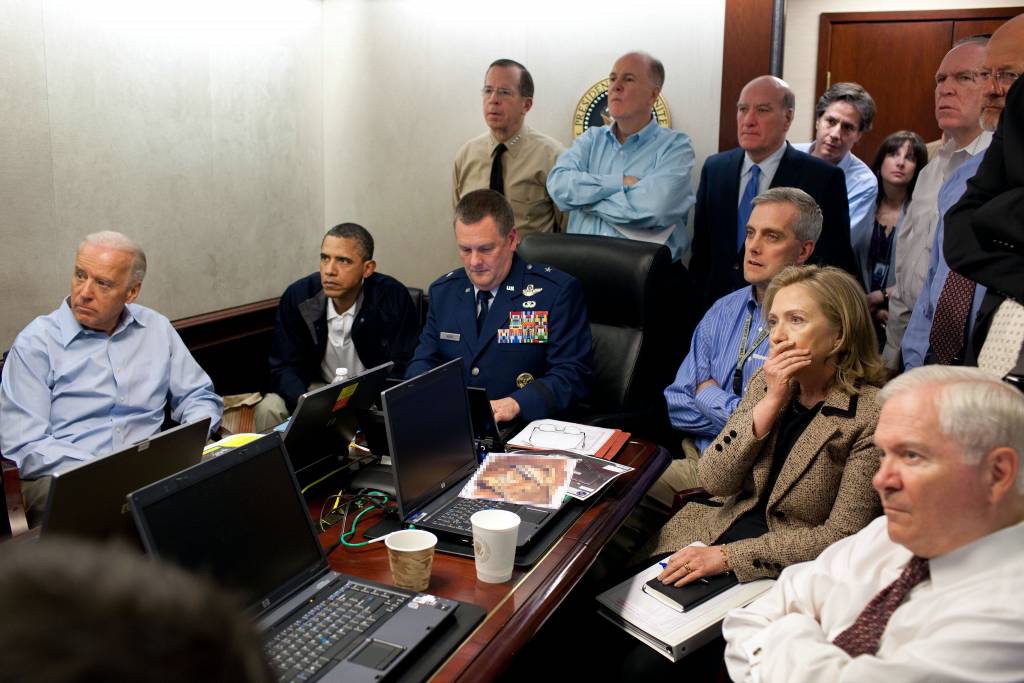 Pete Souza, Official White House Photographer
After the Cold War in Afghanistan ended, US Intelligence assumed Islamic groups would return to their respective countries. However, the fundamentalists stayed in Afghanistan in order to keep the nation's Muslim name intact. "...while the USA saw the collapse of the Soviet state as the failure of the communist system, many Muslims saw it solely as a victory for Islam." (Rashid 131) The successful jihad had sparked a new interest with fundamentalists in conquering the world in the name of Islam, "The war... left behind an uneasy coalition of Islamist organizations intent on promoting Islam against all non-Muslim forces." (130)
According to Huntington, "The clash of civilizations thus occurs at two levels. At the micro-level... At the macro-level, states from different civilizations compete for...