Outline the major changes that occurred in the development of Athenian democracy from 500BC to 450BC
Democracy comes from two Greek words: demos, which means, "people" and kratein, which means "to rule". Democracy first appeared in Athens towards the beginning of the fifth century B.C. The biggest difference between Athenian democracy and almost all other democracies is that the Athenain version was a direct democracy rather than being representative.
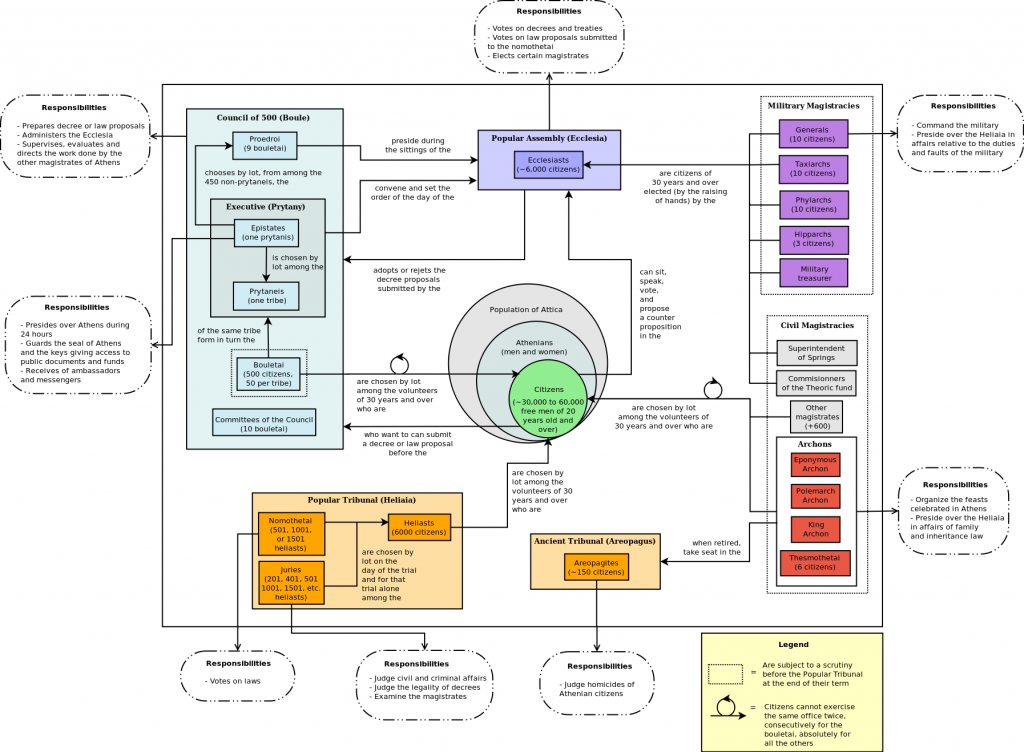
Democracy in Athens came about as a result of the growing navel power and the reforms of leaders such as Cleisthenes and Pericles. In order to truly understand the development of Athenain democracy it is imperative to know about Cleisthenes and his impact on this institution. To end regional divisions, Cleisthenes created over 140 townships (demes), which replaced the phratries as the basis of citizenship. Ten tribes (phylai) were created, and Attica divided into three regions: the city of Athens, the coast, and the interior. Several demes comprised a "third" (trittys) and ten trittys formed a region. Each tribe was made up of one trittys from each region, so had members in all parts of Attica. A Council of 500, with 50 men chosen by lot from each of the tribes, replaced the Solonian Council of 400. Cleisthenes may also have been responsible for the Athenian practice known as ostracism. A vote would take place and assuming 6000 votes had been cast the person would be sent into exile for a period of ten years. As Demand suggests the ostracized citizen's property was not taken nor was he convicted of and crime. When the ten years was up he was free to return to Athens.
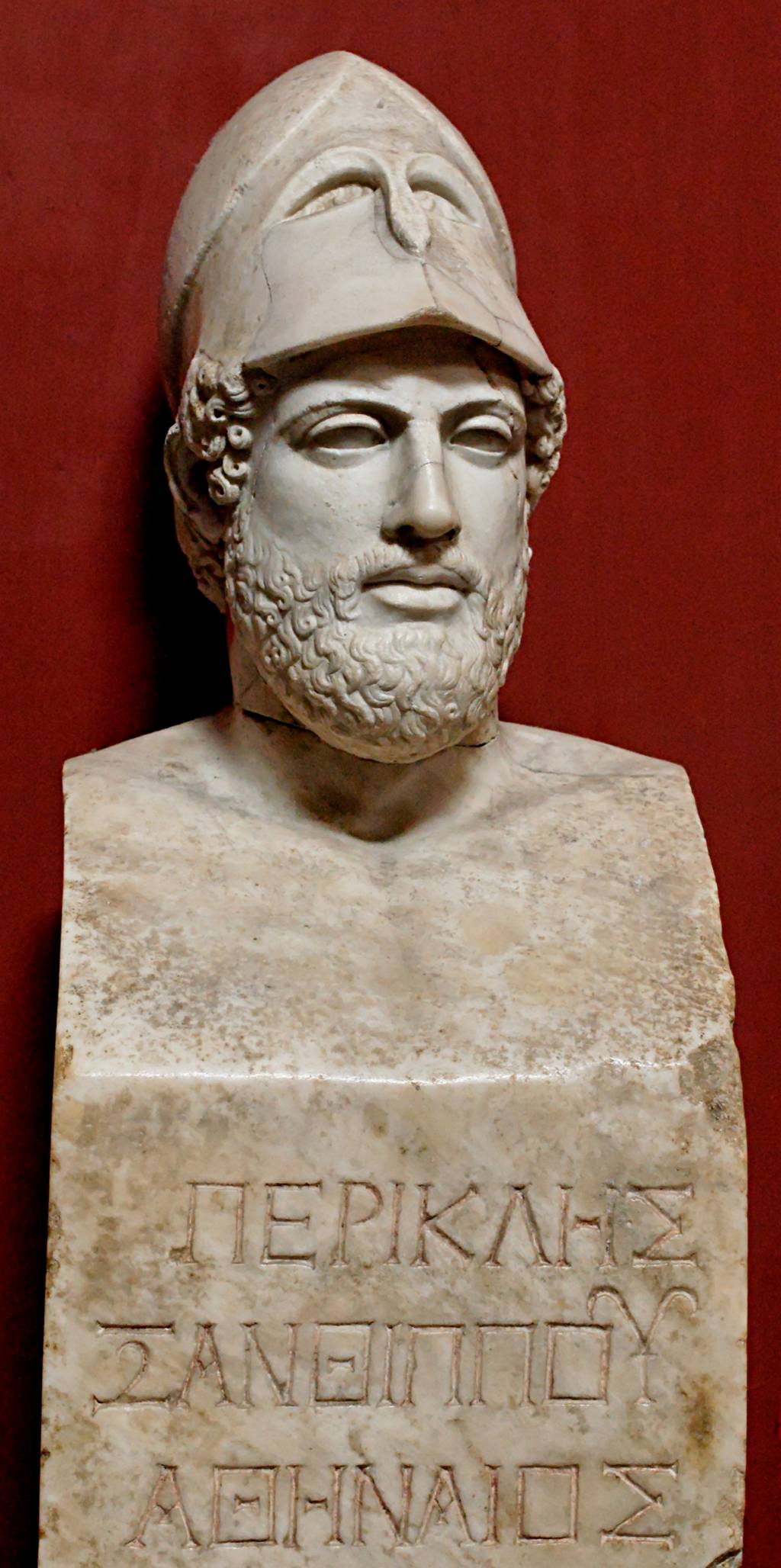
Ephialtes' reforms were some of the most important in the development of Athenian democracy. Between 462/1 he gave the Ekklesia, the boule, and the jury courts a much greater role. Another significant reform was the stripping of powers from the Areopagus that...
More European History
essays:
"Battle of Marathon" This essay talks about the great Battle of Marathon during the Persian Wars in ancient Greece 490 BCE
... The Greeks pursued in an attempt to capture the Persians ships but all but seven escaped. The Persians changed their course of action and sailed around to attack the now undefended city of Athens from the sea. The Athenian army ...
Relations Between the Catholic Church in Croatia and the Serbian Orthodox Church Since World War II.
... Balkan region of Europe have been unstable for nearly one thousand years. In 1054 A.D. when the Christian Church split in the Great Schism it was divided into two halves: the western Roman Catholic Church, with its capital city ...
The History Tells Us That The First Display Of European Democracy Begins, Arguably, Not In Athens But In SpartaThe History Tells Us That The First Display Of European Democracy Begins In Athens
... the citizenship rules in 451. Political scientists maintain that the Athenian democracy was one of the most participatory of all times in all countries. However, we should mention here that not all the inhabitants of the ancient Athens had ...
The Greek civilisation mainly the Archaic period
... the Greek democracies were not representative governments, they were governments run by the free, male citizens of the city-state. Second, all the people were not involved in the ... centers of literature. But perhaps the greatest of the city-states were Athens and Sparta. Sparta in particular ...
Ancient Sparta
... even in old age. The elders' duty was to properly perform the powers of the law, and if they did this, the city belonged to them each and all. The society of Sparta was divided into three main ...
The French Revolution.
... Parts of the Enlightenment ideas were those of Rousseau, Voltaire, and Locke. Rousseau wanted direct democracy. Locke ... stated in the 2nd Document. The people of France were divided into three large ...
A Brief Look at the History of English
... neatly, divided into three periods usually called Old English (or Anglo-Saxon), Middle English, and Modern English. The earliest period begins with the migration of certain Germanic tribes from the continent to Britain in the ...
How important was the role of ideas in the outbreak of the French and Russian Revolutions?
... west. In France, many people had returned from the American War of Independence of 1777 and brought the ideas of liberty and democracy with them. Belonging to the bourgeoisie, the philosophes also incorporated financial freedom into their ...