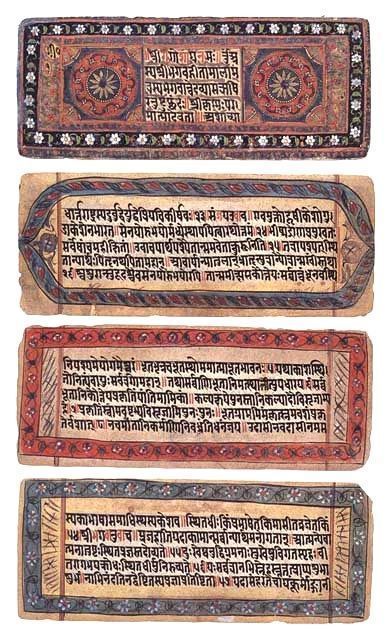
An Overview of the Religion of Hinduism: Hindu beliefs, including the concept of reincarnation, karma, and dharma, heavily influenced Indian culture.
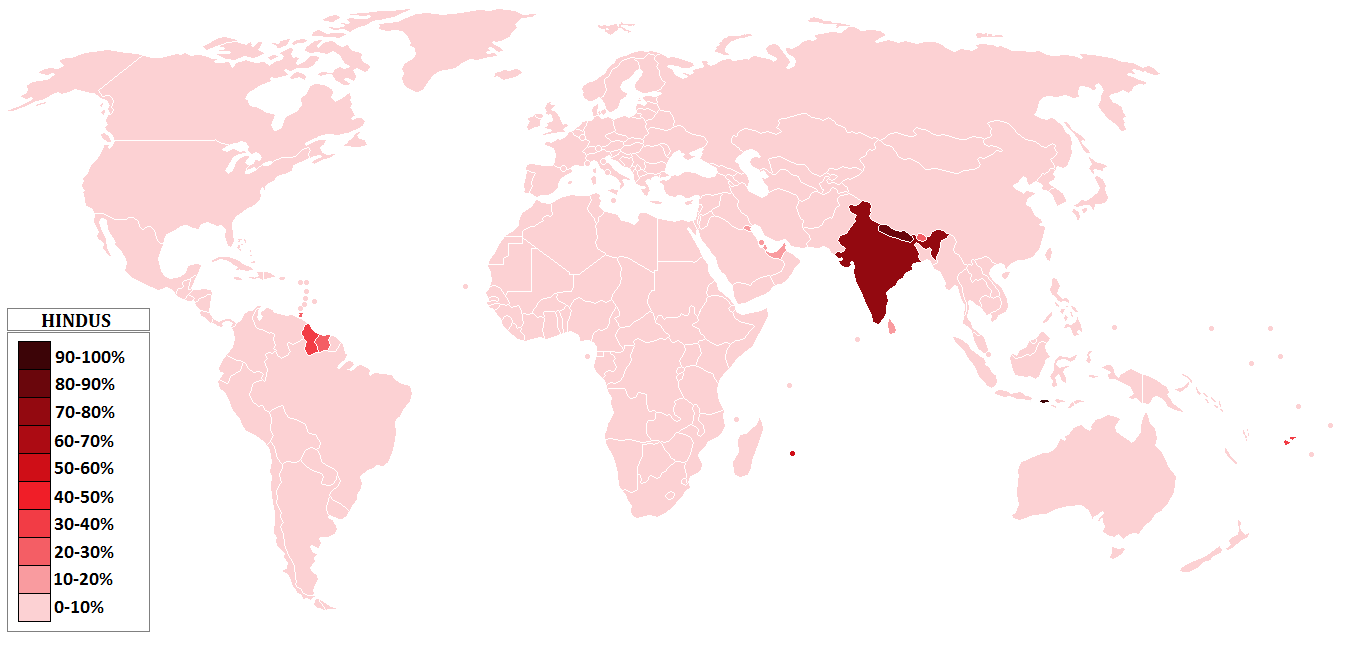
Hinduism was formed by multiple overlapping beliefs of the diverse people of India. It has neither sole founder nor a single text on which it was formed. It does not have a specific theological system, a single system or morality, or a central religious organization. It consists of "thousands of different religious groups that have evolved in India since 1500 BC." As a result of the unique process on which it was developed, Hinduism became one of the worlds most complex religions. Despite the countless gods and multiple forms of worship, all Hindus share certain basic beliefs.
God is one, but wise people know it by many names. This ancient proverb is the key feature of Hinduism. Hindus believe in an omnipotent spiritual force named Brahman. However, most Hindus find the concept of Brahman too complex to fully understand. Consequently, many of them are polytheistic, despite Hinduism being henotheistic. The main gods in Hindu are Brahman, the Creator; Vishnu, the Preserver; and Shiva, the Destroyer. Interestingly, all these gods are simply different aspects of Brahman.
Another key principle in Hinduism is the belief in reincarnation. Hindus believe that the ultimate goal of existence is moksha, a union with Brahman. But since most people cannot achieve moksha in one lifetime, reincarnation allows people to continue working towards moksha through multiple lifetimes. Each existence comes closer to moksha by obeying the laws of karma. In fact, Hindus believe that every action taken in that existence determines the ranking of the succeeding existencehumans are closest to Brahman, followed by animals, plants, and objects such as water or rocks. People who earn good karma are born at a higher existence; people who achieve negative karma in their lifetime are born in a lower existence.
In order to escape the wheel of fate, Hindus emphasize...
More Hinduism
essays:
Comparative religion: Eastern (Hinduism, Buddhism, and Taoism) and Western (Christianity, Judaism, and Islam) religions compared. This was a term paper and is quite long (about 5 pages).
... a good life, and don't attempt to speak of things that I cannot conceive. Religion is definitely becoming more of a tolerable subject among those who are intolerable. The persecution of religious groups seems ...
Hinduism - basic knowledge of Hinduism.
... nine basic beliefs held by Hindus. Hindus believe in the divinity of the Vedas, the world's most ancient scripture, and honor the Agamas as equally revered. These ancient hymns are God's word and the basis of Sanatana Dharma, the ...
Hinduism; WIU
... to good karma. Bad deeds and behavior brings bad karma. Hinduism is a single set of beliefs, although there are similarities and relationships to other religions. In Hinduism, there is a belief in one God-Brahman. Other gods worshipped by Hindus ...
Hinduism and beliefs
... sex organs. Most Hindus imagine Shiva as being in deep meditation high in the Himalayas. Shiva is the ultimate god who holds in divine tension the preservation and destruction of the ...
Hinduism; a basic overview of this eastern religion and philosophy.
... Hinduism, known as Sanatana Dharma, or everlasting religion, to its followers, differs from Christianity and other Western religions in that it does not have a single founder, a specific theological system, a single system of morality, or a central religious organization ...
Hinduism Notes. These notes include information about Reincarnation, Karma, Dharma, Babur, Akbar and more!
... number of existences in the earthly world, the soul reaches its final goal in a union with Brahman. According to Hinduism, all living beings seek to achieve this goal. 2)Karma *Karma is the force generated ...
Hinduism. A) Describe the sacred stories and writings. B) Four principal beliefs, nature of God, significance of life after death. C) Hinduism in Australia
... some Hindus do in India. The main aim of holiness is to fulfil dharma. The concept of dharma, often defined as 'religious duties', is an essential part of ethic and morality in Hinduism. Sacred ...
This is an essay about the role of idol worship for Hindu women in India.
... the Hindu religion is so rich in goddess worship that an undeniable contradiction between the daily lives of Hindu's and their religious belief system exists ... conception of Brahma. She is the creator, the preserver but her most revered role is Kali as the destroyer of all ...