A&P Lab Report on Blood Pressure & Pulse during exercise
Topic: Human Cardiovascular Physiology- Blood Pressure and Pulse Rate Determination.
Hypothesis: Exercise can raise the blood pressure and the pulse rate.
Aim: To determine the effect of exercise on the blood pressure and the pulse rates of students in the class.
Introduction: The blood pressure of a person is the force exerted by the blood on the walls of the arteries per unit area. The blood pressure unit is mmHg. The blood pressure of an individual is expressed in two ways, the systolic (due to the contraction of the ventricle) and diastolic, (due to the relaxation of the ventricle). The normal blood pressure of an individual is 120/80 (systolic / diastolic). Various factors can alter a person's blood pressure; this includes exercise, smoking, stress, diseases and age.
Materials and Methods:
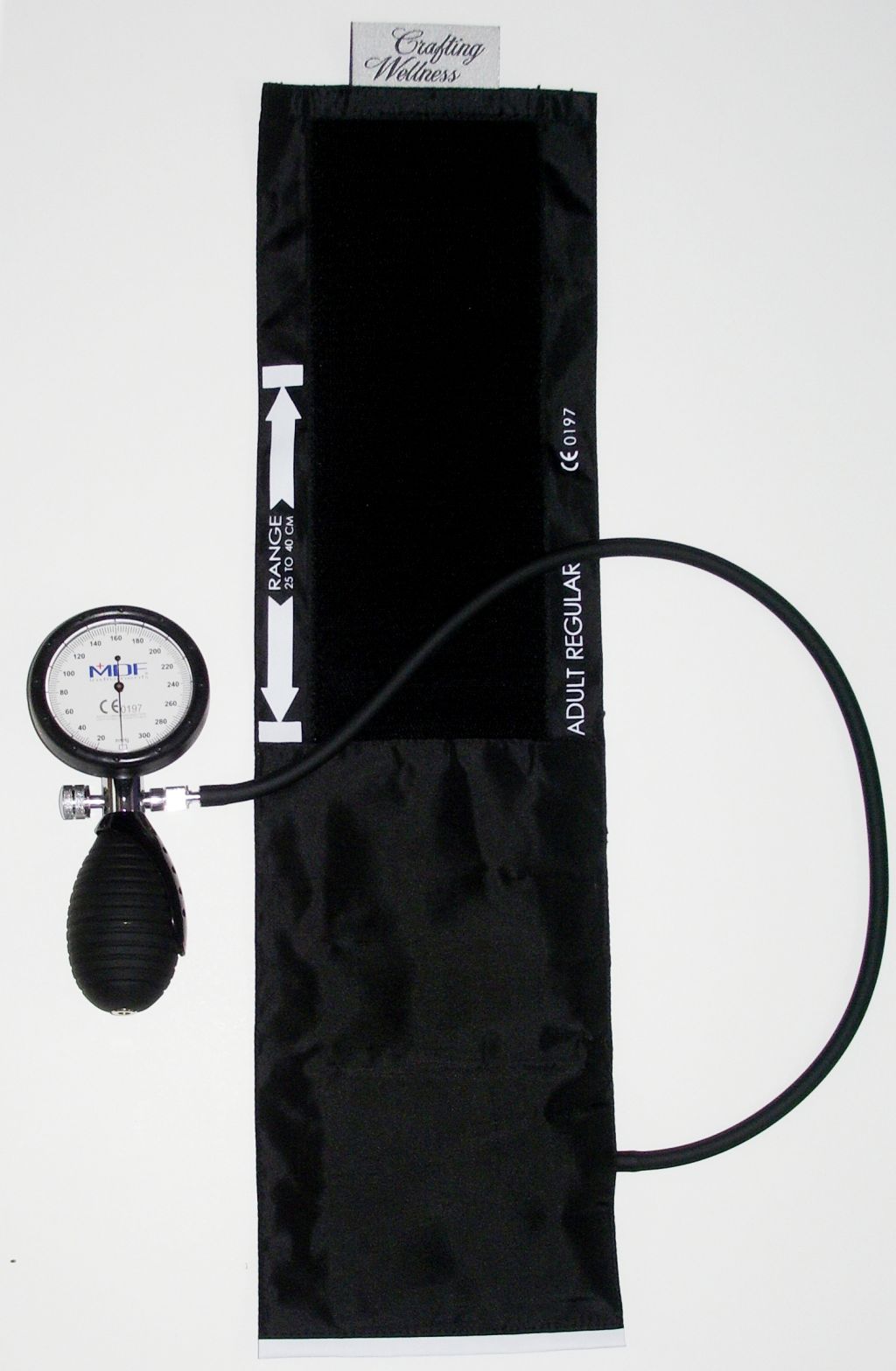
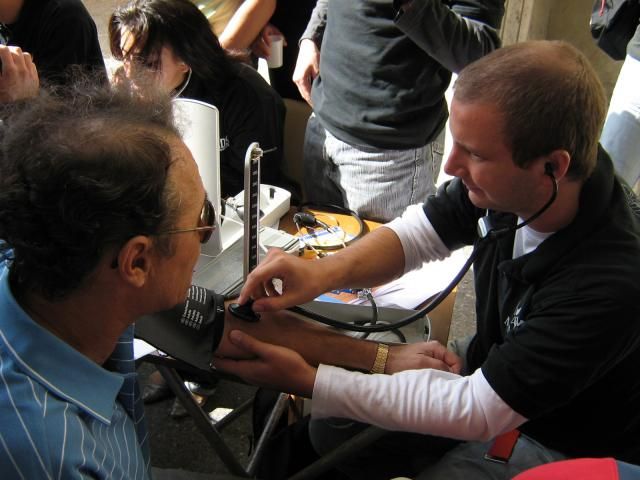
Stepping stool, timer, blood pressure measurement kit (Sphygmomanometer and a stethoscope) and students in-groups of four. In each group one student acted as a patient, while the other acted as a physician or nurse. Another acted as the timekeeper. The fourth student acted as the data recorder.
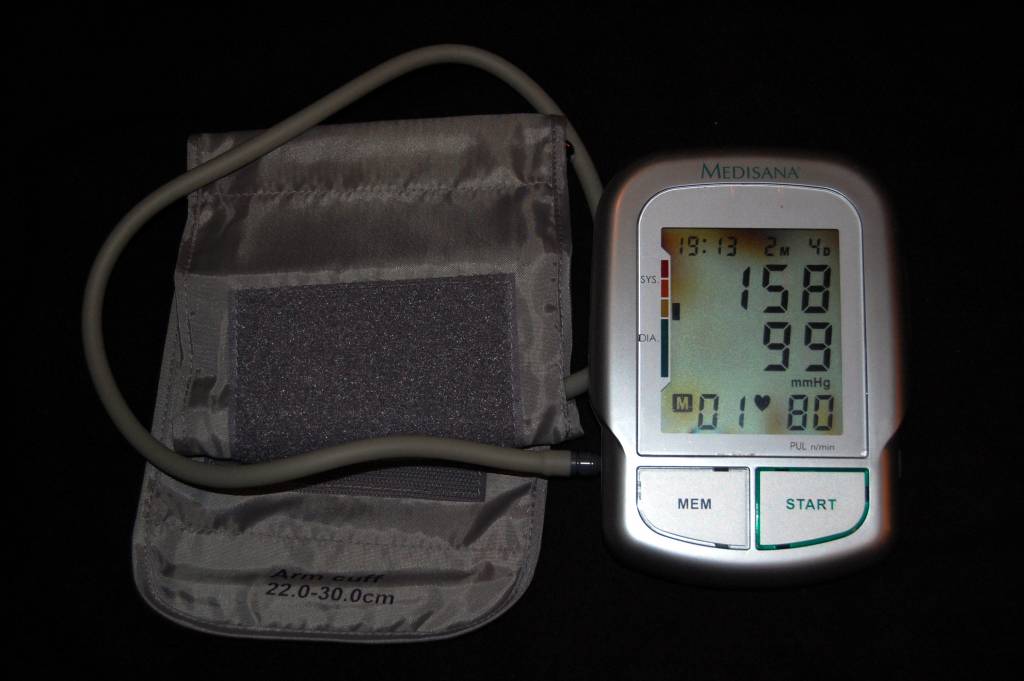
The base-line pulse rate and blood pressure of the patient (student) were obtained. The patient was asked to perform stepping - up and down the stool 30 X within 5 minutes. After the stepping stool exercise, the patient's blood pressure and pulse rate were immediately obtained again. After resting for 2 minutes, the measurements were repeated and also after 5 minutes.
In order to obtain more data each student in the group acted as a patient and the measurements were repeated.
Results:
Student#1 BPb= 120/80
Pulse =65
BPE=140/90
Pulse = 80
BP2=130/90
Pulse=75
BP5=120/80
Pulse = 65
Student #2 BPb=110/80
Pulse = 65
BPE=130/85
Pulse=85
BP2=125/85
Pulse=75
BP5=115/80
Pulse=70
Student # 3 BPb=130/80
Pulse=75
BPE=150/90
Pulse=90
BP2=145/85
Pulse=85
BP5=140/85
Pulse=80
Student # 4...
More Human Biology
essays:
Biology Lab Report on the Effects of Adrenalin on a Daphnia
... metabolic rate, breathing rate, heart rate, blood pressure, sweating and even blood clotting. It is a convenient hormone to study because its effect is relatively swift. Materials required Materials list ...
Biology Report on Smoking and its health effects on the circulatory system includes reference list.
... seconds. It stimulates the nervous system, increasing the heart beat rate and blood pressure, leading to the heart needing more oxygen. In extreme cases ...
A Scientific Look at Cardiovascular Fitness
... sometimes measure their resting heart rate as one way to find out if they're overtrained. The heart rate adapts to changes in the body's need for oxygen, such as during exercise or sleep. Materials and Methods For ...
Variations in High Altitude Populations. The purpose of this paper is to describe the high altitude stresses and the general adaptations made by the Tibetan population in the Himalayas and the Quechua
... either physiological,pathological, or environmental conditions cannot deliver adequate supply of oxygen to the tissues. Since air is compressible, air at high altitudes is less concentrated and under less pressure. At ...
Inter-Organismal Transport System in Humans
... high pressure of blood being pumped through them directly from the heart. Except for the pulmonary arteries, all arteries carry oxygen-rich blood. The artery that carries oxygen-rich blood from the left ventricle to ...
AP Biology Lab Report for Population Genetics and Microbiology
... 6, the students hypothesized that, due to the 50% survival rates in all genotypes, half the population would be eliminated. This hypothesis was supported in that each time either 50 or 51 ...
The Physiological Effects on Aging by Exercise: (predominance of aerobics)and the correlation in slowing the aging process.
... Coronary artery disease accounts for almost half of all death in the US The proper aerobic exercise-at any age-increases strength, keeps blood pressure down and increases ...
What makes up the cardiovascular system, and describe the components.How the cardiovascular system works and the effect of exercise on the cardiovascualr system
... aorta and pulmonary arteries the aortic and pulmonary valves open and blood is ejected. During exercising your body's heart rate increases, the blood pressure increases, ventilation increases and perception also increases. During exercise the ...