The Pardoner's Tale Research Paper
The Pardoner and his TaleThe Pardoners prologue and tale correspond with his character in a way that no other pilgrim does in The Canterbury Tales, by Geoffrey Chaucer. This correspondence can be seen through the Pardoners insatiable greed. True irony can be found in the prologue, tale, and the Pardoner himself. The sermons, told by the Pardoner, possess an underlying purpose. The Pardoners attempts to sell the fake relics only further manifest the Pardoners true self. The typical tendencies of the Pardoner lead to a confrontation with the Host. The insecurities of the Pardoner indicate a possible flaw in his character. Ultimately, the Pardoner stays true to his prologue and tale.
The Pardoner possesses an insatiable hunger for money, and has thrown away his loyalty to God in order to fulfill that hunger. The Pardoner bases his tale around the moral that greed is the root of all evil. He admits to his own greediness and how his avarice inspires him. The Pardoner says, But let me briefly make my purpose plain; I preach for nothing but for greed of gain And use the same old text, as bold as brass, Radix malorum est cupiditas (Chaucer 243). The Pardoner is somewhat proud of his greed and is not hesitant to admit it. Warren says, the Pardoner declares himself a covetous man, and the only theme he preaches constitutes the chief condemnation of the vice in Scripture (Ginsberg 69). The reason for the Pardoners constant telling of this moral could possibly be that he knows it by heart.
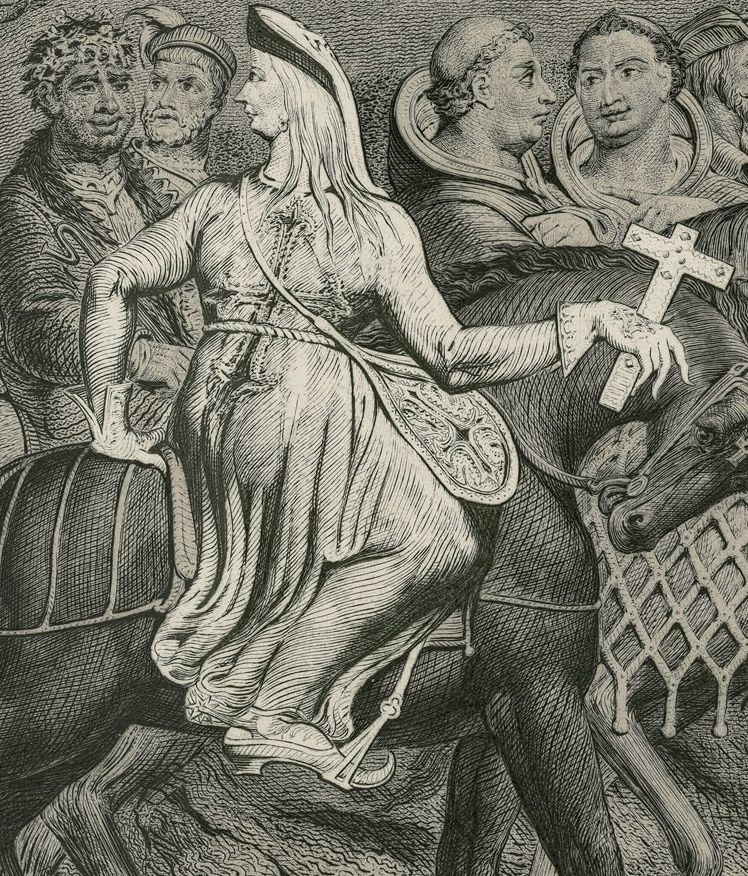
The irony found in the Pardoner and his tale is uncanny. The very fact that the Pardoner preaches against greed yet profits from it, is irony in and of itself. The Pardoner says, And thus I preach against the very vice I make...
More "Canterbury Tales" by Geoffrey Chaucher
essays:
The Canterbury Tales - by Geoffrey Chaucer
... to the Summoner. The Pardoner's Tale is the darkest of all the Canterbury Tales. It reveals the corruption behind the Church, saints, relics, and papal indulgences. Even the other pilgrims sense something dreadfully wrong in the Pardoner. As soon ...
"The Canterbury Tales" by Geoffrey Chaucer
... tales is to show how greedy and corrupt the Catholic has become. The circumstances in each tale are different, but the main point is that greed is the root of all evil ...
The Unholy church. Who and how does Geoffrey Chaucer satirize in the Canterbury Tales and what is his opinion on the Church?
... he is going to receive a good monetary donation. With this money the Friar pays off his superior to keep the "rich" areas of town his. The Job of a Pardoner is the sell ...
The Miller, this essay is about the book, The Canterbury Tales, by Geoffery Chaucer. The Miller is a certain character and this essay tells of his part in the book.
... Geoffrey Chaucer wrote The Canterbury Tales, a collection of stories in a frame story, between 1387 and 1400. It is the story of a group of thirty people who travel as pilgrims to Canterbury (England). The pilgrims, who come from all ...
Greed and Evil Canterbury Tales Geoffrey Chaucher
... be greedy. Chaucer was successful in creating a story which explained how greed is the root of all evil(Bible). Geoffrey Chaucer, The Canterbury ...
Irony in the Canterbury Tales by
... the tool of irony to teach two similar lessons. The moral of "The Pardoner's Tale" is "Money is the root of all evil". Similarly, the moral of the "Nun's Priest's Tale" is ...
The Pefect love. Love as one of the most important themes in "The Canterbury tales" by Geoffrey Chaucer
... says, ' The Beauty of the lady whom I see wandering yonder in the garden is the cause of all my cries and woes.' This is not ...
Externally Different, Internally the Same; an essay about the Canterbury Tales by Geoffrey Chaucer. Compares and contrasts two of Chaucer's pilgrims, the knight and the plowman.
... Internally the Same The Canterbury Tales is the most famous work of Geoffrey Chaucer, a late fourteenth century English poet. Chaucer envisioned English poetry which could be read by anyone who spoke English. The Canterbury ...