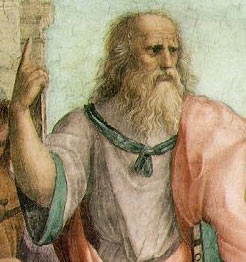
Philosophy Of Plato
As you may know from the lectures, Plato was a greek philosopher who was born in 427 BC and died in 347 BC. Plato was actually given the name Aristocles, but was called Plato possibly as a reference to his broad shoulders because apparently used to a wrestler. Plato by the way means broad or flat. He was born into a wealthy family and his dad was descended from the last king of Athens Plato's philosophy had a massive impact on western thought which is probably the reason why he is so well known in the western world. Another reason why Plato is so well known and respected is because of his method of enquiry. Plato's method of enquiry was totally different from the past ancient greek philosophers, the method used was a more rigorous and rational method of enquiry which philosophers alike used today. Plato introduced analysis, effective argument and a rational approach which laid the foundations of philosophical thought for all the philosophers who came after him. This is why the British philosopher Alfred North Whitehead famously said that the history of philosophy is "˜but a series of footnotes to Plato' Plato wasn't pre occupied by the big questions in life which related to cosmology, his main concern was with moral philosophy i.e. how to live our lives. His later readings were more directed to other branches of philosophy such as political philosophy, education, metaphysics and epistemology. Plato's was actually the earliest philosopher whose writings have survived so it gives philosophers a look not just into early philosophy but what ancient Greece was like.
It's also important to look at the world Plato was living in. At the time Greece wasn't a united country, but was a collection of city-states that were united by language and culture as well as...
More Contemporary Philosophy
essays:
PLATO: Greatest Contributor to Philosophy A report about Plato's contributions to the development of philosophy. It covers his Academy, Dialogues, and his student Aristotle.
... of Plato's philosophical thoughts and Dialogues pertained to political issues. Because of the impact Plato's Dialogues made in the development of philosophy and ... Guide to the Political Classics Plato to Rouseau. New York: Oxford University Press, 1998. Moulton, Carroll, ed. Ancient Greece ...
An Analysis of The Republic
... many ancient philosophers refer to as the guardians (rational class). This leads to Plato's account of the virtues. Although Plato believed that membership in the guardian classes should only be based on their education, philosophy, and ...
Philosophical interpretation of "reality"
... two philosophers is that Plato points out reality to be something beyond obvious while Aristotle defines reality as the physical objects and things of this world. Aristotle's philosophy is ...
Does Plato succeed in demonstrating that philosophers make the best rulers?
... a philosopher is not wise, then he may not make any better a ruler than someone who is virtuous because of correct belief. Plato's theory, therefore, really depends on philosophy actually be able to produce ...
Plato: a history of his life and philosophies
... and philosophies. His successors and predecessors were forever referring to his work, and examining his theories. This Greek man's name was Plato. More ... of these standards. Until the human soul has lived a philosophical life three times in succession, it must be reincarnated but ...
Characterise and assess Plato's theory of forms/essences in the first half of the Phaedo (up to 95e).
... with Plato and is the realm of scholars versed in ancient Greek. A metaphysical claim concerns the existence of the objects of the enquiry, for example, is it the case that 'courage' itself exists? An epistemological claim amounts to the ...
PLATO: His Biography and Works
... meaning 'broad') because of his broad shoulders. He was the youngest son of Ariston and Perictione who both came from famous, wealthy families who had lived in Athens for generations. While Plato was ...
The Effect of the Philosophers on 17th and 18th Century Society
... Other Philosophes, thwarted the intellectual and moral values of the society in which they took part of. Because they believed that their society was not rational, according to the ...