Among many contemporary poets, Gabriel Okara makes his stand as one of the most influential Nigerian lyricists. Okara speaks of the same impressions of the controversial novelist Chinua Achebe. In the poem "Piano and Drums," Gabriel Okara shows the contrasts between the past life and the modern world. Some aspects in his poem date back before the beginning of civilization. In this essay I will reflect on Okara's concepts and visions.
The poem is effectively written in Verse Libre or free verse. This allows Okara to freely express his thoughts without any restrictions in rhyme or rhythm, yet the poem inhibits a powerful rhythm. This technique gives a lyric type tone to the poem, aiming on the reflection of the speaker's experiences and how different and complex life has become. From "...simple paths with no innovation..." formed with "...the naked warmth of hurrying feet..." contrasting strongly with the modern day "...complex
 POETRY SOCIETY POSTCARD
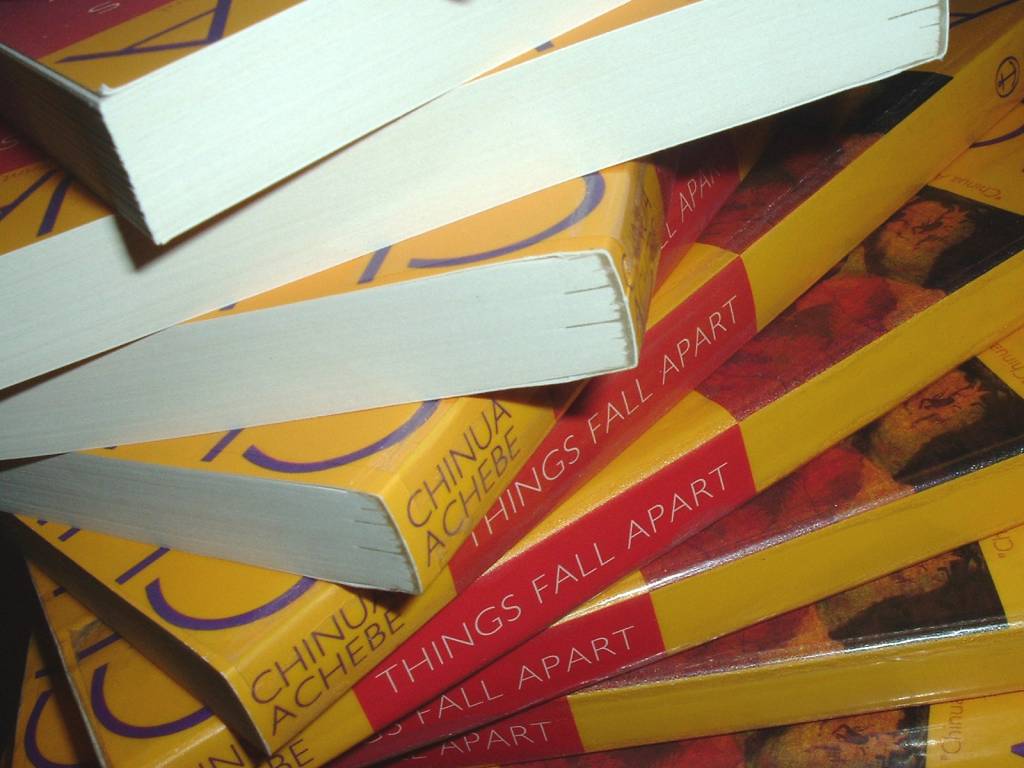 A spiral stack of copies of the 1994 Anchor Books ...
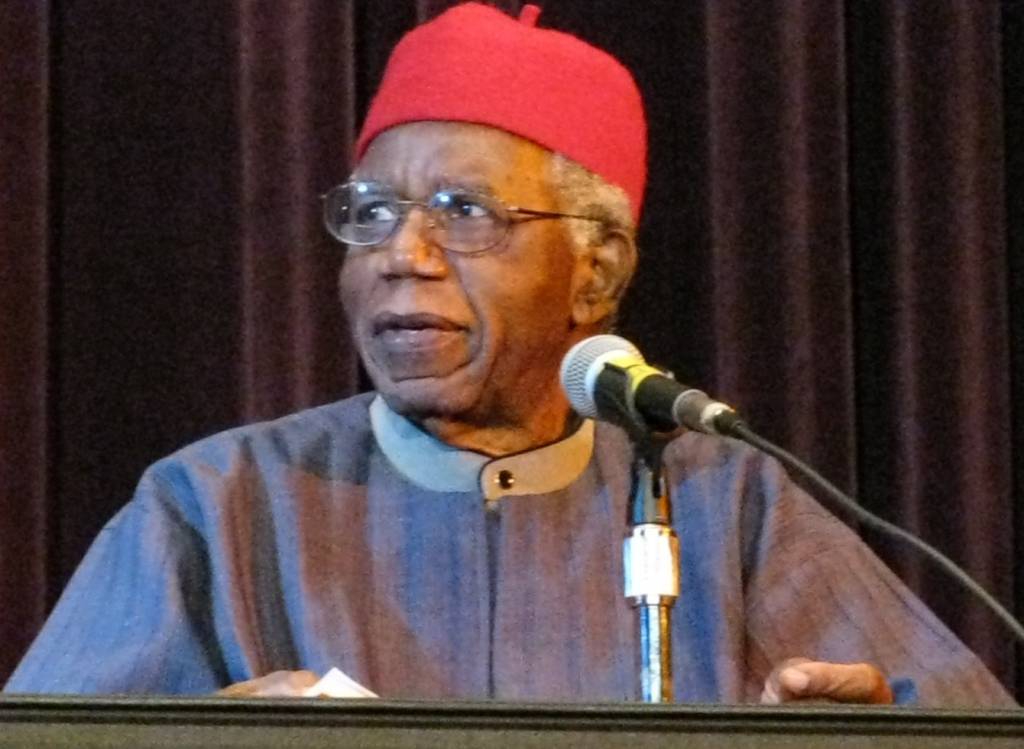 English: Chinua Achebe speaking at Asbury Hall, Bu...
ways...," this reiterates the title's strong contrast, piano's and drums. So by using no distinctive rhyme or rhythm, Okara creates a monologue lyric reflective on the speaker's experiences and visions.
In the poem, there is a strong contrast between the symbols shown in the title. The drums, representing metaphorically ancient native life; simple yet solid, some of the perspectives date back to earlier times before the acts of civilization but most importantly European imperialism. The drums have a "...mystic rhythm..." having an unrehearsed, "...urgent, raw..." sense to their powerful simple, basic beat as opposed to the piano. The poem metaphorically symbolises the Western World but more specifically the European race. This statement is created because of the complexity of the instrument; an individual must possess some sort of knowledge. The speaker describes the sound of the piano as "...wailing..." this also contrasts with the "...pulsing..." beat of the drum. Through these elements of contrast, the speaker metaphorically describes to us a sense of change and a sentiment of loss.
The poem frequently extends back to primitive times, where the piano was not present. By doing this the speaker shows how change can occur at any time and may destroy cultural foundations. He uses the drums as "...primal youth..." and the piano being "...tear furrowed..." This immediately illustrates how the drums have been dated back years ago, and how the piano being "...tear furrowed..." brings pain and loss. This is a direct link to the Europeans invading on the territories of the indigenous black Africans. By relating the poem to previous times, the speaker gains evidence to make his points deeper.
There is a constant reference to mystical, unknown elements in the poem. The first encounter is at the beginning with; "...at a riverside..." The speaker gives no information or specificity on the region of where he is located. There is the alliterated "...mystic rhythm..." at the opening two lines of the poem and the ending two lines of the poem, which echoes the title and the first time we are greeted with the phrase. The speaker mentions "...mist..." near the end which also adds to the component of unexplained factors. Thus the speaker creates an aspect of unknown elements and thoughts which have not been fulfilled.
To conclude, the poem "Piano and Drums" by Gabriel Okara, reflects on proportions explored by Chinua Achebe. Okara expresses his judgments on the greater picture which is European imperialism. He also articulates on the sense of loss from there indigenous ethics to modern customs irrelative to the black society. It is a poem reflecting on change and loss.
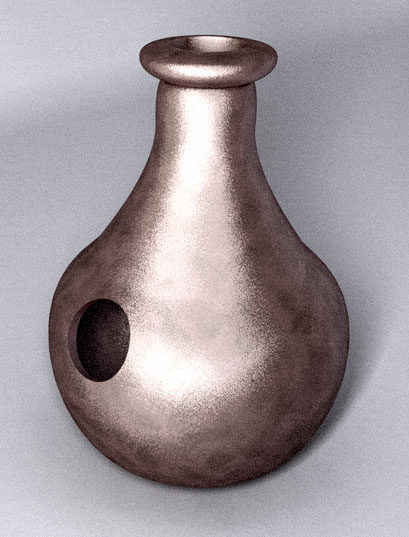 English: Computer generated image of an udu made b...
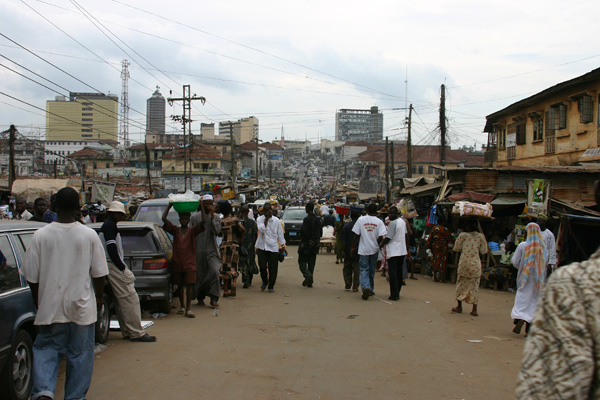 English: Market scene in Ibadan
 Poetry
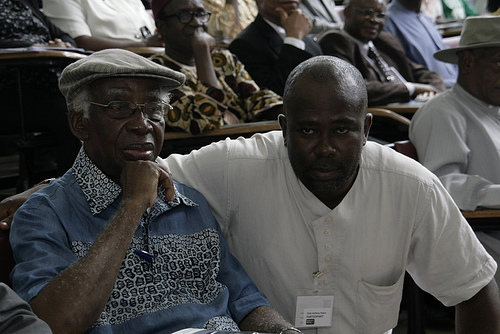 With Dr. Gabriel Okara On The Opening Day Of The F...