Pituitary Dwarfism
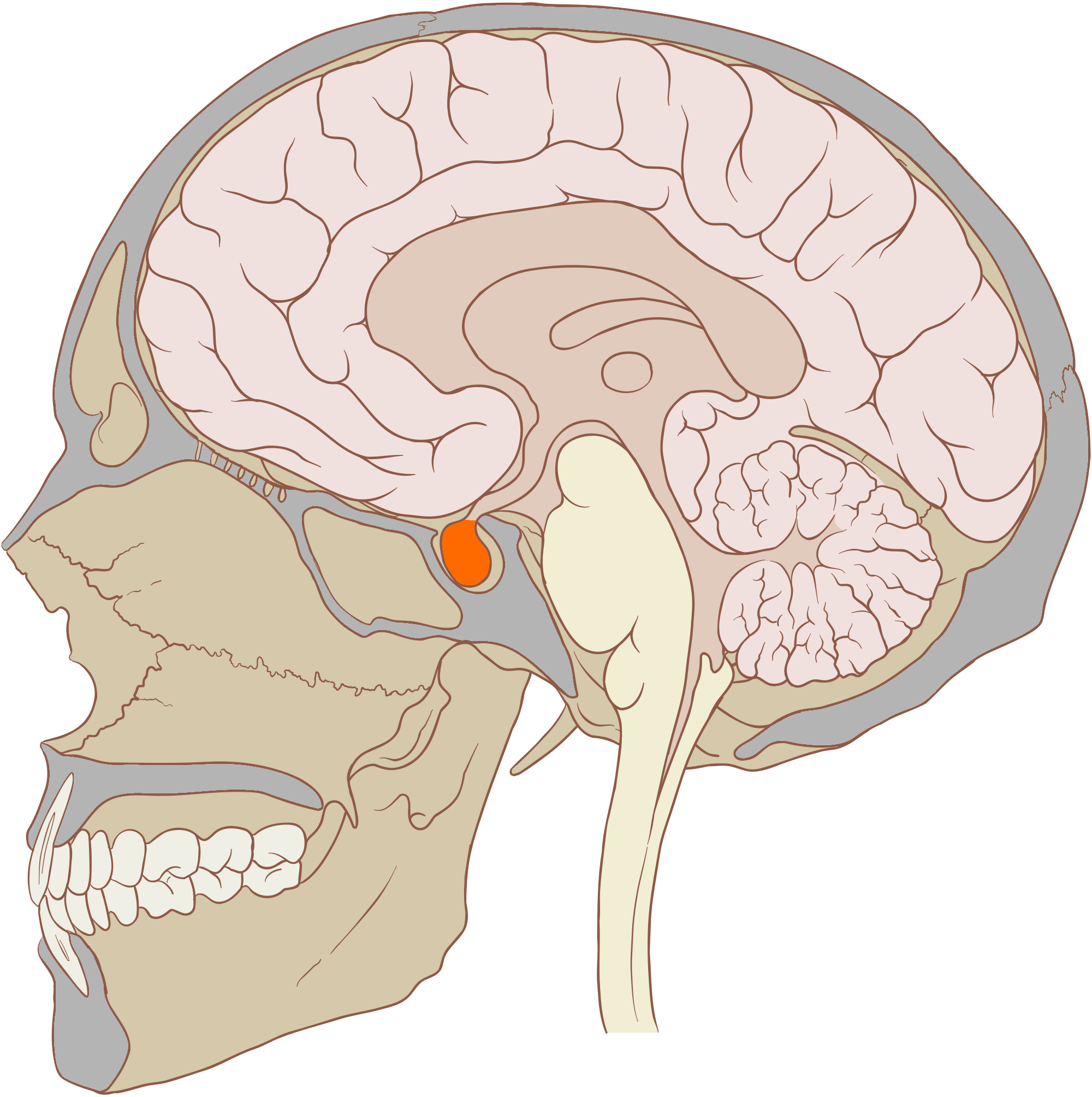
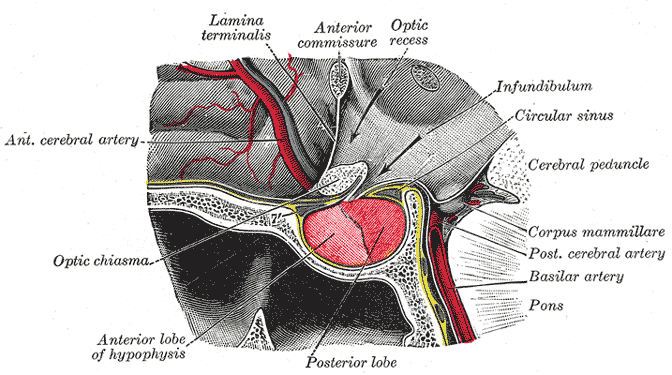
The Pituitary Gland is situated at the base of the brain and it produces hormones which control growth. Too large an amount of these hormones causes giantism, a condition where facial features, hands, etc. become abnormally large. Too little causes dwarfism, where the overall stature of a person is very small.
Dwarfism is the condition of being undersized, or less than 127 cm (50 in) in height. Some dwarfs have been less than 64 cm (24 in) in height when fully grown. The word midget is usually applied to dwarfs. Another growth disorder disease is Cretinism which is a result of a disease of the thyroid gland it is the cause of most dwarfism in Europe, Canada, and the United States. Other causes of dwarfism are Down's syndrome, a congenital condition with symptoms similar to those of cretinism, achondroplasia, a disease characterized by short extremities resulting from absorption of cartilaginous tissue during the fetal stage, spinal tuberculosis, and deficiency of the secretions of the pituitary gland or of the ovary.
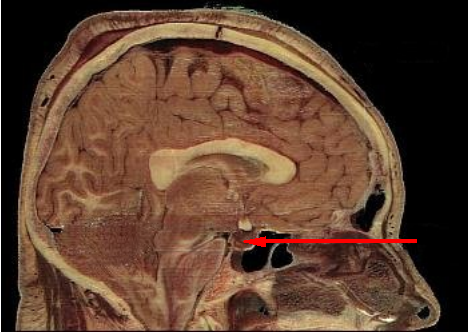
Causes of pituitary dwarfism may vary. Abnormally short height in childhood may be due to the pituitary gland not functioning correctly, resulting in underproduction of growth hormone. This may result from a tumor in the pituitary gland, absence of the pituitary gland, or trauma.
Growth retardation may become evident in infancy and persists throughout childhood. Normal puberty may or may not occur depending on the degree of pituitary insufficiency that is present, which is the inability of the pituitary to produce adequate hormone levels other than growth hormone.
Physical defects of the face and skull may also be associated with abnormalities of the pituitary gland. A small percentage of infants with cleft lip and cleft palate may have decreased growth hormone levels.
No ideal treatment has been developed yet for...
More Human Biology
essays:
A critical and in depth analysis of pituitary dwarfism!
... recently, the only source of human growth hormone was the pituitary glands of deceased people, obtained at autopsy. In April 1985, pituitary-derived growth hormone was removed from distribution in the United States and many ...
Congenital Adrenal Hyperplasia A birth defect research paper written for an infant development class.
... that of the rest of Europe and the United States. Some hypothesize that this may relate directly to the degree of homogeneity and isolation ...
Melatonin and the Pineal Gland
... melatonin; the hormone that may prove to be the biggest medical discovery since penicilin, and the key to controlling the aging process. The pineal gland controls such functions as our sleeping cycle and the change of body ... metabolizes the thyroid hormone (which supplies energy to the mitochondria ...
Occupational Health Issues - Overachieving on the Job - STRESS
... Overactive thyroid gland · Skin disorders · Diabetes mellitus · Tuberculosis (Academic Library) Depression and mental disorders are also a common complaint of long ...
Describes Anthrax, the different types and what it does to a person that gets it, and how a person gets it- 5 pages- done for a High School Anatomy Class
... effects, of which evidence is limited. The only anthrax vaccine currently approved for human use in the United States is made by BioPort Corp. in Lansing, Michigan. The Food and Drug ...
Male Circumcision: A Social and Medical Misconception
... against the toxic effects of vaginal blood, and as a mark of slavery. (Milos & Macris, 1992) In the United States, advocacy of circumcision was perpetuated amid the Victorian ...
Outline of Leprosy
... countries of Asia, Africa, and Latin America, especially where crowded and unsanitary conditions contribute to its spread, and even in the more developed countries it crops up from time to time. In the United States, the disease ...
Variations in High Altitude Populations. The purpose of this paper is to describe the high altitude stresses and the general adaptations made by the Tibetan population in the Himalayas and the Quechua
... identical conditions. It is known that " birth weight is said to be correlated with maternal size particularly stature(Baker,95)" therefore small birth weight is an effect of the adaptation of body size to deal with hypoxia. Growth and development ...