Plato's Allegory of the cave.
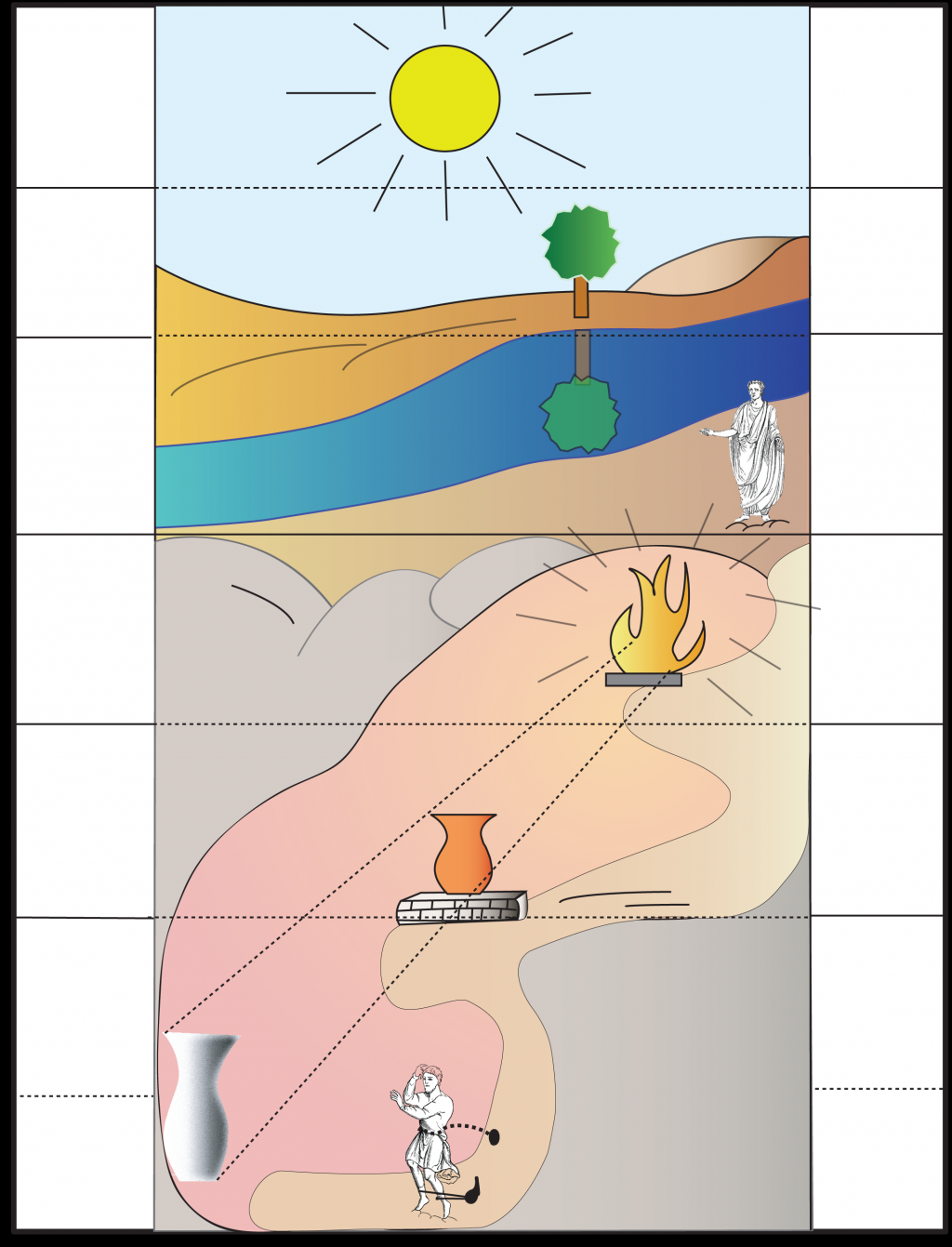
The allegory of the cave was an analogy of Plato, the greatest of the ancient philosophers. The allegory of the cave was based on the majority of mankind. We are like prisoners chained in a dark cave. There we live from childhood knowing only the dark cave wit ha blazing fire off to a distance. All that is visible to us is shadows made by one another reflected on to the wall of the cave. Bound by the chains we are unable to move or turn around. To us all that is known is what is displayed inside of the cave. We are unable to distinguish our own shadows from our fellow prisoners. The only world we know consists of the sounds and shadows of the cave.
If someday any prisoner is freed from the chains, to him the outside world would be foreign and frightening. The glare of light from the outside world would cause pain to his eyes and he would suffer. Blinded by the great light he would then hide his eyes. Further he will be unable to notice that the shadows were unreal. Once accustomed to the light he will venture out of the cave. Only then will he realize that the shadows from the cave were not reality. Upon this realization he his take pity on his fellow slaves. He will be ridden of his illusions and accepted his new state.
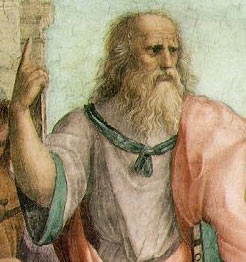
Once he has accepted reality he will attempt to relay the truth to the chained prisoners. The prisoners in the cave will maintain that he is ridiculous and close their minds to any idea of further seeking the world outside the cave. They will cast out the liberated prisoner to prevent anyone further ascending and trying to free another and lead him towards the...
More Contemporary Philosophy
essays:
This essay is about Plato's Allegory of the Cave and what my interpretation is of the images that dwell in the cave.
... you know something, once you understand and have seen the light, you cannot go back into the cave of ignorance. Plato demonstrates this in "The Allegory of the Cave." The prisoners were chained in the cave to ...
Plato's Allegory of the Cave
... Plato's cave allegory is an analogy of an individual's journey from ignorance to enlightenment, as well as referring to his beliefs of the world of appearances, and the world of Reality. The individuals are chained within the cave by ...
Plato's Allegory of the Cave
... allegory has a number of "prisoners" trapped in a cave, without the ability to turn their heads around. All the prisoners only can see the wall in front of the cave the way which they are facing. There is a fire ...
Explain the Criticisms of Plato's Theory of the Forms.
... his Allegory of the Cave (from The Republic, Book VII), where the prisoners only live in what they think is a real world, but really it is a shadow of reality. According to Plato, to ...
Plato's theory of ideas-the history of philosophy.
... reality, Plato gives a brilliant comparison of the state of non-philosophical consciousness with the state of the cave prisoners' consciousness in book X of his Republic. The non-philosopehr is the prisoner of the cave, and he is observing shadows ...
Plato's view of Justice in The Republic.
... on Plato or vice versa at this time. This correlation of classical Greek and ancient Chinese science is especially apparent in 444d of The Republic ... with the medieval belief in The Great Chain Of Being. The Great Chain Of Being was a description of the balance of power and harmony in the world that ...
An essay on Plato's theory of forms.
... what they see is real and do not want to know of an alternate world or perfect world. The parable of the cave reflects this. Plato explained this with the philosopher who escaped the cave or "World of ...
Plato's Republic, a breif summary.
... pleasures of appetite and honor. The philosopher's pleasures are much greater than those of the normal world, or so Plato states. The Republic ...