Even in this abridged version, Plato's fable "The Allegory of the Cave" reflects the vast wisdom of Plato, his teacher and the philosophers of his time. The story's meaning and lessons are as significant today as they were then, and its inclusion in The Republic is well earned.
The intentions of Plato in sharing this story seem to be fairly simple. As with all of the works that he included in The Republic, he is attempting to convey a message that relates to government and leadership. I also believe that this story conveys a message to, not just leaders, but people in general. The message that is expressed by this work is that, " A lie told often enough becomes the truth."(-Lenin), and when someone is convinced of this lie, the liar can control them. This fable also tells us how, what some people believe to be true may be in fact the exact opposite to truth, and that people must always be open minded, just in case their beliefs are wrong.
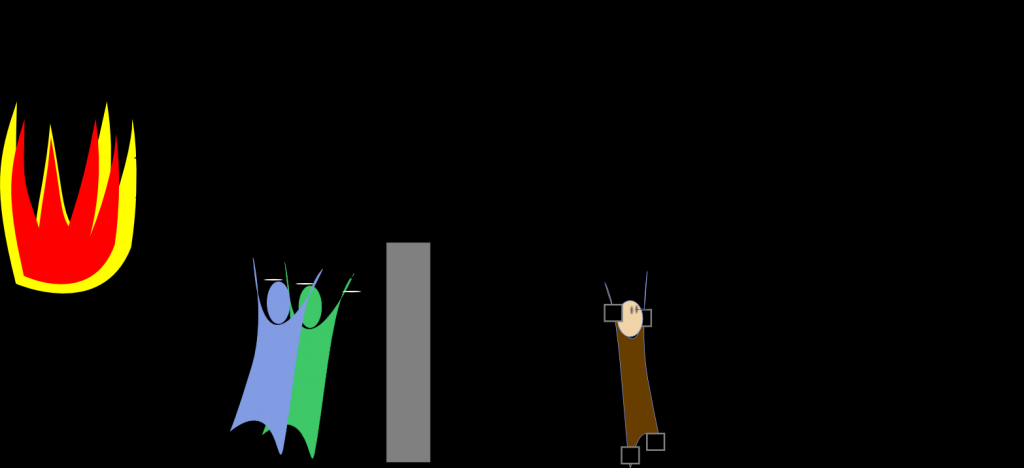 Illustration of Plato's Allegory of the cave.
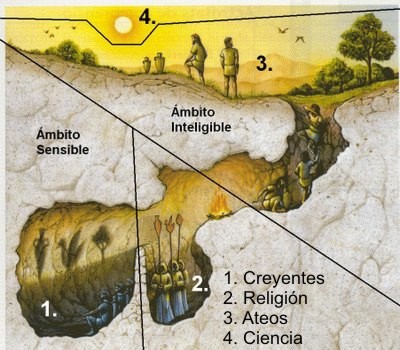 English: 1. Believers 2. Religion 3. Atheists 4. S...
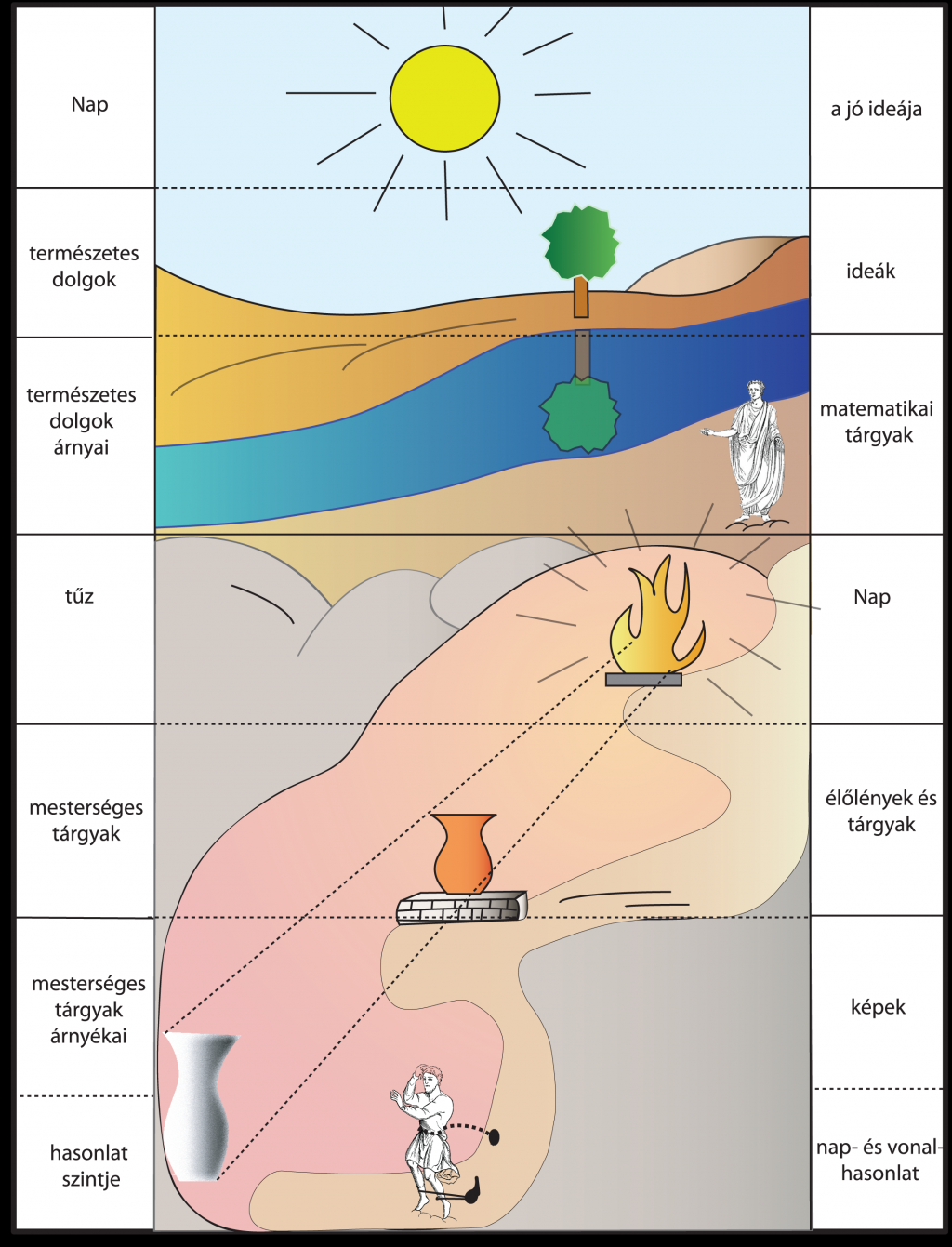 en: Cave allegory (Plato); hu: Barlanghasonlat.
In the story, the prisoners are convinced that the shadows they see are alive, real and able to speak to them. In fact, however, they are being lied to by puppeteers. Because they have seen this lie so many times, and because it is all that they have seen, for them, it has become the truth. As such, the puppeteers are able to control their lives, by speaking to these prisoners as the shadows. This lesson becomes quite relevant to today's society. It is portrayed in works such as The Matrix and Animal Farm, where the characters are lied to, but because they hear the lie so often, they perceive it as truth. In reality, we find this message to also be evident in the forms...
Nice
I thought that this was a very nice book report. I really liked some of your own ideas that you expressed as well as the ideas in the original text. overall i like the way your thoughts and ideas were presented , as well as the fact that there was a very nice flow between arguments and the new paragraphs. very well done
0 out of 0 people found this comment useful.