The search for extraterrestrial life is not doomed to fail. Bernard le Bovier de Fontenelle's "Conversations on the Plurality of Worlds" (1686) makes this abundantly clear. However, the author's approach of the subject is totally different from the approach of scientists today, who discuss again and again the possibility of the existence of life beyond earth with specific formulas such as the Drake equation. The scientists and writers who discuss the plurality of worlds today do not deal with the "imagination" as much as de Fontenelle did. Neither do these scientists and writers feel the need to include philosophy in their discussions about the possibility of the existence of life beyond our planet. Moreover, de Fontenelle uses "conversations" to explain his reasoning behind the belief that there exist "an infinity of worlds with inhabitants." If the author's work had been written in our own time, we would include it among books such as Zen and the Art of Motorcycle Maintenance, which uses facts and fiction to explain the author's philosophy.
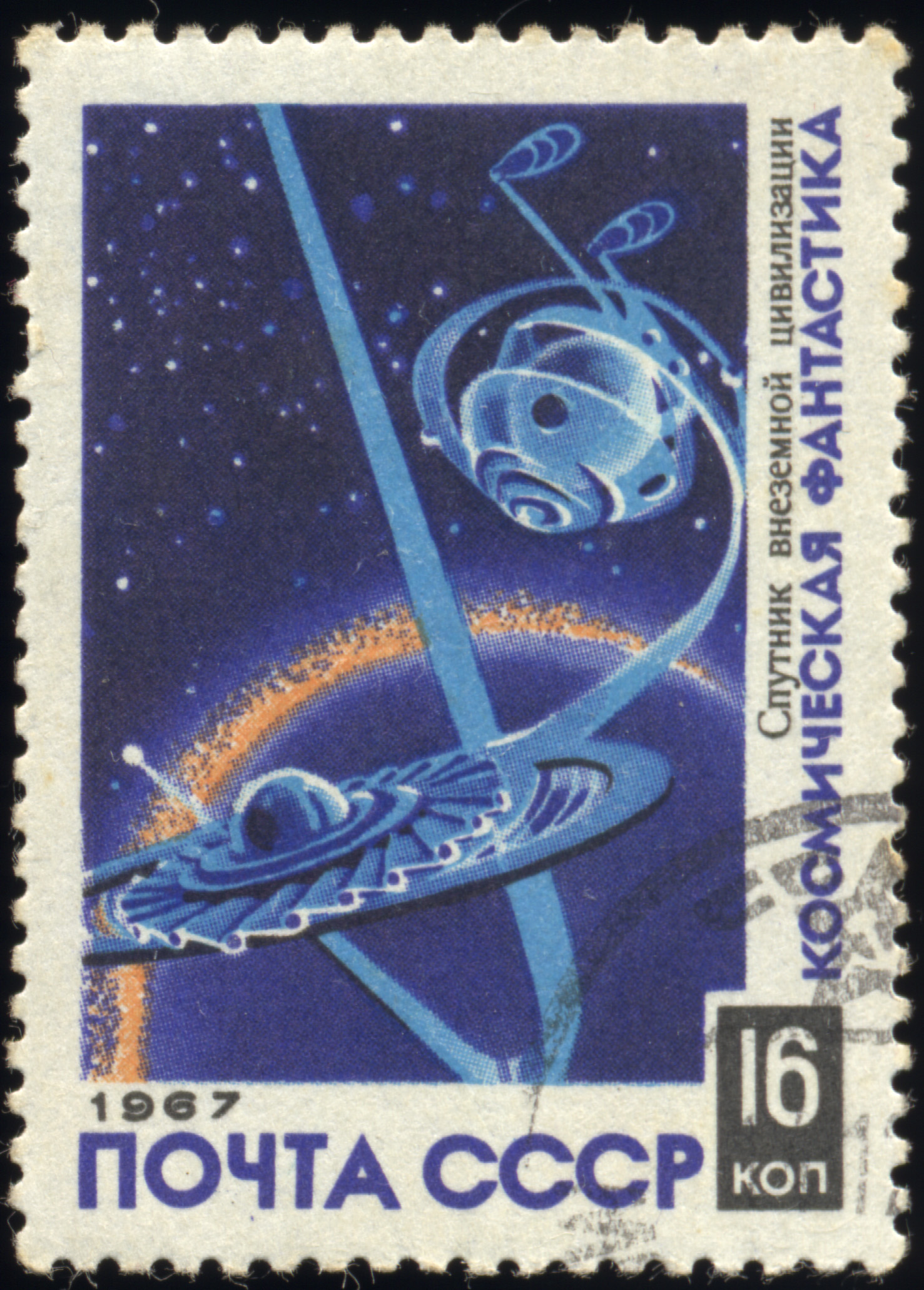 English: 1967 Soviet Union 16 kopeks stamp. Space ...
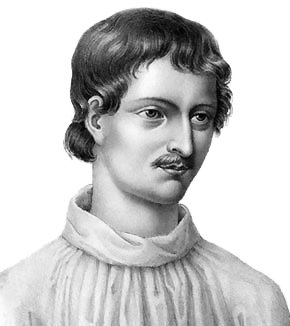 The later of two Bruno portraits often uncriticall...
 English: Labeled illustration of the Kepler Spacec...
All the same, de Fontenelle's work is strictly of his own time, seeing that it even mentions that our moon is inhabited! Of course, we know now that the moon is not inhabited. After all, we have more scientific evidence backing up our discussions on the plurality of worlds than de Fontenelle had.
Still, de Fontenelle's work is essential to scientists who are only beginning to understand a certain aspect of our universe. Philosophy is the mother of science, according to many. Besides, the ancient Egyptians, Chinese, Babylonians, Indians, and Sumerians had all believed in the existence of extraterrestrial life, even if they were principally focused on angels and demons in their belief. The Jewish Talmud stated that there are at least eighteen thousand other worlds. Hindu...