Preparing of Aspirin
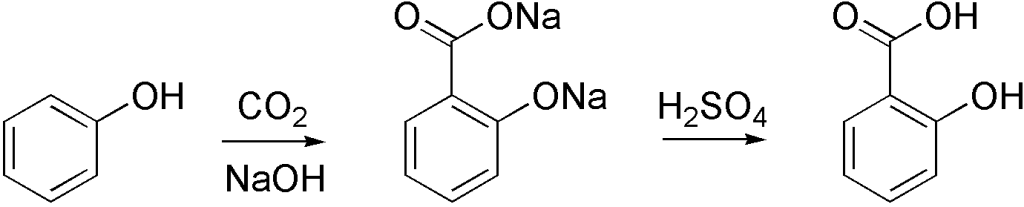
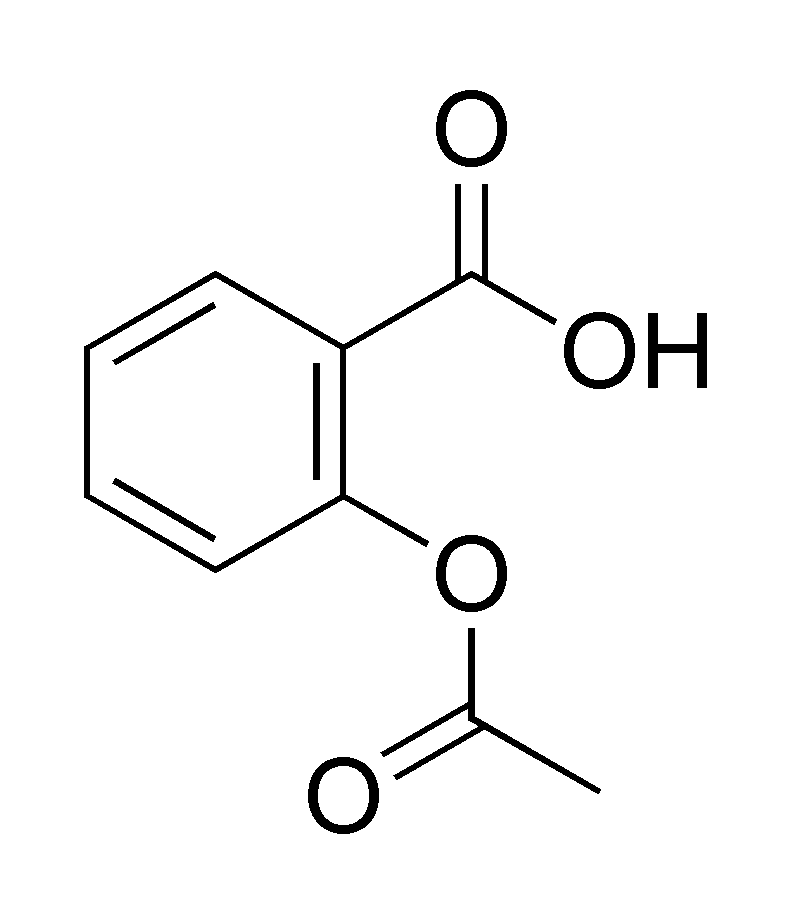
I.SynopsisThe synthesis of aspirin is known in organic chemistry as an esterification reaction.
In this experiment, preparation of aspirin were conducted and followed by recrystallisation to have it purified. Aspirin was prepared from salicylic acid and acetic anhydride. Concentrated sulphuric acid was added to speed up the reaction. It was then heated in water bath, removed, let it cooled and product was collected by suction filtration. As product collected was impure, purification was carried out by recrystallization. Then melting point of the product was determined in order to check the purity of aspirin.
Theoretical yield of aspirin expected from 2.4g of salicylic acid was calculated to be 3.15g. With the actual yield that was measured to be 0.99g, percentage yield could be calculated, which was 31.43% yield. Temperature range for the melting point was 138.6oC 149.3oC. The product obtained was in powdery form aspirin.
II.Introduction1.Objective1.1This experiment was conducted so that students could familiarize with the preparation of some simple organic compound1.2Students know how to purify the compound by recrystallisation2.History of aspirinThe effects of aspirin-like substances were found since the ancient Greeks which was the use of the willow bark as a fever fighter. The leaves and bark of the willow tree contain a substance called salicin, a naturally occurring compound similar to acetylsalicylic acid, the chemical name for aspirin.

During the 1800s, various scientists extracted salicylic acid from willow bark and produced the compound synthetically. Then, in 1853, French chemist Charles F. Gerhardt synthesized a primitive form of aspirin, a derivative of salicylic acid. In 1897 Felix Hoffmann, a German chemist working at theBayer division of I.G. Farber, discovered a better method for synthesizing the drug.
The manufacture of aspirin has paralleled advancements in pharmaceutical manufacturing as a whole, with significant mechanization occurring during the early twentieth century. Now,
Reviews of: "Preparing of Aspirin"
:
The author has cited that the reaction was an esterification reaction but failed to integrate the concept of Fischer-Speier esterification, tautomerism and most especially, the mechanism for the formation of aspirin. Furthermore, there was no discussion provided to analyze the obtained results and observations (if there are any) gained in the experimental process. The author was also not able to provide a good procedure for differentiating the reactants iand the products to determine whether the crude aspirin produced is of high purity. I also observed some flaws on the experimental design for it lacked a test for the characterization of crude and pure aspirin.
More Chemical Engineering
essays:
Catalyst - Preparation and Characterization
... selection of a support. First, it is amphoteric, which means that it can act as an acid and a basic medium. Alumina has a high melting point of just ... and manufacture. 2. IntroductionDefinition of catalyst is, A substance that increases the rate at which a chemical reaction approaches ...
Alfred Nobel and the prizes named after him
... and German. His numerous handwritten letters demonstrate his remarkable proficiency in all of them. He perfected his French when sent to Paris by his father in his late teens to study chemistry. His ...
Haber process
... the yield of ammonia. Haber had to balance the rate of a reaction (increased by increasing temperature) against the equilibrium of the reaction (pushed ... for cannon or even most rifles. In 1884 a French chemist, Paul Vieille, made the first smokeless powder as it is ...
Reynolds Experiment
... all water being released will be recovered. REFERENCES Daugherty, R. L. et. Al., Fluid Mechanics with Engineering Applications.Singapore: McGraw-Hill Book Company. 1989Foust, et. al.Principles of Unit ...
Haber Process.
... a German chemist named Fritz Haber examined the direct combination reaction between nitrogen and hydrogen, a reaction that forms ammonia. If we decrease the concentration of ammonia ... the reaction tends to shift to the fewer molecule side, therefore the amount of the equilibrium yield of ammonia ...
Fire Protection
... retardants such as the above are successful in reducing the effects of fire, such as ignitability, heat release and flame spread. However ... Steel yield strength reduces to 20 percent of its initial (room temperature) value and ultimate tensile strength is reduced to 40 percent of its ...
Self-Assembling Circuits Using DNA, The Next Computer Breakthrough
... year 2010. When electronic components become so small that current manufacturing methods no longer suffice, DNA may be used to assemble them. This report assesses the current problem of computer technology and miniaturization reaching its limits in correlation with ...
Cyclone
... designs, manufacture or installation of the unit. These defects can cause the cyclone to fill up with trapped matter or the ingress of moisture which leads to clogging. Clogging - results from the chemistry of the ...
Impressive
Overall, this is a very impressive essay.
I did hope to get some more information about the significance of the melting point, such as how pure the resulting product was.
0 out of 0 people found this comment useful.