John Fitzgerald Kennedy was born on May 29, 1917 in the Boston suburb of
Brookline. Kennedy was the son of Joseph P. Kennedy a formerambassador to Great
Britain. Kennedy was much like his father, possesing a delightful sense of humor, a strong
family loyalty, a concern for the state of the nation, endless vitality and a constant air of
confidence no matter how dire the situation (Kennedy, Sorensen, Harper & Row, New
York 1965, Page 18).
Growing up in a priviliged household and graduating with honors from Harvard. He
served as an assistant to his father (1938), naval officer (1941-1945), journalist (1941 and
1945) and Congressman (1947-1953), he had traveled to every major continent and talked
with the presidents and prime ministers, of some thirty-seven countries. In 1952 he was
elected to the United States Senate and in 1953 he married Jaqueline Bouvier. However
one year later a spinal operation brought him to the edge of death's door, causing him to
deeply reflect on his character (Sorensen 28).
 English: John F. Kennedy meeting with Nikita Khrus...
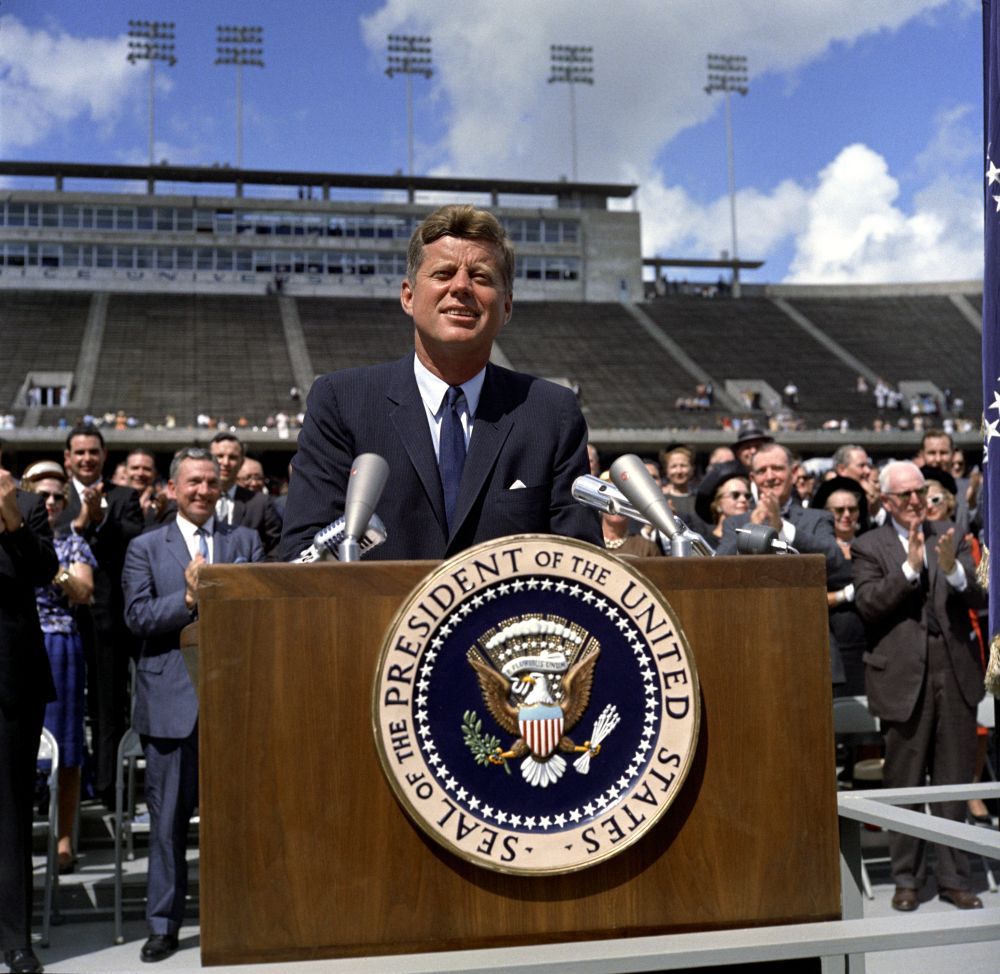 English: President John F. Kennedy speaks on the n...
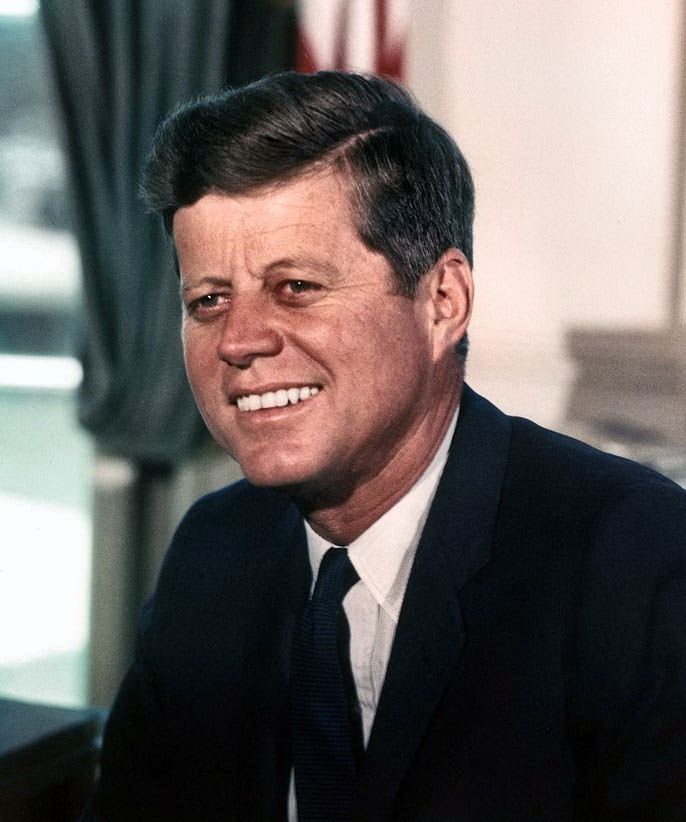 English: John F. Kennedy, photograph in the Oval O...
After his dangerous operation he
researched and wrote a book, about democracy. The next year narrowly missing the Vice
Presidential nomination of his party, Kennedy emerged as a national figure in large
demand.
"John Kennedy was not one of the Senate's great leaders" (Sorensen 43). Very
few laws of great importance bear his name. Even after his initial "traditionally' inactive
freshman year in the Senate, his chances for major contributions to the Senate excluding
his stances on fair labor reform and against rackets, were constantly diminished of his
Presidential campaign. His voting record reflects his open minded views, and strengthed
beliefs. He was well liked and respected by many Senators. Kennedy was regarded for
his eagerness and cool logic in debate situations His only real "enemy" was Senator
Joseph McCarthy of Wisconsin...